

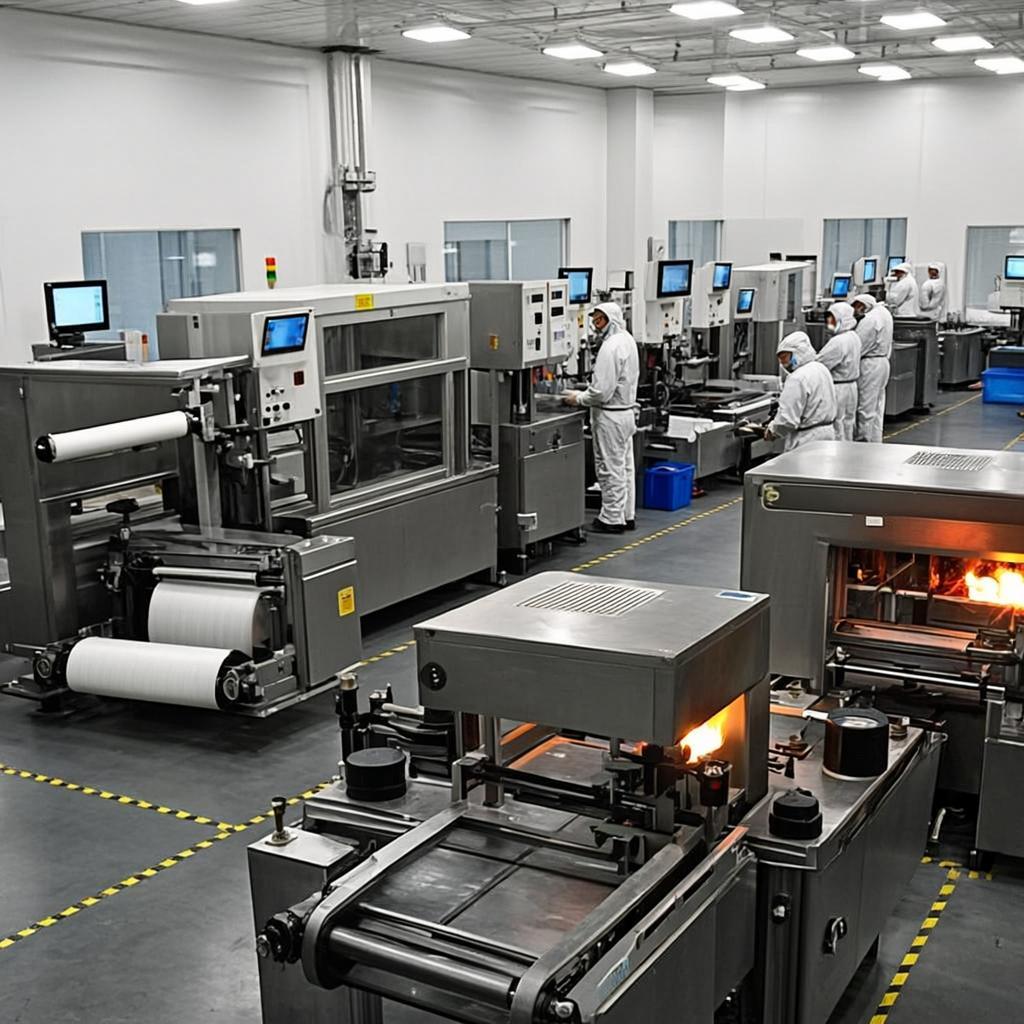
turbine air intake filters
Our turbine air intake filters are precision-engineered solutions designed to safeguard gas turbines, steam turbines, and industrial compressors from airborne contaminants. In demanding environments
Turbine Air Intake Filters
1. Product Overview
Our turbine air intake filters are precision-engineered solutions designed to safeguard gas turbines, steam turbines, and industrial compressors from airborne contaminants. In demanding environments where dust, particulates, and moisture pose significant risks to operational efficiency, these turbine air intake filters provide superior protection by capturing particles as small as 1 micron with exceptional efficiency. Crafted from advanced synthetic media and robust structural frames, they ensure optimal airflow while minimizing pressure drop, thereby extending turbine blade life and reducing maintenance costs.
Ideal for power generation, oil & gas, and heavy industrial applications, our turbine air intake filters meet stringent international standards such as ISO 8573 and API 616. By preventing ingress of fine dust and corrosive elements, they help maintain peak turbine performance, boost fuel efficiency, and comply with environmental regulations. Whether for onshore or offshore installations, these filters deliver reliable filtration that translates to measurable ROI through fewer outages and prolonged service intervals.
With customizable options for various turbine models from leading manufacturers like GE, Siemens, and Mitsubishi, our turbine air intake filters are the go-to choice for engineers seeking durability and high filtration performance in one comprehensive package.
2. Key Features
- High-Efficiency Filtration Media: Multi-stage synthetic nanofibers capture 99.97% of particles down to 0.3 microns, outperforming traditional cellulose filters in dusty conditions.
- Low Pressure Drop Design: Optimized pleat geometry and spacer supports maintain airflow rates up to 100,000 CFM with minimal resistance, ensuring energy savings.
- Corrosion-Resistant Construction: Galvanized steel or aluminum frames with polyurethane gaskets resist humidity, salt spray, and chemical exposure.
- Easy Installation and Replacement: Universal flange mounting compatible with standard turbine housings; quick-change mechanism reduces downtime to under 30 minutes.
- Fire Retardant and Self-Extinguishing: Meets UL 900 Class 1 and FM standards for flame resistance in high-risk environments.
- Customizable Dimensions and Configurations: Tailored to fit cylindrical, panel, or conical intake systems for precise integration.
- Integrated Pre-Filters Option: Coarse pre-filtration layers extend main filter life by 50% in high-dust areas.
These features make our turbine air intake filters a robust barrier against turbine degradation, combining cutting-edge materials with practical engineering for seamless deployment worldwide.
3. Technical Specifications
Below is a comprehensive table outlining the technical specifications of our standard turbine air intake filters. Custom specifications are available upon request to match specific turbine requirements.
| Parameter | Specification | Standard Models |
|---|---|---|
| Filtration Efficiency (DOE) | 99.97% @ 0.3 micron | All models |
| Initial Pressure Drop | 0.25 in. w.g. @ 1000 FPM | TAIF-100, TAIF-200 |
| Recommended Final Pressure Drop | 1.0 in. w.g. | All models |
| Airflow Capacity | 10,000 - 150,000 CFM | Customizable |
| Media Type | Synthetic Nanofiber / Borosilicate Glass | HEPA-grade options |
| Frame Material | Galvanized Steel / Extruded Aluminum | Corrosion-resistant coating |
| Sealant | Polyurethane / Silicone | Temp-resistant up to 200°C |
| Dimensions (H x W x D) | 24" x 24" x 12" (standard); Custom | Up to 96" x 96" x 36" |
| Operating Temperature | -40°C to +80°C | Extended range available |
| Humidity Resistance | 100% RH | Non-hygroscopic media |
| Certifications | ISO 5011, UL 900, FM Approved | API 616 compliant |
| Service Life | 12-24 months (typical) | Depends on environment |
These specifications ensure our turbine air intake filters deliver consistent performance across diverse operating conditions.
4. Application Scenarios
Turbine air intake filters excel in scenarios where air quality directly impacts equipment reliability. In power plants, they protect gas turbines from coal dust and fly ash, maintaining output during peak loads. Offshore oil platforms benefit from their salt fog resistance, preventing corrosion in harsh marine environments.
Industrial compressor stations in desert regions rely on these filters to combat silica sand ingress, while petrochemical refineries use them to filter hydrocarbon vapors and particulates. Combined cycle plants integrate them for both gas and steam turbine intakes, optimizing overall system efficiency.
Additional applications include aviation ground support equipment, marine propulsion turbines, and renewable energy wind turbine auxiliaries. Wherever turbines operate in polluted or abrasive atmospheres, our turbine air intake filters provide the frontline defense, ensuring uninterrupted operation and regulatory compliance.
5. Advantages
Choosing our turbine air intake filters offers distinct advantages over generic alternatives. Their advanced media achieves higher dust-holding capacity, extending replacement intervals by up to 40% and slashing lifecycle costs. The low pressure drop preserves turbine efficiency, potentially saving thousands in fuel expenses annually.
Unlike fragile paper-based filters, our robust construction withstands vibration and pressure surges common in turbine operations. Independent testing shows 20% better particle rejection in ISO fine dust environments, reducing wear on downstream components like compressors and blades.
Environmental benefits include lower emissions from efficient combustion, aiding ESG goals. With global inventory and rapid prototyping, we minimize lead times, supporting just-in-time maintenance schedules. In summary, these turbine air intake filters deliver superior protection, economy, and peace of mind for B2B clients worldwide.
6. Why Choose Us
As a leading manufacturer with over 20 years in filtration engineering, we specialize in turbine air intake filters tailored for international trade. Our ISO 9001-certified facilities employ state-of-the-art cleanroom production, ensuring zero-defect quality. We collaborate with OEMs to develop filters certified for specific turbine models, guaranteeing seamless compatibility.
Our global supply chain supports bulk orders with consistent quality, backed by rigorous third-party testing from labs like AMCA and ASHRAE. Extensive R&D invests in innovations like antimicrobial coatings for tropical climates and pulse-cleaning designs for pulse-jet systems.
Customers value our technical support, including CFD airflow simulations and on-site audits. With exports to 50+ countries, we understand diverse standards from ASME to EU ATEX. Partner with us for turbine air intake filters that prioritize performance, reliability, and your operational success.
7. FAQ
Q: What makes your turbine air intake filters suitable for high-dust environments?
A: Our multi-layer nanofiber media combined with pre-filter options captures ultra-fine dust while maintaining airflow, proven in ISO 8573 Class 1 tests.
Q: Are these filters compatible with my existing turbine housing?
A: Yes, we offer standard and custom sizes for GE Frame 7/9, Siemens SGT series, and others. Provide drawings for exact fitment.
Q: How do I determine when to replace the filter?
A: Monitor differential pressure; replace at 1.0 in. w.g. or annually in clean air, semi-annually in dusty conditions.
Q: Do turbine air intake filters handle extreme temperatures?
A: Standard range is -40°C to +80°C; high-temp variants up to 200°C with silicone seals are available.
Q: What certifications do your filters hold?
A: ISO 5011 Grade E11, UL 900 Class 1, FM 5870, and API 616 for turbine applications.
Q: Can I get turbine air intake filters with weatherproofing?
A: Absolutely; options include weather hoods, drain valves, and epoxy coatings for outdoor or marine use.
Q: How do these filters impact turbine efficiency?
A: Minimal pressure drop ensures less than 0.5% efficiency loss, with many users reporting improved performance post-installation.
Related product
- English
- Françai
- Español
- Deutsch
- Română
- العربية
- 한국어
- 日本語
- Italiano
- Português
- Gaeilge
- Dansk
- Čeština
- Русский
- Afrikaans
- Euskara
- Català
- Esperanto
- हिन्दी
- Ελληνικά
- Bahasa Melayu
- Polski
- Српски
- Kiswahili
- ภาษาไทย
- Tiếng Việt
- Türkçe
- Svenska
- Cymraeg
- Slovenčina
- Latviešu
- Malti
- Magyar
- Galego
- ગુજરાતી
- Eesti Keel
- বাংলা
- Shqip
- беларуская мова