
meltblown filter material
Our meltblown filter material is a high-performance nonwoven fabric engineered through the advanced meltblown process, where molten polypropylene is extruded into ultra-fine fibers to create a highly
Meltblown Filter Material
1. Product Overview
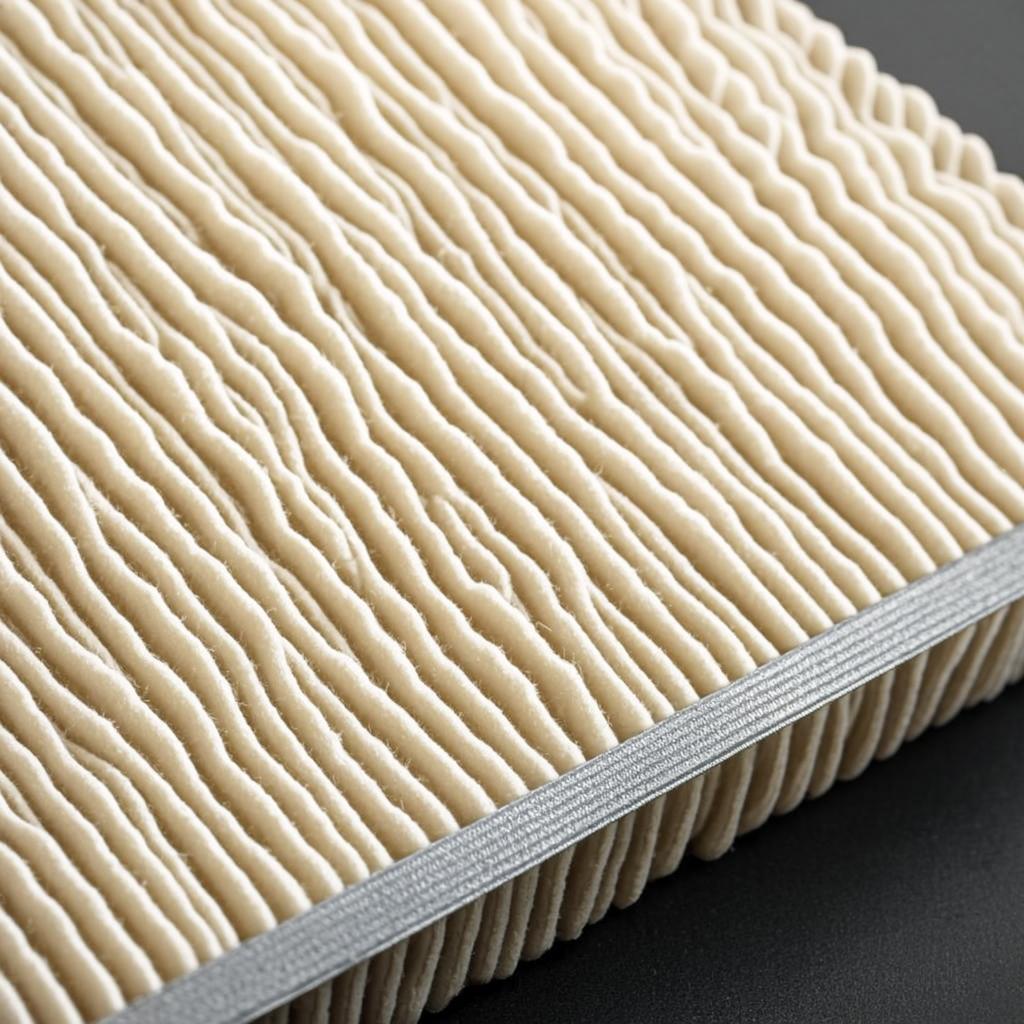
Our meltblown filter material is a high-performance nonwoven fabric engineered through the advanced meltblown process, where molten polypropylene is extruded into ultra-fine fibers to create a highly efficient filtration media. This material excels in capturing microscopic particles, making it an essential component in air, liquid, and gas filtration systems worldwide. Ideal for B2B applications in industries requiring superior particle retention without compromising airflow, our meltblown filter material is produced under stringent quality controls to ensure consistency, durability, and reliability.
The meltblown filter material features a random fiber structure with diameters typically ranging from 1 to 5 microns, providing an exceptional balance of filtration efficiency and low resistance. This makes it particularly suitable for demanding environments such as cleanrooms, medical facilities, and industrial processes. Available in various grammages and widths, our meltblown filter material can be customized to meet specific project requirements, supporting rolls up to 2 meters wide and lengths exceeding 10,000 meters. With global certifications including ISO 9001 and ISO 13485, we deliver meltblown filter material that meets international standards for safety and performance.
In the evolving landscape of filtration technology, meltblown filter material stands out for its versatility and electrostatic charging capabilities, which enhance particle adhesion. Whether used as a standalone filter or in composite structures, it provides long-lasting protection against contaminants like dust, bacteria, viruses, and PM2.5 particles. Our commitment to innovation ensures that every batch of meltblown filter material undergoes rigorous testing for bacterial filtration efficiency (BFE), particulate filtration efficiency (PFE), and pressure drop, guaranteeing optimal performance in real-world applications.
2. Key Features
- Ultra-Fine Fiber Structure: Fibers as thin as 1-5 microns create a dense web for capturing particles down to 0.1 microns with efficiencies exceeding 99%.
- High Filtration Efficiency: Electrostatically charged options enhance capture of submicron particles, ideal for HEPA and N95-grade applications.
- Low Pressure Drop: Maintains excellent airflow (typically 20-100 L/m²/s) to reduce energy consumption in filtration systems.
- Lightweight and Flexible: Basis weights from 10-100 gsm allow easy integration into masks, filters, and laminates without adding bulk.
- Chemical Resistance: Resists oils, acids, and alkalis, ensuring longevity in harsh industrial environments.
- Customizable Specifications: Tailored grammage, width, color, and treatments like hydrophobic or antiviral coatings for diverse needs.
- Eco-Friendly Production: Utilizes recyclable polypropylene with minimal waste, supporting sustainable manufacturing practices.
- Consistent Quality: Advanced meltblown lines ensure uniform fiber distribution and no defects, verified by automated inspection systems.
3. Technical Specifications
| Property | Standard Grade | High-Efficiency Grade | Ultra-Fine Grade | Test Method |
|---|---|---|---|---|
| Basis Weight (gsm) | 20-25 | 25-40 | 10-20 | GB/T 24218.1 |
| Thickness (mm) | 0.20-0.30 | 0.25-0.40 | 0.15-0.25 | GB/T 24218.2 |
| Filtration Efficiency (% for 0.3μm particles) | >95 | >99 | >99.5 | GB/T 38825 |
| Bacterial Filtration Efficiency (BFE, %) | >98 | >99.5 | >99.9 | GB 19083 |
| Air Permeability (L/m²/s) | 80-120 | 50-80 | 100-150 | GB/T 5453 |
| Pressure Drop (Pa) | <50 | <80 | <40 | GB/T 38825 |
| Fiber Diameter (μm) | 2-4 | 1.5-3 | 1-2.5 | SEM Analysis |
| Width (mm) | 100-2000 | 100-2000 | 100-1600 | Custom |
| Length per Roll (m) | 2000-10000 | 2000-8000 | 3000-12000 | Custom |
| Material | PP | PP | PP | - |
Note: Specifications are typical values; custom formulations available upon request. All meltblown filter material undergoes third-party testing for compliance.
4. Application Scenarios
Meltblown filter material finds extensive use across multiple sectors due to its superior particle capture and airflow properties. In personal protective equipment (PPE), it serves as the core layer in surgical masks, N95 respirators, and FFP2/FFP3 masks, effectively blocking airborne pathogens and aerosols during healthcare operations or public health crises.
For industrial air filtration, our meltblown filter material is integrated into HVAC systems, cleanroom filters, and baghouse collectors, ensuring compliance with standards like EN 1822 for HEPA filtration. Its low pressure drop minimizes fan energy requirements, making it cost-effective for large-scale ventilation in manufacturing plants, pharmaceutical facilities, and data centers.
In liquid filtration applications, meltblown filter material excels in water treatment cartridges, oil separators, and beverage processing, where it removes sediments, microbes, and emulsified oils with high throughput. Automotive sectors utilize it in cabin air filters and fuel filters for enhanced engine protection and passenger comfort.
Additional scenarios include vacuum cleaner bags, compressor intake filters, and gas turbine inlet protection, where durability under high velocities and humidity is critical. The material's adaptability supports composite laminates with SMS or spunbond fabrics for multi-layer barrier products in hygiene and medical packaging.
5. Advantages
Choosing our meltblown filter material provides distinct advantages over conventional filtration media. Firstly, its electrostatic charge mechanism actively attracts and traps charged particles, outperforming mechanical filtration alone and extending service life by up to 50% in dusty environments. This results in fewer replacements and lower operational costs for B2B clients.
Secondly, the meltblown process yields a highly uniform fiber mat with minimal pinholes, ensuring reliable performance batch-to-batch—unlike spunbond or glass fiber alternatives that may suffer from variability or brittleness. Our material's hydrophobicity prevents microbial growth, ideal for humid applications, while optional plasma treatments add antiviral properties for enhanced biosafety.
From a sustainability perspective, meltblown filter material is fully recyclable and produced with energy-efficient extrusion lines, reducing carbon footprint compared to microfiber glass media. Economically, bulk pricing and high yield rates (over 98% uptime) deliver competitive value, with rapid lead times for international shipments. Rigorous quality assurance, including 100% online monitoring and DOE testing, guarantees traceability and compliance with global regulations like FDA and CE marking.
Furthermore, the material's thermal bonding compatibility facilitates seamless integration into automated production lines, boosting efficiency for mask and filter manufacturers. In summary, our meltblown filter material combines technical excellence with practical benefits, positioning it as the preferred choice for forward-thinking industrial partners.
6. Why Choose Us
As a leading manufacturer of meltblown filter material, we bring over 15 years of expertise in nonwoven production, operating state-of-the-art facilities with annual capacity exceeding 10,000 tons. Our vertical integration—from raw polymer selection to finished rolls—ensures end-to-end control, minimizing defects and optimizing costs.
We prioritize innovation, investing in R&D for next-generation meltblown filter material with enhanced electret stability and nano-fiber variants. Certifications such as OEKO-TEX, REACH, and RoHS underscore our commitment to safety and environmental responsibility. Global supply chains enable reliable delivery to Europe, North America, and Asia, with flexible MOQs starting at 1 ton.
Our technical support team offers application engineering, prototype development, and performance simulations tailored to your specifications. With a defect rate below 0.1% and real-time quality dashboards, we foster long-term partnerships built on trust and performance. Choose us for meltblown filter material that elevates your products and safeguards your reputation.
7. FAQ
Q: What is meltblown filter material made from?
A: Primarily polypropylene (PP) polymers, melted and extruded into fine fibers, forming a nonwoven web optimized for filtration.
Q: How does meltblown filter material achieve high efficiency?
A: Through ultra-fine fibers and optional electret charging, which electrostatically attracts particles, achieving >99% efficiency for 0.3μm aerosols.
Q: What are the storage requirements for meltblown filter material?
A: Store in a cool, dry place (below 30°C, <70% RH) away from direct sunlight to preserve electrostatic properties; shelf life exceeds 2 years.
Q: Can meltblown filter material be laminated with other fabrics?
A: Yes, it bonds excellently with spunbond, SMS, or films via ultrasonic welding or hot-pressing for multi-layer filters and masks.
Q: Is your meltblown filter material suitable for medical use?
A: Absolutely, with BFE/PFE tested to GB 19083 and EN 14683 standards, suitable for Type IIR surgical masks and respirators.
Q: What customization options are available?
A: Grammage, width, fiber fineness, treatments (hydrophobic, antimicrobial), and roll sizes tailored to your production needs.
Q: How is quality ensured during production?
A: Inline laser scanning, automated grammage control, and final lab testing for every batch of meltblown filter material.
Related product
- English
- Françai
- Español
- Deutsch
- Română
- العربية
- 한국어
- 日本語
- Italiano
- Português
- Gaeilge
- Dansk
- Čeština
- Русский
- Afrikaans
- Euskara
- Català
- Esperanto
- हिन्दी
- Ελληνικά
- Bahasa Melayu
- Polski
- Српски
- Kiswahili
- ภาษาไทย
- Tiếng Việt
- Türkçe
- Svenska
- Cymraeg
- Slovenčina
- Latviešu
- Malti
- Magyar
- Galego
- ગુજરાતી
- Eesti Keel
- বাংলা
- Shqip
- беларуская мова
- Nederlands
- Tagalog
- ქართული
- Íslenska
- Kreyòl Ayisyen
- Lietuvių
- Norsk
- slovenščina
- தமிழ்
- Українська
- ײִדיש
- اردو
- తెలుగు
- فارسی
- македонски
- ಕನ್ನಡ
- Bahasa Indonesia
- עברית
- Suomi
- Hrvatski
- Български
- Azerbaijani