

High-Efficiency Melt Blown Filter Media for Industrial Filtration Solutions
In the demanding world of industrial filtration, precision and reliability are paramount. Our advanced melt blown filter media stands as a cornerstone technology, engineered to deliver exceptional particulate capture, consistent performance, and robust durability. Manufactured through a controlled extrusion and fiber-layering process, this non-woven media is designed to meet the rigorous standards of diverse sectors, from critical healthcare applications to heavy-duty manufacturing. This page details the specifications, benefits, and applications of our premium-grade filter media, providing B2B buyers with the comprehensive information needed for informed procurement decisions.
1. Product Overview
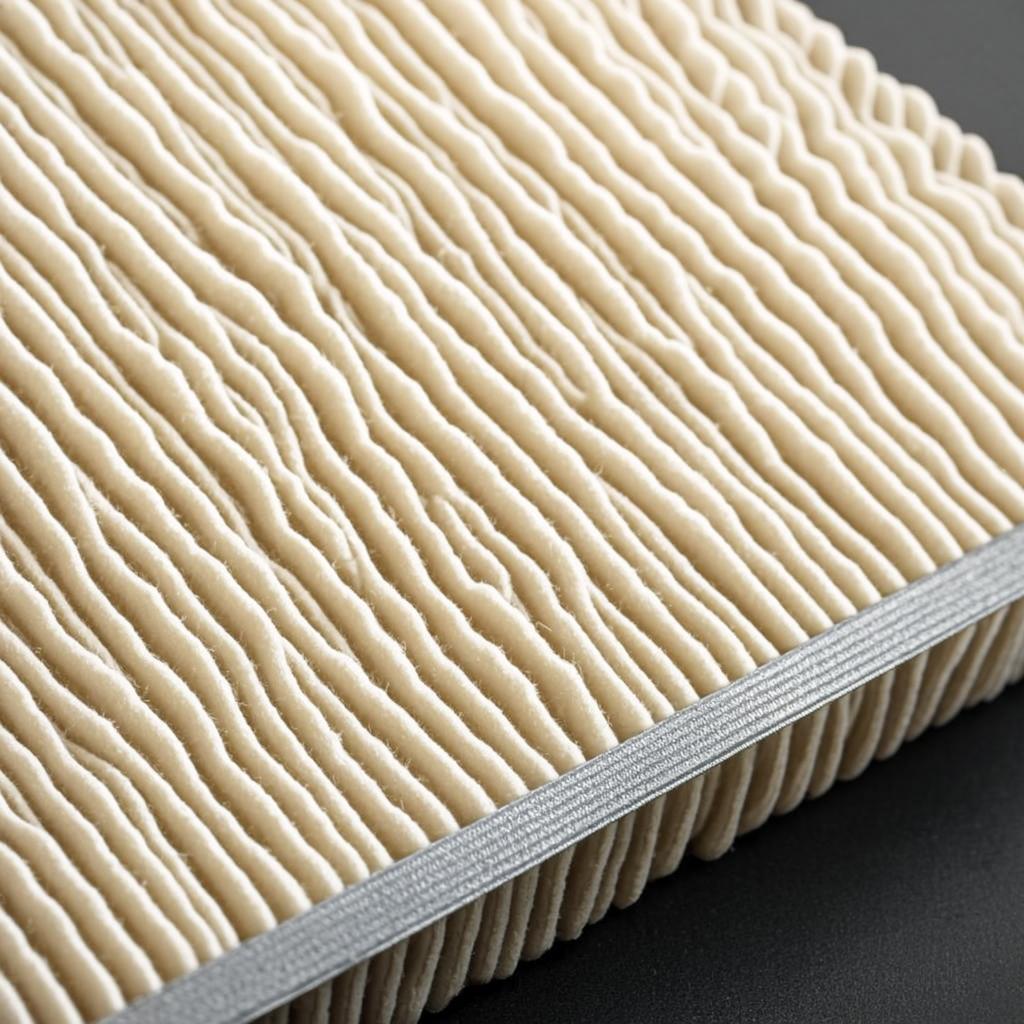
Our melt blown filter media is a sophisticated non-woven fabric produced by extruding molten polymer through fine nozzles, which is then attenuated by high-velocity hot air to form micro-diameter fibers. These fibers are randomly collected on a conveyor, creating a web with a complex, depth-loading matrix. This unique structure offers a gradient density profile, allowing for high dirt-holding capacity and efficient multi-stage filtration within a single media layer. Primarily composed of polypropylene (PP), our media is known for its chemical resistance, thermal stability, and consistent quality, making it an ideal core component for filter cartridges, face masks, air purifiers, and liquid filtration systems.
2. Key Features
- Gradient Density Structure: Provides depth filtration, capturing particles throughout the media cross-section for longer service life and higher capacity.
- High Filtration Efficiency: Achieves high particle capture rates (up to 99.9%+ on certain grades) for sub-micron particulates, including dust, bacteria, and aerosols.
- Excellent Breathability with Low Pressure Drop: Optimized fiber structure ensures efficient airflow with minimal resistance, enhancing energy efficiency in systems.
- Superior Chemical Compatibility: Inert polypropylene construction offers strong resistance to a wide range of acids, alkalis, and organic solvents.
- Customizable Parameters: Basis weight, thickness, fiber diameter, and electrostatic charge can be tailored to meet specific filtration performance targets.
- Consistent Homogeneity: Automated production ensures uniform fiber distribution and reliable batch-to-batch performance.
3. Technical Specifications
| Parameter | Standard Range | Test Standard | Notes |
|---|---|---|---|
| Primary Material | Polypropylene (PP) | - | Other polymers (e.g., PET) available upon request |
| Basis Weight | 20 - 200 gsm | ISO 536 | Most common range for filtration applications |
| Thickness | 0.3 - 5.0 mm | ISO 534 | Varies with density and application |
| Fiber Diameter | 1 - 10 microns | Microscopy / SEM | Finer fibers for higher efficiency |
| Filtration Efficiency (0.3μm) | 90% - 99.9%+ | ASTM F2299 / EN 1822 | Dependent on grade and face velocity |
| Pressure Drop (Initial) | 10 - 150 Pa | ISO 9237 | At specified flow rates |
| Width | Up to 3200 mm | - | Minimizes seams in final product manufacturing |
4. Application Scenarios
Our melt blown filter media serves as a critical component across a spectrum of industries:
- Healthcare & Life Sciences: Core filtration layer in surgical masks, respirators (N95/KN95), HVAC filters for cleanrooms, and sterilizing air filters for medical devices.
- Industrial Air Filtration: Filter cartridges and panels for dust collection systems, paint booth exhaust, fume extraction, and compressed air purification.
- Water & Liquid Filtration: Depth filtration for pre-filtration stages, removing sediment, rust, and other suspended solids from water, chemicals, and fuels.
- Consumer & Appliance: Primary filter media in home air purifiers, vacuum cleaner bags, HVAC filters, and automotive cabin air filters.
- Food & Beverage Processing: Air filtration for packaging areas and liquid pre-filtration for ingredients, ensuring product purity and safety.
5. Advantages
Choosing our melt blown filter media provides distinct competitive and operational benefits:
- Optimized Cost-Efficiency: The high dirt-holding capacity extends filter change-out intervals, reducing maintenance costs and downtime.
- Enhanced System Performance: Low initial pressure drop translates to lower energy consumption for fans and blowers, offering long-term operational savings.
- Proven Reliability: Rigorous quality control at every production stage ensures the media performs consistently under specified conditions.
- Design Flexibility: The media can be easily pleated, laminated, or converted into various shapes and configurations to fit specific filter housings.
- Broad Compatibility: Suitable for integration with activated carbon layers, support scrims, or other composite materials to create hybrid filter solutions.
6. Why Choose Us
As a leading manufacturer in the filtration industry, we differentiate ourselves through expertise and commitment:
- Deep Technical Expertise: Our engineering team works closely with clients to develop custom melt blown filter media solutions for unique challenges.
- State-of-the-Art Manufacturing: We operate modern, automated production lines that guarantee precision, scale, and consistent product quality.
- Full Compliance & Certification: Our media is tested and can be produced to meet international standards (ISO, ASTM, GB) and industry-specific certifications.
- Global Supply Chain Strength: Reliable raw material sourcing and efficient logistics ensure on-time delivery for global B2B clients.
- Dedicated Customer Support: From initial inquiry to post-sale technical assistance, we provide comprehensive support to ensure your project's success.
7. FAQ
Q1: What is the typical lead time for bulk orders of melt blown filter media?
A: For standard grades, our typical lead time is 2-4 weeks for container-sized orders. Customized specifications may require additional time for R&D and setup. We provide firm timelines upon order confirmation.
Q2: Can you produce media with specific efficiency ratings, such as N95 or HEPA grades?
A: Absolutely. We specialize in engineering media to target specific efficiency benchmarks, including those required for N95 respirators (≥95% efficiency on 0.3μm particles) and various HEPA grades. Electrostatic charging can also be applied to enhance particle capture.
Q3: Is the media suitable for high-temperature or aggressive chemical environments?
A: Standard polypropylene melt blown filter media has a continuous use temperature of up to ~90°C (194°F) and offers good chemical resistance. For more extreme conditions, we can discuss alternative polymer bases like polyester (PET) or polyphenylene sulfide (PPS).
Q4: Do you offer laminated or composite media products?
A: Yes. We provide value-added converting services, including laminating the melt blown layer with support scrims (e.g., spunbond) for added strength, or combining it with activated carbon fabric for gas-phase filtration. This creates a turnkey solution for filter manufacturers.
Q5: How do you ensure quality consistency?
A: Quality is embedded in our process. We conduct in-line monitoring of key parameters (basis weight, thickness) and perform rigorous offline testing in our lab for filtration efficiency, pressure drop, and tensile strength. A Certificate of Analysis (CoA) is available with each shipment.