

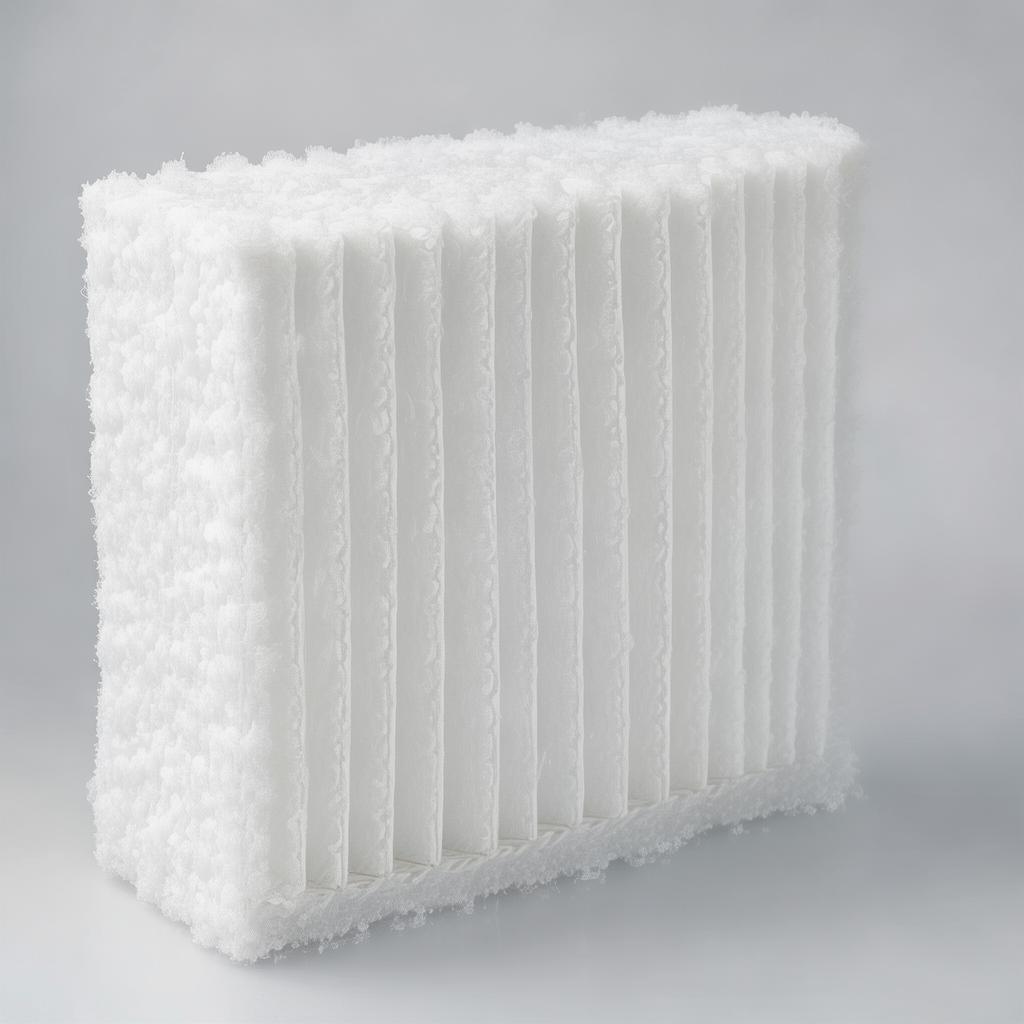
glass microfiber pocket filter media
Our glass microfiber pocket filter media is a premium filtration solution engineered for high-performance air purification in demanding industrial environments. Composed of ultra-fine borosilicate
Glass Microfiber Pocket Filter Media
1. Product Overview
Our glass microfiber pocket filter media is a premium filtration solution engineered for high-performance air purification in demanding industrial environments. Composed of ultra-fine borosilicate glass microfibers, this media delivers exceptional particle capture efficiency while maintaining optimal airflow. Ideal for pocket filter cartridges, it excels in removing fine dust, smoke, pollen, and microorganisms from airstreams, achieving filtration efficiencies up to H14 standards.
Designed for international trade and B2B applications, our glass microfiber pocket filter media supports a wide range of HVAC systems, cleanroom operations, and industrial ventilation setups. Its borosilicate composition ensures chemical resistance, thermal stability up to 500°C, and longevity in harsh conditions. Whether you're manufacturing air handling units or upgrading existing filtration infrastructure, this media provides reliable, low-maintenance performance that meets global standards like ISO 16890 and EN 1822.
With a focus on sustainability, our glass microfiber pocket filter media is fully incinerable and recyclable, minimizing environmental impact without compromising on quality. Trusted by leading filter manufacturers worldwide, it represents the pinnacle of microfiber technology for precise air quality control.
2. Key Features
- Ultra-Fine Filtration: Captures particles as small as 0.3 microns with efficiencies exceeding 99.99%, perfect for HEPA and ULPA applications using glass microfiber pocket filter media.
- Low Initial Pressure Drop: Optimized fiber structure ensures minimal airflow resistance, extending filter life and reducing energy costs.
- High Dust Holding Capacity: Advanced pleating and media design hold up to 5 times more dust than synthetic alternatives.
- Temperature and Chemical Resistance: Withstands continuous exposure to 260°C and resists acids, alkalis, and solvents common in industrial settings.
- Fire Retardant: Inherently non-combustible, meeting stringent safety requirements for turbine inlets and high-risk areas.
- Customizable Options: Available in various grammages, thicknesses, and efficiency grades to suit specific pocket filter designs.
- Antimicrobial Treatment: Optional coatings inhibit bacterial and fungal growth, enhancing hygiene in pharmaceutical and food processing environments.
3. Technical Specifications
| Parameter | Value/Range | Test Standard | Notes |
|---|---|---|---|
| Material | Borosilicate glass microfibers | - | 100% inorganic, wet-laid process |
| Grammage | 80 - 200 g/m² | ISO 9073-1 | Customizable for pocket filter media |
| Thickness | 0.3 - 1.2 mm | ISO 9073-2 | Compressibility optimized |
| Filtration Efficiency (MPPS) | E10 (85%) to H14 (99.995%) | EN 1822 | Glass microfiber pocket filter media grades |
| MERV Rating | 13 - 16 | ASHRAE 52.2 | Equivalent to ISO Coarse to ePM1 |
| Initial Pressure Drop | 50 - 120 Pa @ 0.1 m/s | ISO 16890 | Face velocity dependent |
| Air Permeability | 100 - 400 L/m²/s | ISO 9237 | Adjustable for airflow balance |
| Dust Holding Capacity | 500 - 2000 g/m² | ISO 16890 | @ 450 Pa terminal pressure |
| Maximum Operating Temperature | 500°C short-term / 260°C continuous | - | Suitable for hot gas filtration |
| pH Resistance | 3 - 11 | - | Resists corrosive environments |
| Width | 1.0 - 2.2 m | - | Standard roll lengths: 50-1000 m |
| Fire Classification | A1 (non-combustible) | EN 13501-1 | Inherent glass fiber property |
All specifications for our glass microfiber pocket filter media are verified through independent testing. Custom specifications available upon request to match your pocket filter production needs.
4. Application Scenarios
The versatility of glass microfiber pocket filter media makes it indispensable across diverse industries requiring superior air filtration.
- HVAC and Commercial Buildings: Pre-filters and fine filters in AHUs for offices, hospitals, and data centers to maintain IAQ standards.
- Pharmaceutical and Cleanrooms: Critical for ISO 5-8 cleanrooms, capturing microbes and particulates in laminar flow systems.
- Food and Beverage Processing: Removes airborne contaminants in production lines, ensuring hygiene compliance with FDA and EU regulations.
- Automotive and Paint Shops: High-efficiency media for spray booth ventilation, trapping overspray and VOCs effectively.
- Power Generation and Turbines: Inlet air filtration protecting gas turbines from dust ingestion in harsh outdoor conditions.
- Industrial Exhaust Systems: Fine dust control in metalworking, woodworking, and chemical plants for emission compliance.
- Laboratories and Research Facilities: Specialized grades for fume hoods and biosafety cabinets demanding ultra-low particle counts.
In each scenario, our glass microfiber pocket filter media integrates seamlessly into pocket filter frames, delivering consistent performance over extended service intervals.
5. Advantages
Choosing our glass microfiber pocket filter media offers distinct advantages over conventional synthetic or cellulose-based media:
- Superior Efficiency and Capacity: Glass microfibers form a tortuous path that traps particles mechanically, outperforming electrostatic synthetics which lose charge over time.
- Extended Service Life: High dust loading prevents premature clogging, reducing changeout frequency by up to 50% and operational downtime.
- Energy Efficiency: Lower pressure drops translate to significant HVAC energy savings, aligning with green building certifications like LEED.
- Durability in Extremes: Unaffected by humidity, oils, or high temperatures, ensuring reliability where synthetics fail.
- Eco-Friendly Disposal: Incinerates to trace ash without toxic emissions, supporting circular economy principles.
- Consistent Quality: Rigorous production controls guarantee batch-to-batch uniformity, critical for OEM filter assembly.
These advantages position our glass microfiber pocket filter media as the preferred choice for manufacturers seeking competitive edges in performance and cost-effectiveness.
6. Why Choose Us
As a leading supplier of glass microfiber pocket filter media, we bring decades of expertise in nonwoven filtration materials to the global market. Our state-of-the-art production facility employs advanced wet-laid technology, ensuring microfiber diameters below 1 micron for unmatched filtration precision.
We prioritize B2B partnerships, offering:
- Customization: Tailored media blends for specific efficiency curves and pocket filter geometries.
- Global Certifications: Compliant with ISO 9001, IEST-RP-CC001, and REACH for seamless international trade.
- Rapid Delivery: Stocked warehouses in Europe, Asia, and North America for just-in-time supply.
- Technical Support: Engineering consultations for filter design optimization and performance validation.
- Quality Assurance: 100% inline testing with full traceability from raw glass to finished rolls.
Our commitment to innovation includes ongoing R&D in hybrid glass-synthetic media, keeping your products ahead in evolving regulatory landscapes.
7. FAQ
Q: What makes glass microfiber pocket filter media superior to synthetic media?
A: Glass microfibers provide permanent mechanical filtration without relying on charge, offering higher efficiency, better chemical resistance, and no degradation from oils or humidity.
Q: Can this media be used in high-humidity environments?
A: Yes, borosilicate glass is inherently hydrophobic and maintains structural integrity in 100% RH conditions, ideal for tropical climates or wet processes.
Q: What are the standard roll sizes for glass microfiber pocket filter media?
A: Typically 1.2-2.0 m width x 100-500 m length, but we accommodate custom slitting and packaging for pocket filter production lines.
Q: Is antimicrobial treatment standard?
A: Optional and customizable; it enhances media for sterile applications without affecting airflow or efficiency ratings.
Q: How does it perform in ISO 16890 testing?
A: Achieves ePM1 (70-90%) to ePM0.3 grades, with full classification reports available for your filter homologation.
Q: What is the minimum order quantity?
A: Flexible for B2B; starts at 500 m², with volume discounts for larger international shipments.
Related product
- English
- Françai
- Español
- Deutsch
- Română
- العربية
- 한국어
- 日本語
- Italiano
- Português
- Gaeilge
- Dansk
- Čeština
- Русский
- Afrikaans
- Euskara
- Català
- Esperanto
- हिन्दी
- Ελληνικά
- Bahasa Melayu
- Polski
- Српски
- Kiswahili
- ภาษาไทย
- Tiếng Việt
- Türkçe
- Svenska
- Cymraeg
- Slovenčina
- Latviešu
- Malti
- Magyar
- Galego
- ગુજરાતી
- Eesti Keel
- বাংলা
- Shqip
- беларуская мова