


High-Efficiency Glass Microfiber Filter Paper for Precision Filtration
In demanding industrial and laboratory environments, the integrity of your filtration process is paramount. Our premium-grade glass microfiber filter paper is engineered to deliver exceptional performance, reliability, and consistency for critical separation tasks. As a leading manufacturer, we provide a robust solution for applications requiring high flow rates, superior particle retention, and chemical resistance.
1. Product Overview
Our glass microfiber filter paper is a non-woven media composed of 100% borosilicate glass microfibers. Manufactured without binders or additives, it offers a pure, inert filtration matrix ideal for analytical and process filtration. The random fiber orientation creates a dense, porous structure with a high surface area, enabling efficient capture of fine particles while maintaining excellent flow characteristics. This product is the cornerstone of reliable filtration in sectors where precision and data accuracy cannot be compromised.
2. Key Features
- High Purity & Inertness: Made from 100% borosilicate glass, it is chemically inert and will not introduce contaminants, making it perfect for sensitive analytical procedures like gravimetric analysis and HPLC sample preparation.
- Exceptional Flow Rate: The highly porous structure allows for faster filtration compared to conventional cellulose papers, reducing processing time and increasing throughput.
- Superior Particle Retention: Available in a range of pore sizes, our glass microfiber media provides precise and consistent retention of fine particulates, sub-micron particles, and precipitates.
- High Wet Strength: Exhibits remarkable strength when wet, resisting tearing and rupture under vacuum or pressure, which ensures process integrity.
- Temperature Resistance: Withstands high temperatures (up to 500°C), allowing for ashing or ignition of the filter and collected residue without loss of structural integrity.
- Broad Chemical Compatibility: Resistant to most acids, alkalis, and organic solvents, ensuring performance stability across diverse chemical environments.
3. Technical Specifications
| Parameter | Specification / Range | Standard Grade (GF/A) | Fine Retention Grade (GF/F) |
|---|---|---|---|
| Nominal Thickness | 0.26 mm | ✓ | ✓ |
| Basis Weight | 52 g/m² | ✓ | ✓ |
| Nominal Pore Size | 1.6 µm | ✓ | |
| Nominal Pore Size | 0.7 µm | ✓ | |
| Max. Temperature | 500°C (932°F) | ✓ | ✓ |
| Ash Content | < 0.1% | ✓ | ✓ |
| Standard Diameters | 47 mm, 55 mm, 90 mm, 110 mm, 150 mm, 293 mm, Rolls | ✓ | ✓ |
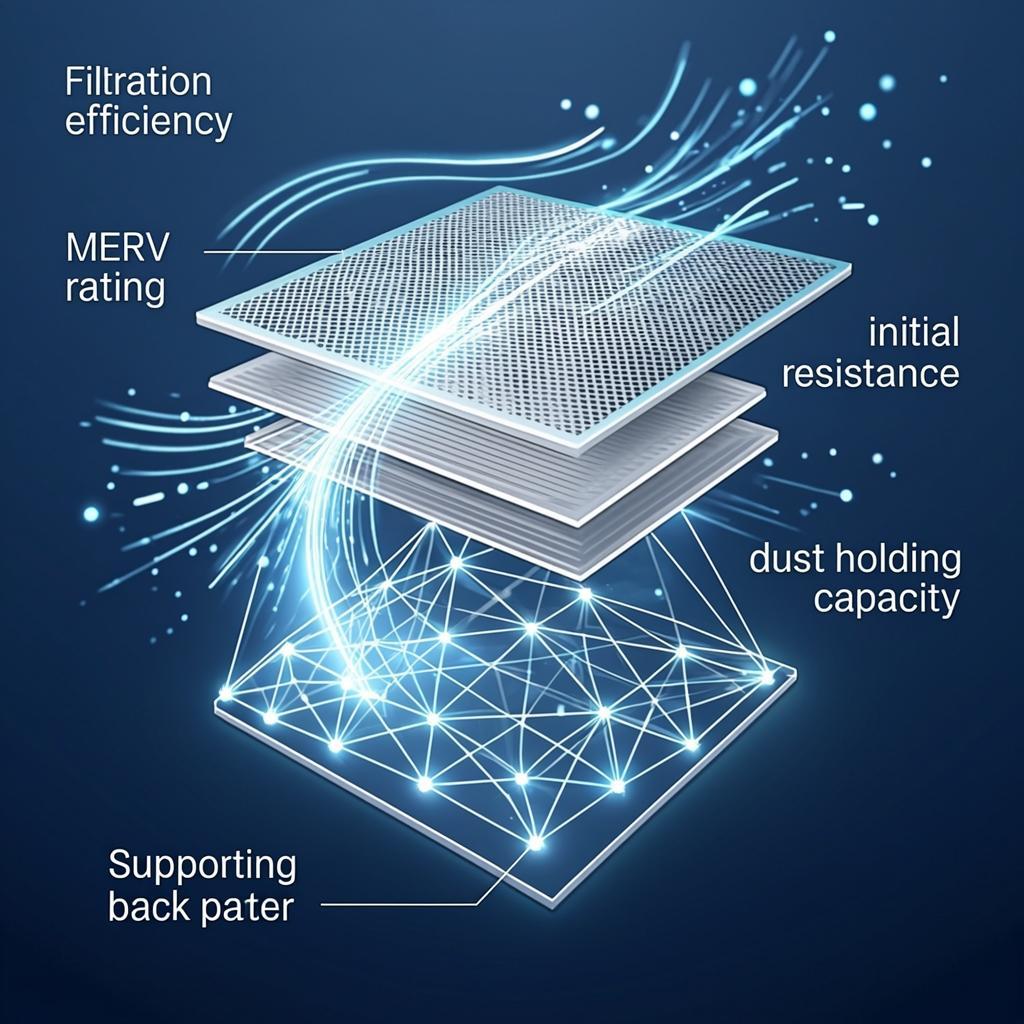
Custom sizes, pore ratings, and quantitative grades are available upon request for OEM applications.
4. Application Scenarios
Our glass microfiber filter paper is versatile and trusted across multiple industries for critical filtration steps:
- Environmental Monitoring: Air pollution monitoring (PM2.5, PM10), water analysis for suspended solids, and soil extraction procedures.
- Laboratory Analysis: Sample preparation for HPLC, GC, AA, and ICP-MS; gravimetric analysis; clarification of solvents and reagents; cell harvesting.
- Food & Beverage: Clarification of wines, beers, and juices; quality control testing for solids content; sterility testing.
- Pharmaceutical & Biotech: Sterile filtration of growth media, buffer clarification, and general laboratory fluid processing.
- Industrial Processes: Quality control in chemical manufacturing, hydraulic fluid analysis, and coolant purity testing.
- Academic Research: A standard media in university and R&D labs for a wide array of chemical and biological separations.
5. Advantages Over Alternative Media
Choosing the right filter media impacts efficiency, cost, and result validity. Our glass microfiber filter paper offers distinct benefits:
- vs. Cellulose Filter Paper: Significantly faster flow rates, higher wet strength, superior chemical resistance, and the ability to be asked at high temperatures without charring.
- vs. Membrane Filters: Higher dirt-holding capacity, greater surface area for adsorption, and typically lower cost per filtration area for pre-filtration or applications with high particulate loads.
- vs. Quartz Fiber Filters: While both are high-temperature compatible, our borosilicate glass microfiber filter paper generally offers better handling strength and a more consistent fiber matrix at a competitive price point.
It often serves as an excellent pre-filter to protect more expensive membrane filters, extending their lifespan and reducing overall operational costs.
6. Why Choose Our Glass Microfiber Filter Paper
We are more than just a supplier; we are a filtration partner committed to your success.
- Consistent Quality: Rigorous in-process and batch-level QC ensures every sheet meets precise specifications for weight, thickness, and retention, guaranteeing reproducible results.
- Manufacturing Expertise: Decades of experience in advanced non-woven media production allow us to control fiber distribution for optimal performance.
- Global Supply Chain: Reliable, large-volume production capacity and efficient logistics ensure timely delivery to meet your project timelines anywhere in the world.
- Technical Support: Our engineering team provides expert application support to help you select the optimal grade and specification for your specific process.
- OEM & Customization: We specialize in developing custom formulations, sizes, and packaging solutions to integrate seamlessly into your equipment or product line.
7. Frequently Asked Questions (FAQ)
Q1: What is the difference between GF/A and GF/F grades?
A: The primary difference is nominal pore size and retention capability. GF/A has a pore size of approximately 1.6 µm, offering a very high flow rate for general filtration. GF/F has a finer pore size of about 0.7 µm, providing superior retention of finer particles and is often used for critical analytical applications like particulate determination in water.
Q2: Can your glass microfiber filter paper be sterilized?
A: Yes. It can be sterilized by dry heat (e.g., in an oven at 180°C+ for 2 hours) or by autoclaving (121°C, 15 psi). Its high-temperature stability ensures it remains intact through these processes.
Q3: Is it suitable for filtering strong acids like hydrofluoric acid (HF)?
A: No. Glass microfiber filter paper is composed of borosilicate glass and will be attacked and dissolved by hydrofluoric acid and hot, concentrated phosphoric acid. For these chemicals, a quartz fiber or polymer membrane filter is recommended.
Q4: Do you offer these filters in pre-pleated cartridges or capsules?
A: While our core product is the flat sheet media, we work with OEM partners to convert our base material into pleated cartridges, filter capsules, and other assembled forms. Please contact our sales team to discuss your specific assembly requirements.
Q5: What is the shelf life of this product?
A: When stored in its original packaging in a cool, dry environment away from direct sunlight and corrosive fumes, the filter paper has an indefinite shelf life. Its inert glass composition does not degrade over time.
For detailed technical data sheets, samples, or to discuss a custom filtration solution, please contact our technical sales department. Elevate the precision and reliability of your filtration processes with our high-performance glass microfiber filter paper.