


High-Performance Glass Microfiber Filter Paper 47mm for Precision Laboratory Filtration
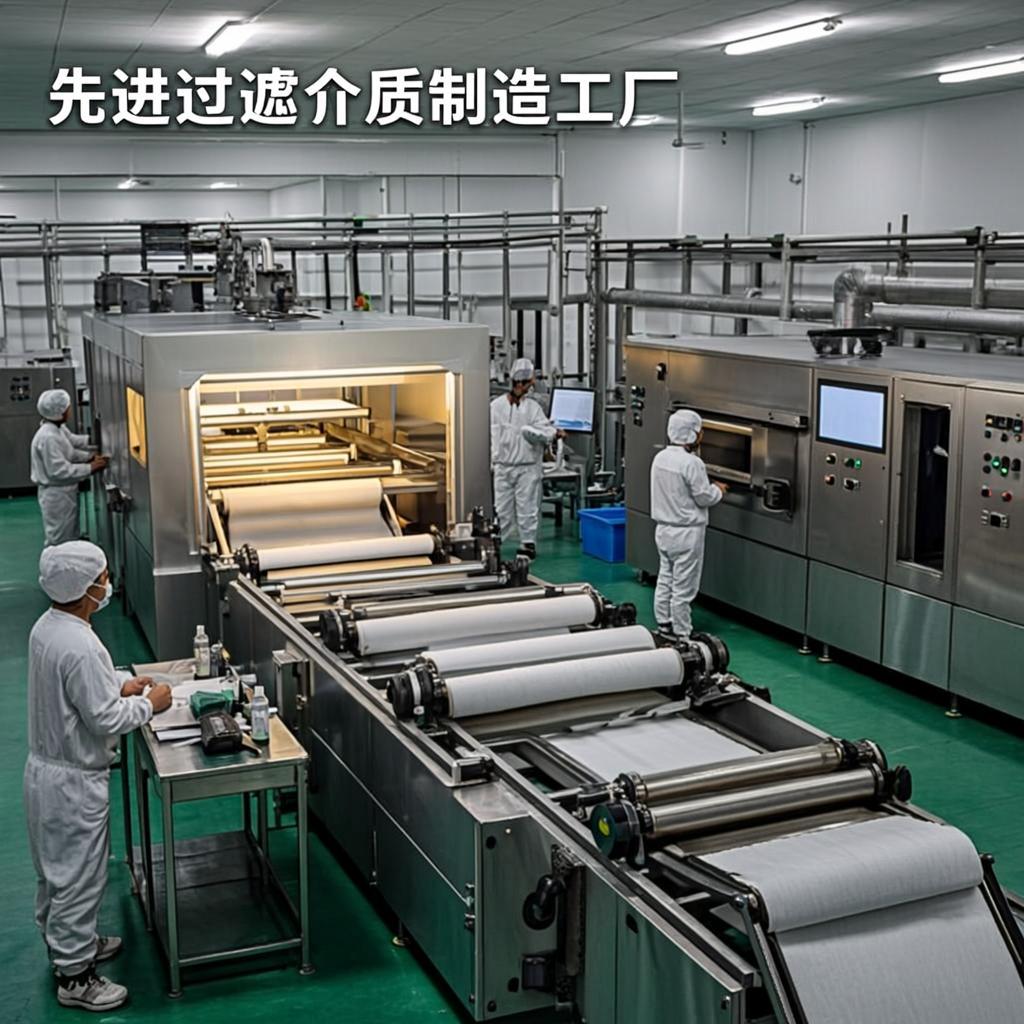
In demanding laboratory and industrial environments, the integrity of your filtration process is paramount. Our premium glass microfiber filter paper 47mm is engineered to deliver exceptional particle retention, high flow rates, and superior chemical resistance. Designed for critical applications in environmental monitoring, pharmaceuticals, food and beverage, and academic research, this filter media sets the standard for reliability and performance in quantitative and qualitative analysis.
Product Overview
Our 47mm glass microfiber filter paper is a non-binder, high-purity filtration medium manufactured from 100% borosilicate glass microfibers. The random fiber orientation creates a deep-bed, three-dimensional matrix that offers high loading capacity and consistent performance. The standard 47mm diameter is compatible with a vast range of filtration manifolds, vacuum filtration setups, and syringe filters, making it a versatile choice for any laboratory. This filter is particularly renowned for its ability to retain fine particles while maintaining a faster flow rate than equivalent cellulose filters, significantly improving workflow efficiency.
Key Features
- High Particle Retention: Efficiently captures sub-micron particles, making it ideal for gravimetric analysis, air pollution monitoring, and sterile filtration.
- Fast Flow Rate & High Dirt Capacity: The porous, deep-layer structure allows for rapid filtration and can hold a large amount of precipitate without clogging prematurely.
- Exceptional Chemical Compatibility: Resistant to most acids, alkalis, and organic solvents, ensuring stability in aggressive chemical environments.
- High-Temperature Resistance: Can withstand temperatures up to 500°C (932°F), making it perfect for ashing procedures in gravimetric analysis without compromising weight stability.
- Low Background Interference: Manufactured to have minimal levels of extractable ions and organics, which is critical for sensitive analytical techniques like HPLC, ICP-MS, and ion chromatography.
- Consistent Quality & Lot-to-Lot Uniformity: Every batch is rigorously tested to ensure consistent pore size distribution, thickness, and basis weight for reproducible results.
Technical Specifications
| Parameter | Specification | Notes / Standard |
|---|---|---|
| Material | 100% Borosilicate Glass Microfiber | No binders or additives |
| Diameter | 47 mm | ± 0.5 mm tolerance |
| Nominal Thickness | 0.40 mm | ASTM D5729 |
| Basis Weight | 70 g/m² | ISO 536 |
| Typical Air Flow Rate | 4.5 sec/100ml/in² | ASTM D737 |
| Max Operating Temperature | 500°C (932°F) | Continuous use |
| Ash Content | < 0.5% | Ignited at 900°C |
| pH (Aqueous Extract) | 6.5 - 7.5 | Neutral, low extractables |
| Standard Pore Size (Grade) | 1.0 µm | Other grades (0.3µm, 0.7µm, 2.0µm) available upon request |
Application Scenarios
The versatility of our glass microfiber filter paper 47mm makes it indispensable across numerous sectors:
- Environmental Analysis: Standard method testing for suspended solids (TSS), air particulate matter (PM2.5, PM10) on high-volume air samplers, and water quality assessment.
- Pharmaceutical & Biotechnology: Sterile filtration of buffers, media, and APIs; clarification of fermentation broths; and sample preparation for QC analysis.
- Food & Beverage Industry: Contaminant analysis, clarity testing of beverages, and fat content determination via solvent extraction.
- Academic & Industrial R&D: General laboratory filtration, sample preparation for microscopy, and catalyst recovery.
- Electronics & Precision Manufacturing: Analysis of process chemicals and ultrapure water for particulate contamination.
Advantages Over Alternative Filter Media
Choosing the right filter medium directly impacts data accuracy and operational cost. Our glass microfiber product offers distinct benefits:
- vs. Cellulose Filter Paper: Superior wet strength, faster flow rates, higher dirt loading capacity, and much higher temperature resistance for ashing.
- vs. Membrane Filters: Higher capacity for gelatinous or high-solid samples, lower cost per filtration for heavy loading applications, and a deep-bed structure that retains particles throughout the matrix.
- vs. Quartz Fiber Filters: While both offer high-temperature stability, our borosilicate glass microfiber filter paper typically provides a more consistent fiber structure and is more cost-effective for routine analytical procedures.
Why Choose Our 47mm Glass Microfiber Filter Paper?
We are more than just a supplier; we are a partner in your quality assurance. Our commitment to excellence ensures you receive a product that performs consistently, batch after batch.
- ISO-Compliant Manufacturing: Produced in a controlled environment adhering to strict ISO guidelines, ensuring purity and performance reliability.
- Rigorous QC Testing: Every production lot undergoes comprehensive testing for key parameters like flow rate, retention efficiency, and ash content. Certificates of Analysis are available.
- Global Supply Chain Expertise: We understand the needs of international trade, offering reliable logistics, flexible packaging (sheets, boxes, bulk), and comprehensive export documentation.
- Technical Support: Our team of filtration specialists is available to help you select the correct grade for your specific application, optimizing your process and results.
- Competitive Value: We provide industrial-grade performance at a competitive price point, offering excellent total cost of ownership through efficiency and reliability.
Frequently Asked Questions (FAQ)
Q1: What is the difference between the various pore size grades (e.g., 0.7µm vs. 1.0µm)?
A: The pore size rating indicates the nominal size of particles the filter is designed to retain with high efficiency. A 0.7µm grade offers finer retention for smaller particles, while a 1.0µm or 2.0µm grade provides faster flow rates and is suitable for larger particulates. The choice depends on your analytical method requirements and sample characteristics.
Q2: Is this filter paper suitable for ashing in a muffle furnace for gravimetric analysis?
A: Yes, this is one of its primary advantages. Our glass microfiber filter paper 47mm can withstand temperatures up to 500°C with minimal weight loss (<0.5% ash), making it ideal for ignition after sample collection to determine particulate mass.
Q3: How should I handle and store the filters?
A: Store in a cool, dry place in the original packaging. Handle with clean tweezers or powder-free gloves to avoid contamination from skin oils or particulates, which is critical for sensitive analytical applications.
Q4: Can I use this filter for sterile filtration?
A: While the 0.7µm grade can achieve bacterial retention, it is not sold as sterile. For critical sterile applications, it must be pre-sterilized (e.g., by autoclaving or dry heat) and used within a validated aseptic process. Always validate the process for your specific application.
Q5: Do you offer custom sizes or grades?
A: Absolutely. While the 47mm glass microfiber filter paper is our most popular standard size, we can produce custom diameters, thicknesses, and specialized grades (e.g., binder-free for extreme chemical resistance). Contact our sales team to discuss your custom requirements.
Upgrade your laboratory's filtration standard. For pricing, samples, or to discuss your specific application needs for our high-performance glass microfiber filter paper 47mm, contact our expert team today.