

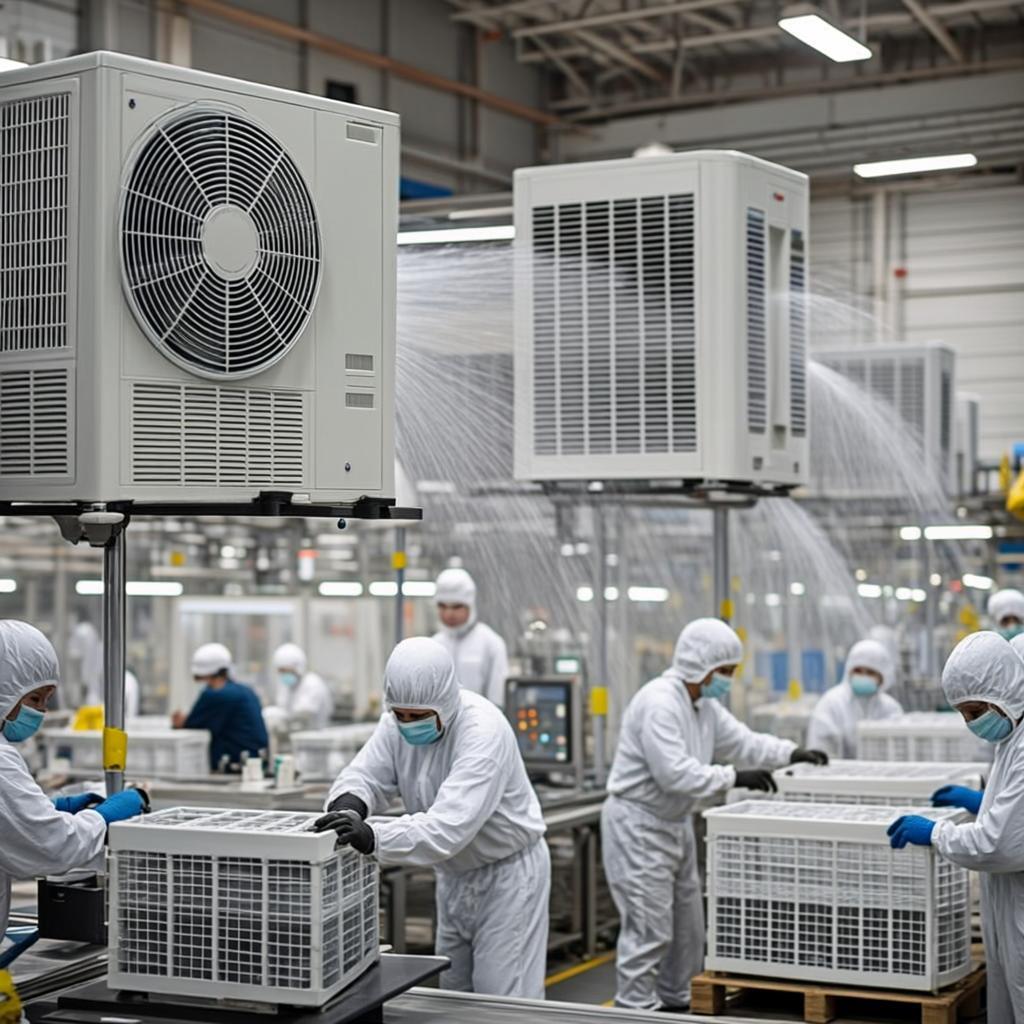
glass fiber bag filter media
Our glass fiber bag filter media is a premium filtration solution engineered for demanding industrial environments. Crafted from high-quality, continuous filament glass fibers, this media excels in
Glass Fiber Bag Filter Media
Product Overview
Our glass fiber bag filter media is a premium filtration solution engineered for demanding industrial environments. Crafted from high-quality, continuous filament glass fibers, this media excels in capturing fine particulates while enduring extreme temperatures and corrosive conditions. Ideal for pulse-jet baghouse systems, the glass fiber bag filter media offers exceptional mechanical strength and thermal stability, making it the go-to choice for high-temperature gas filtration applications.
Designed with precision weaving techniques, our glass fiber bag filter media ensures uniform airflow and superior dust cake release, minimizing pressure drop and extending service life. Whether you're managing emissions in power generation or protecting equipment in metallurgical processes, this filter media delivers reliable performance that meets stringent environmental regulations. Its inherent chemical resistance and dimensional stability under heat set it apart from synthetic alternatives, providing long-term value in continuous operation scenarios.
Available in various weights and constructions, our glass fiber bag filter media can be customized to fit specific baghouse configurations, ensuring seamless integration into your existing filtration setup. With a proven track record in global industrial applications, this media represents the pinnacle of reliability and efficiency in high-temperature filtration technology.
Key Features
- High-Temperature Resistance: Withstands continuous operation up to 260°C (500°F) and short-term peaks exceeding 300°C, perfect for hot gas environments.
- Superior Filtration Efficiency: Achieves 99.9% efficiency on submicron particles, ensuring compliance with PM2.5 and other fine dust standards.
- Excellent Chemical Resistance: Inert to acids, alkalis, and most industrial gases, preventing degradation in harsh atmospheres.
- Low Pressure Drop: Optimized pore structure maintains airflow while capturing contaminants effectively.
- Durable Construction: High tensile strength resists tearing and abrasion during pulse cleaning cycles.
- Customizable Options: Available with PTFE membrane laminates for enhanced performance in moisture-laden gases.
- Easy Installation: Compatible with standard baghouse cages, facilitating quick retrofits.
Technical Specifications
| Property | Value/Range | Description |
|---|---|---|
| Material | Continuous filament glass fiber | High-purity E-glass or C-glass fibers for optimal strength and stability. |
| Weight | 450 - 850 g/m² | Standard options: 500, 650, 750 g/m²; customizable. |
| Air Permeability | 120 - 300 L/m²/s @ 200 Pa | Measured per ISO 9237; ensures balanced filtration and cleaning. |
| Filtration Efficiency | ≥99.5% @ 0.3 μm | DOP test method; membrane-coated versions up to 99.99%. |
| Maximum Operating Temperature | 260°C continuous / 300°C peak | Resistant to thermal shock; no embrittlement. |
| Tensile Strength (Warp/Fill) | ≥1200 N/5cm / ≥1000 N/5cm | ASTM D5035; superior to needlefelt alternatives. |
| Thickness | 0.8 - 1.8 mm | Uniform caliper for consistent performance. |
| Moisture Absorption | <5% @ 65% RH | Hydrophobic treatment available for humid conditions. |
| Width | Up to 2.5 m | Seamless or sewn tubes for bag production. |
| Standard Treatments | PTFE dip, singeing, anti-static | Enhances cleanability and safety. |
Note: Specifications are subject to customization based on application requirements. All data based on factory testing under controlled conditions.
Application Scenarios
The versatility of glass fiber bag filter media makes it indispensable across a wide array of industrial sectors where high-temperature and fine particulate filtration are critical. In coal-fired power plants, it effectively captures fly ash and unburned carbon, reducing stack emissions and protecting downstream equipment like induced draft fans. Cement manufacturers rely on this media for kiln raw gas filtration, handling alkaline dusts and temperatures exceeding 200°C without compromising efficiency.
In the steel industry, glass fiber bag filter media excels in blast furnace gas cleaning, separating sinter dust and metallurgical fumes while resisting abrasion from heavy particulates. Chemical processing plants use it for catalyst recovery and acid gas scrubbing, benefiting from its chemical inertness. Additionally, waste incineration facilities deploy this media to meet dioxin and heavy metal emission limits, ensuring compliance with EU IED and U.S. EPA standards.
Other key applications include asphalt mixing plants for bitumen fume control, biomass boilers for ash management, and aluminum smelters for fluoride-laden exhaust. Its robustness in pulse-jet systems supports high-volume airflow, making it suitable for large-scale baghouses processing thousands of cubic meters per minute.
Advantages
Choosing our glass fiber bag filter media provides distinct advantages over conventional filter materials. Unlike polyester or aramid felts, which degrade above 200°C, glass fiber maintains structural integrity in prolonged high-heat exposure, reducing downtime and replacement frequency. The media's woven structure promotes superior dust release during cleaning, achieving up to 50% lower residual dust compared to needlefelts, which translates to extended bag life—often exceeding 24 months in optimized systems.
Energy efficiency is another hallmark, with minimal pressure drop evolution over time, lowering fan power consumption by 10-20%. Its non-flammable nature enhances safety in explosive dust environments, complying with ATEX directives. Environmentally, the media supports ultra-low emission levels, aiding in sustainable operations. Cost-wise, the initial investment is offset by reduced maintenance and higher throughput, delivering a ROI within the first year for most installations.
Furthermore, optional PTFE lamination creates a hybrid solution that repels moisture and oils, preventing blinding in condensing gases—a common failure mode for untreated glass fiber. This comprehensive performance profile positions our glass fiber bag filter media as a strategic upgrade for any high-temperature filtration challenge.
Why Choose Us
As a leading manufacturer of industrial filtration solutions, we bring decades of expertise in producing top-tier glass fiber bag filter media. Our state-of-the-art production facilities employ advanced weaving and finishing technologies, ensuring consistency batch after batch. We hold ISO 9001, ISO 14001, and IAF certifications, guaranteeing quality and environmental responsibility.
What sets us apart is our commitment to customization: from tailored grammages to specialized coatings, we engineer solutions that match your exact process parameters. Our global supply chain ensures reliable delivery, with rigorous testing at independent labs like TUV and SGS. Backed by a team of filtration engineers, we offer technical consultations to optimize your baghouse performance, maximizing uptime and minimizing total cost of ownership.
FAQ
Q: What is the typical service life of glass fiber bag filter media?
A: Under standard conditions, expect 18-36 months, depending on dust load, temperature, and cleaning intensity. Proper pulse settings can extend this further.
Q: Can this media handle acidic or alkaline gases?
A: Yes, glass fiber bag filter media is highly resistant to pH extremes from 2-12, outperforming synthetics in corrosive environments.
Q: Is a membrane coating necessary?
A: For dry, hot gases, standard glass fiber suffices. Membrane versions are recommended for fine or sticky dusts to prevent penetration.
Q: How does it compare to PTFE felt?
A: Glass fiber offers better abrasion resistance and lower cost at high temperatures, while PTFE excels in chemical aggression. Hybrids combine both.
Q: What sizes are available for bag production?
A: Tubes from 100-300 mm diameter, lengths up to 10 m. We support OEM sewing with caps and restrictions.
Q: Does it meet international emission standards?
A: Absolutely—designed for compliance with EPA MACT, EU Best Available Techniques (BAT), and China GB standards for particulate matter.
Q: Can it be used in reverse-air systems?
A: Primarily for pulse-jet, but reinforced versions suit shaker and reverse-air collectors with adjusted specifications.
Related product
- English
- Françai
- Español
- Deutsch
- Română
- العربية
- 한국어
- 日本語
- Italiano
- Português
- Gaeilge
- Dansk
- Čeština
- Русский
- Afrikaans
- Euskara
- Català
- Esperanto
- हिन्दी
- Ελληνικά
- Bahasa Melayu
- Polski
- Српски
- Kiswahili
- ภาษาไทย
- Tiếng Việt
- Türkçe
- Svenska
- Cymraeg
- Slovenčina
- Latviešu
- Malti
- Magyar
- Galego
- ગુજરાતી
- Eesti Keel
- বাংলা
- Shqip
- беларуская мова
- Nederlands
- Tagalog
- ქართული
- Íslenska
- Kreyòl Ayisyen
- Lietuvių
- Norsk
- slovenščina
- தமிழ்
- Українська
- ײִדיש
- اردو
- తెలుగు
- فارسی
- македонски
- ಕನ್ನಡ
- Bahasa Indonesia
- עברית
- Suomi
- Hrvatski
- Български
- Azerbaijani