

High-Efficiency Activated Carbon Water Filters for Industrial & Municipal Treatment
In modern water purification systems, the function of activated carbon filter in water treatment is indispensable for achieving superior water quality. Our industrial-grade activated carbon filters are engineered to deliver exceptional adsorption performance, removing a wide spectrum of contaminants including chlorine, chloramines, volatile organic compounds (VOCs), pesticides, and unpleasant tastes and odors. Designed for reliability and scalability, these systems are the cornerstone of effective tertiary treatment for industries and municipalities worldwide.
Product Overview
Our activated carbon filtration systems utilize high-quality, reactivated granular activated carbon (GAC) or extruded carbon blocks housed in durable, corrosion-resistant vessels. The core function of activated carbon filter in water treatment is to leverage its vast, porous surface area to adsorb dissolved organic contaminants through physical and chemical processes. These skid-mounted or custom-configured systems are built for continuous, high-flow operation with minimal pressure drop, ensuring consistent water quality while protecting downstream processes like reverse osmosis membranes and ion exchange resins from fouling.
Key Features
- Premium Adsorption Media: Loaded with high-iodine-value activated carbon for maximum contaminant removal capacity and extended service life.
- Robust Vessel Construction: Vessels are manufactured from FRP (Fiber Reinforced Plastic), lined carbon steel, or stainless steel to suit various feed water chemistries and pressure requirements.
- Optimized Flow Distribution: Patented underdrain and upper distribution systems ensure even flow across the entire carbon bed, preventing channeling and maximizing media utilization.
- Automated Control Systems: Optional PLC-based controls manage backwash cycles, monitor pressure differential, and provide alerts for media replacement, enabling unattended operation.
- Scalable Design: Modular configurations allow for single-unit use or multiple units in series/parallel to meet any flow rate requirement, from 10 GPM to over 1000 GPM.
Technical Specifications
| Parameter | Specification |
|---|---|
| Media Type | Bituminous Coal-Based GAC, Coconut Shell GAC, Catalytic Carbon |
| Vessel Diameter | 12" to 120" (Standard Sizes Available) |
| Operating Pressure | Up to 150 PSI (10 bar) |
| Operating Temperature | 40°F - 120°F (5°C - 50°C) |
| Flow Rate Range | 5 - 100 GPM per sq.ft. (Depending on application) |
| Connection Sizes | 1" to 10" Flanged, NPT, or Socket Weld |
| Control System | Manual Valving or Fully Automated PLC with Touchscreen HMI |
Application Scenarios
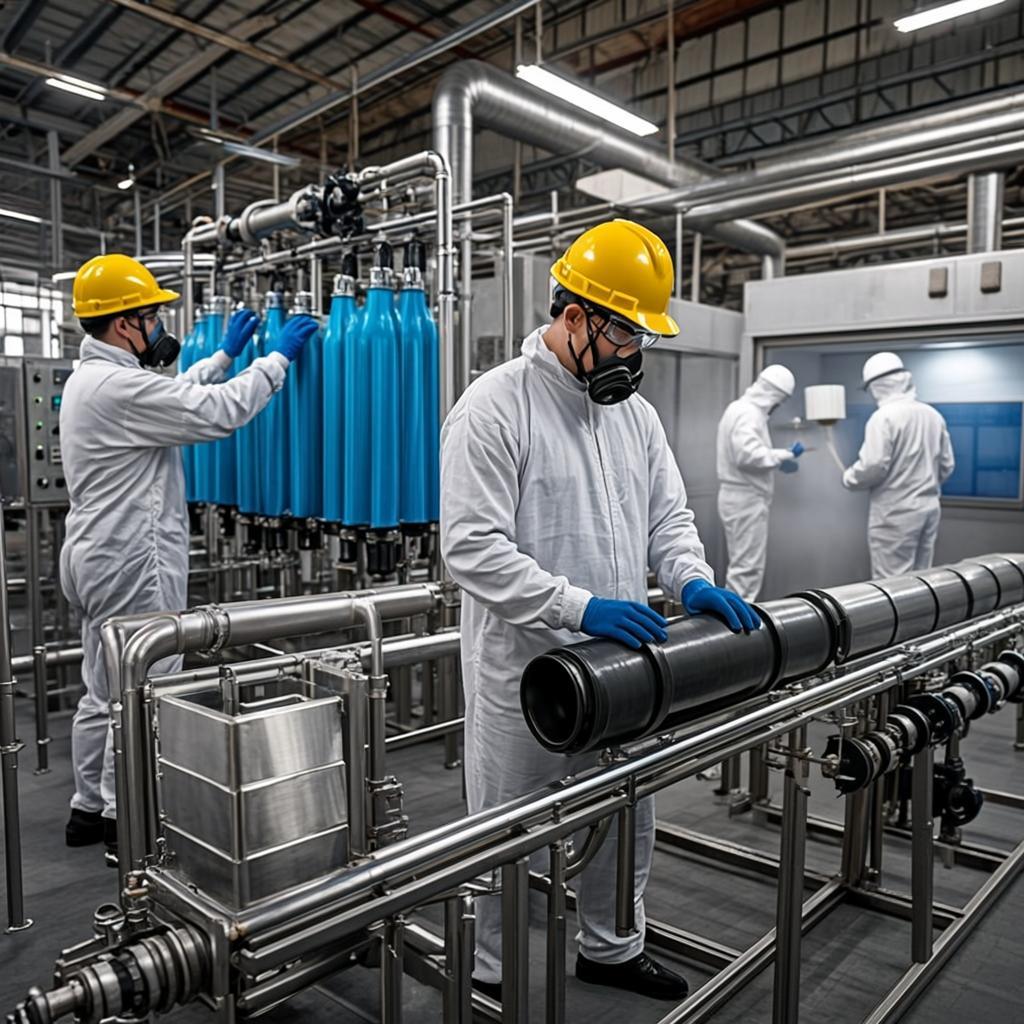
The versatility of our filters allows them to fulfill the critical function of activated carbon filter in water treatment across diverse sectors:
- Municipal Drinking Water: Final polishing step for dechlorination and removal of synthetic organic compounds (SOCs) to meet stringent potable water standards.
- Food & Beverage Production: Elimination of chlorine, off-tastes, and odors to ensure product quality and consistency in ingredient water.
- Pharmaceutical & Microelectronics: Provision of ultra-pure pre-treatment water for USP Purified Water or as pretreatment for DI and RO systems.
- Wastewater Reuse: Tertiary treatment in advanced water reclamation facilities to remove trace organics and color.
- Industrial Process Water: Protection of sensitive downstream equipment (e.g., RO membranes, resin beds) from oxidants and organic fouling.
Advantages
Choosing our activated carbon filtration solution provides tangible operational and economic benefits:
- Enhanced Process Protection: By effectively removing chlorine and organics, our filters significantly extend the lifespan and reduce maintenance costs of expensive downstream equipment.
- Superior Water Quality: Achieve consistent, high-purity water output that meets or exceeds industry-specific quality benchmarks.
- Cost-Effective Operation: High-density carbon loading and efficient vessel design lead to longer contact times and media life, reducing replacement frequency and total cost of ownership.
- Low Maintenance Design: Easy-access manways, standardized components, and automated controls simplify routine servicing and media change-outs.
- Environmental Compliance: Aids in meeting regulatory requirements for effluent discharge and product water by effectively adsorbing regulated contaminants.
Why Choose Us
As a specialist in industrial water treatment solutions, we offer more than just equipment. We provide a partnership based on deep technical expertise. Our engineers will work with you to analyze your water chemistry and process requirements, ensuring the system design perfectly fulfills the intended function of activated carbon filter in water treatment for your specific application. We support you with comprehensive documentation, on-site commissioning, and readily available spare parts and media refill services, guaranteeing system performance and uptime for years to come.
FAQ
What is the primary function of activated carbon filter in water treatment?
The primary function is adsorption. Activated carbon's incredibly porous structure provides a massive surface area that attracts and traps (adsorbs) dissolved organic contaminants, chlorine, and compounds causing taste and odor, thereby purifying the water.
How often does the activated carbon media need to be replaced?
Replacement frequency depends on the contaminant load and water volume processed. It can range from 6 months to 3+ years. We recommend monitoring effluent quality and pressure drop; our systems include indicators to signal when exhaustion is approaching.
Can your filters handle chloramine removal?
Yes. Standard GAC can remove chloramine, but it requires longer contact time. For efficient chloramine removal, we recommend specifying our systems with catalytic carbon media, which is specifically designed to catalyze the breakdown of chloramines.
Do you provide custom-designed systems?
Absolutely. While we offer a range of standard models, most industrial applications benefit from a customized design. We tailor vessel size, media type, metallurgy, and controls to optimize performance for your exact flow rate, water analysis, and space constraints.
What pretreatment is required before an activated carbon filter?
To prevent premature fouling of the carbon bed, we typically recommend particulate filtration (e.g., multi-media or cartridge filters) upstream to remove suspended solids greater than 5-10 microns.