


High-Performance Composite Filter Material for Demanding Industrial Applications
As a leading composite filter material factory, we specialize in engineering and manufacturing advanced filtration solutions that set new standards for efficiency, durability, and reliability. Our composite filter materials are the result of sophisticated material science, designed to meet the rigorous demands of modern industrial processes. We provide OEM and ODM services to global partners, delivering bespoke filtration media that enhances system performance and reduces total operational costs.
1. Product Overview
Our composite filter material represents the pinnacle of filtration media technology. It is not a simple layered product but a precisely engineered synergy of multiple materials—such as meltblown polypropylene, spunbond polyester, glass fiber, activated carbon, or PTFE membranes—bonded to create a single, superior medium. This intelligent construction allows each layer to target specific contaminants, resulting in a filter that offers exceptional depth loading capacity, high dirt-holding capability, and consistent performance across a wide range of particulate sizes, from coarse dust to sub-micron aerosols and moisture. Engineered in our state-of-the-art composite filter material factory, this product is the cornerstone of efficient and sustainable industrial operations.
2. Key Features
- Multi-Layer Composite Structure: Each layer is optimized for a specific function (pre-filtration, primary filtration, final barrier, support), creating a unified media with graded density for maximum efficiency and service life.
- Enhanced Filtration Efficiency: Achieves high-efficiency ratings (up to H13/HEPA/ULPA standards) for particulate matter while maintaining optimal airflow and low initial pressure drop.
- Superior Strength & Durability: Reinforced with robust support layers to prevent media migration, withstand high differential pressures, and resist moisture and chemical degradation in harsh environments.
- Customizable Design: As a flexible composite filter material factory, we tailor the material composition, weight, thickness, and finish (e.g., calendared, coated) to meet exact OEM specifications and application requirements.
- Broad Chemical Compatibility: Formulated with materials resistant to a wide pH range and various industrial chemicals, ensuring stable performance in aggressive atmospheres.
3. Technical Specifications
| Parameter | Specification Range / Standard | Notes |
|---|---|---|
| Base Materials | PP, PET, Glass Fiber, PTFE, Activated Carbon, Non-woven Composites | Custom blends available |
| Filtration Efficiency | MERV 8-16 | ISO 35%-99.995% (MPPS) | Tested per ISO 16890, EN1822, ASHRAE 52.2 |
| Grammage (Basis Weight) | 80 - 500 g/m² | Varies with composite design |
| Thickness | 0.5 mm - 5.0 mm | Can be calibrated for precision |
| Air Permeability | Customized to achieve target pressure drop | Optimized for energy efficiency |
| Max. Operating Temperature | Up to 150°C (depending on material) | Consult for specific high-temp needs |
| Standard Width | Up to 3.2 meters | Minimizes seams in final filter construction |
| Fire Rating | UL 900 Class 1 / Class 2, Euroclass B-s1,d0 | Available upon request |
Note: All specifications are typical ranges. Exact parameters are defined during the customization process with our engineering team.
4. Application Scenarios
Our composite filter material is engineered for critical filtration roles across diverse industries:
- HVAC & Building Air Quality: High-efficiency bag filters, panel filters, and HEPA filters for commercial buildings, hospitals, and cleanrooms.
- Industrial Manufacturing: Intake air filtration for gas turbines, process air for food & beverage, and dust collection in woodworking or metal processing.
- Automotive & Transportation: Cabin air filters, engine intake filters, and fuel filtration systems.
- Pharmaceutical & Biotechnology: Terminal HEPA/ULPA filters for aseptic filling lines, R&D labs, and isolation barriers.
- Energy & Environment: Filtration in power generation (gas, nuclear), and as a key component in industrial air pollution control systems.
5. Advantages
Partnering with a dedicated composite filter material factory like ours delivers distinct competitive advantages to your filtration products:
- Extended Filter Life: The graded-density structure maximizes dust holding capacity, reducing change-out frequency and lowering maintenance costs.
- Energy Savings: Optimized balance between efficiency and low air resistance minimizes system fan energy consumption over the filter's lifespan.
- Consistent Quality: In-house control of the entire manufacturing process—from raw material selection to final slitting—ensures batch-to-batch consistency and reliable performance.
- Technical Collaboration: We work as an extension of your R&D team to develop material solutions for novel applications or performance challenges.
- Supply Chain Reliability: Robust production capacity and stringent quality management systems guarantee on-time delivery of materials that meet your exact specifications.
6. Why Choose Our Composite Filter Material Factory
Selecting the right manufacturing partner is crucial. Here’s what sets our composite filter material factory apart:
- Deep Expertise: Decades of focused experience in non-woven and composite media technology, translating into superior product design advice.
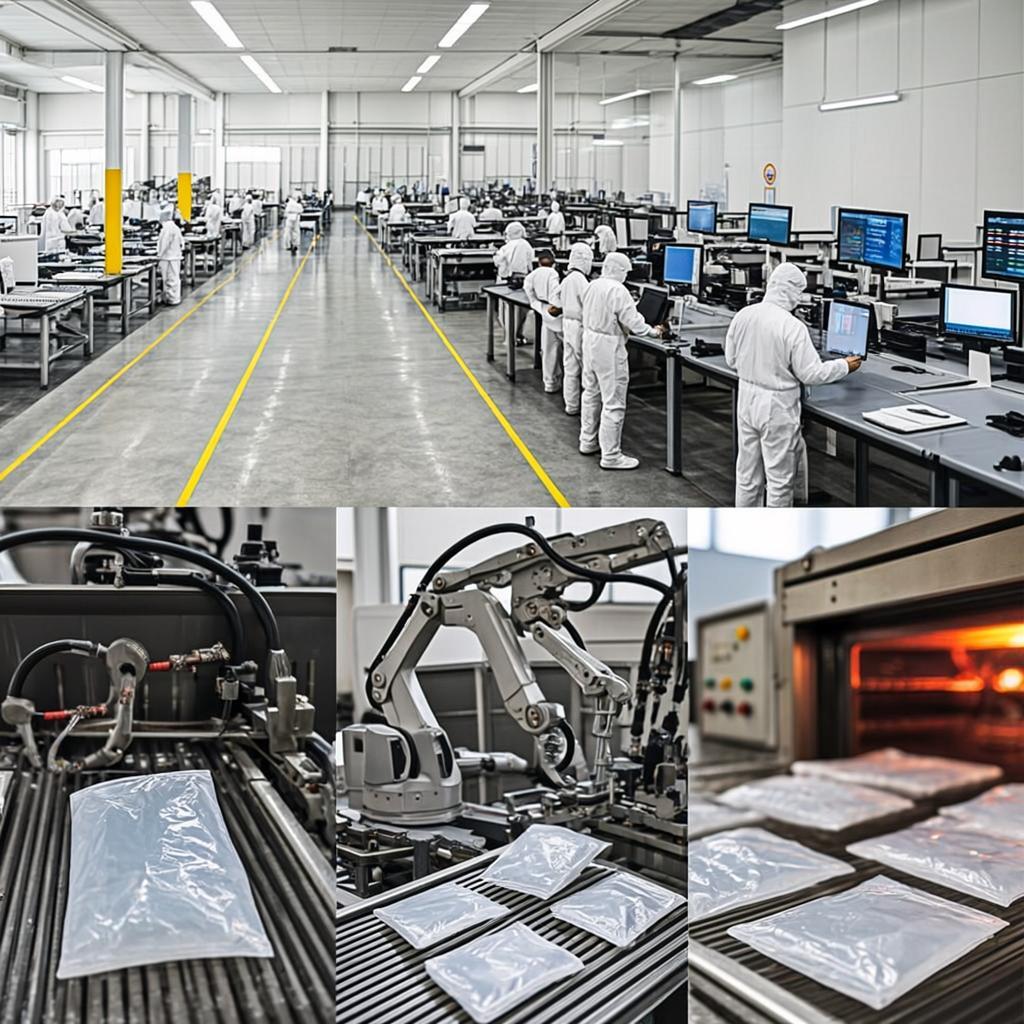
- Full-Scale Manufacturing: We operate complete, modern production lines for meltblown, spunbond, coating, and lamination under one roof, ensuring quality control and fast prototyping.
- R&D Driven: A dedicated laboratory for testing filtration efficiency, air permeability, tensile strength, and other critical parameters supports continuous innovation.
- Global Compliance: Our materials are developed to meet international standards (ISO, EN, ASHRAE, UL) and can be certified accordingly to support your market entry.
- Customer-Centric Service: From initial consultation and sample development to bulk production and logistics support, we are committed to being a reliable, long-term partner for your business growth.
7. FAQ
Q: Can you develop a composite material for a specific efficiency target and pressure drop?
A: Absolutely. This is our core competency. By adjusting the type, sequence, and density of the composite layers, our engineers can precisely tailor the media to meet your exact performance curve (e.g., "MERV 14 with an initial pressure drop below 30 Pa"). We begin with a detailed application review and provide lab samples for your validation.
Q: What is the typical lead time for a custom development project and for production orders?
A: For a new custom development, the prototyping phase typically takes 2-4 weeks after finalizing specifications. For established production orders, lead times range from 4-6 weeks depending on order volume and complexity. As a vertically integrated composite filter material factory, we maintain efficient scheduling to meet urgent demands.
Q: Do you offer flame-retardant or hydrophobic treatments?
A: Yes. We can incorporate flame-retardant additives into the polymer or apply topical treatments to achieve required fire safety ratings (e.g., UL 900). Similarly, hydrophobic or oleophobic coatings can be applied to repel water or oil aerosols, which is critical for certain industrial and HVAC applications.
Q: What is your minimum order quantity (MOQ) for custom materials?
A: Our MOQ is flexible and designed to support both development projects and large-scale production. We work with clients to establish a feasible MOQ based on the material's complexity. We encourage you to discuss your project with our sales engineers for a specific quotation.
Q: How do you ensure quality control throughout production?
A: Quality is embedded in our process. We perform raw material inspection, in-line monitoring of basis weight and uniformity, and final batch testing in our lab. Key parameters like efficiency, permeability, and strength are verified against your specifications. Comprehensive QC certificates can be provided with each shipment.