

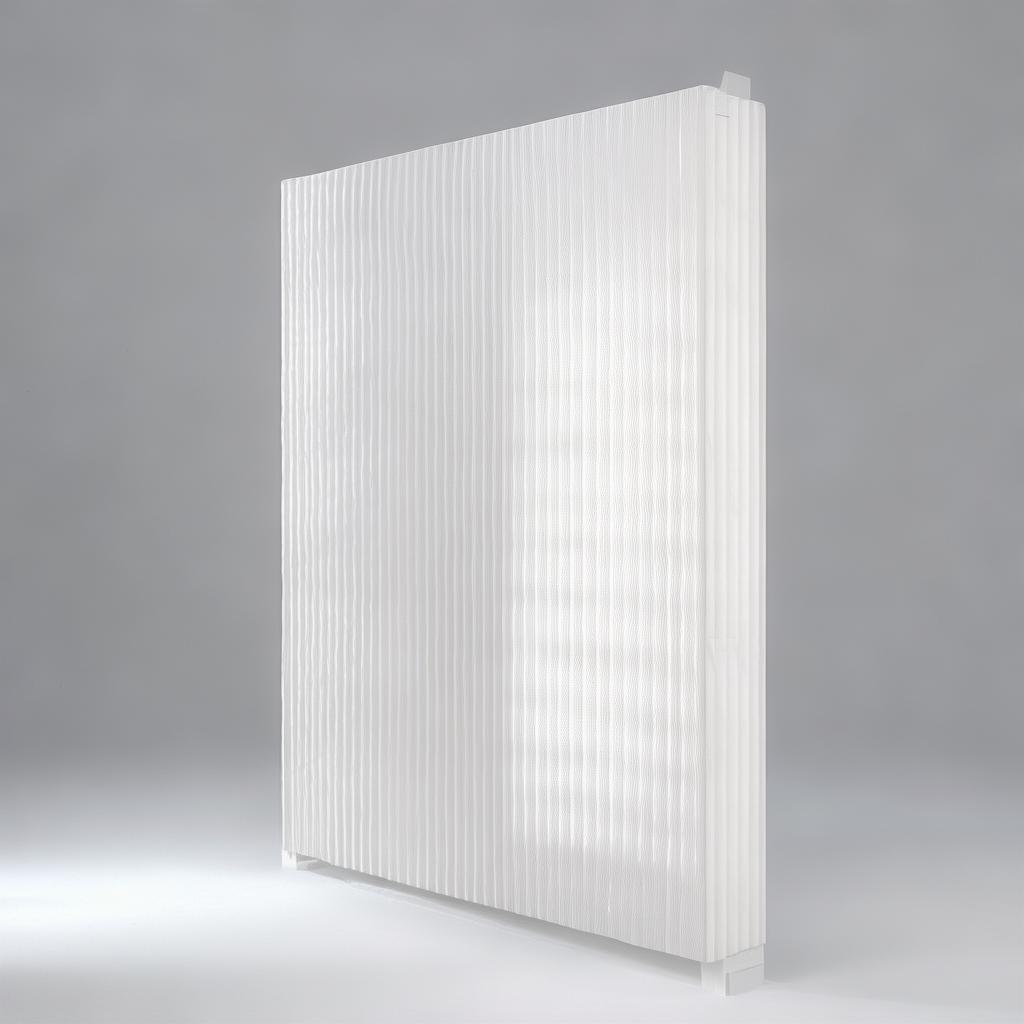
composite bag filter media
Our composite bag filter media represents the pinnacle of advanced filtration technology, designed specifically for high-performance dust collection in industrial applications. This innovative media
Composite Bag Filter Media
1. Product Overview
Our composite bag filter media represents the pinnacle of advanced filtration technology, designed specifically for high-performance dust collection in industrial applications. This innovative media combines multiple layers of high-quality synthetic fibers, including polyester, polypropylene, and PTFE, with a robust substrate to deliver exceptional filtration efficiency, durability, and longevity. Engineered for pulse-jet baghouses and other demanding filtration systems, the composite bag filter media effectively captures fine particulates down to 0.1 microns while maintaining low differential pressure, ensuring optimal airflow and energy efficiency.
In the competitive landscape of industrial air pollution control, our composite bag filter media stands out by addressing common challenges such as high dust loads, abrasive particles, and elevated temperatures. Whether used in cement production, power generation, or metallurgical processes, this media provides reliable performance that minimizes downtime and complies with stringent environmental regulations like EPA standards and EU ATEX directives. With customizable options for grammage, thickness, and surface treatments, our composite bag filter media adapts seamlessly to diverse operational needs, offering a cost-effective solution for long-term filtration excellence.
2. Key Features
- Multi-Layer Composite Design: Integrates a filtration layer, support scrim, and protective membrane for superior particle capture and structural integrity in composite bag filter media.
- High Filtration Efficiency: Achieves up to 99.99% efficiency on PM2.5 and submicron particles, ideal for fine dust environments.
- Low Pressure Drop: Optimized airflow resistance ensures energy savings and reduced fan power consumption.
- Exceptional Dust Holding Capacity: Holds up to 5-7 times its weight in dust, extending service intervals and lowering maintenance costs.
- Temperature Resistance: Rated for continuous operation up to 200°C, with options for high-temp variants exceeding 260°C.
- Chemical and Abrasion Resistance: Enhanced durability against corrosive gases, moisture, and abrasive materials common in industrial settings.
- Anti-Static and Flame Retardant Options: Available for explosive dust environments, meeting global safety standards.
- Customizable Finishing: Singeing, calendering, and PTFE membrane coating for tailored performance in composite bag filter media.
3. Technical Specifications
| Property | Standard Grade | High-Efficiency Grade | High-Temp Grade | Test Method |
|---|---|---|---|---|
| Material Composition | Polyester/Polyester Scrim | PTFE Membrane/Polyester | PTFE/Glassfiber Scrim | - |
| Grammage (g/m²) | 550 ± 5% | 650 ± 5% | 750 ± 5% | GB/T 24218.1 |
| Thickness (mm) | 2.0 ± 0.2 | 2.2 ± 0.2 | 2.5 ± 0.2 | GB/T 24218.2 |
| Air Permeability (L/m²·s) | 120-150 | 100-130 | 80-110 | GB/T 5453 |
| Filtration Efficiency (%) | 99.5 @ 0.5μm | 99.99 @ 0.1μm | 99.9 @ 0.3μm | GB/T 6165 |
| Differential Pressure (Pa) | 120 (initial) / 1500 (final) | 150 (initial) / 1800 (final) | 180 (initial) / 2000 (final) | GB/T 6719 |
| Maximum Operating Temp (°C) | 150 continuous / 170 peak | 190 continuous / 210 peak | 260 continuous / 280 peak | - |
| Dust Holding Capacity (g/m²) | 450-550 | 500-600 | 550-650 | GB/T 16852 |
| Tensile Strength (N/5cm) | Warp: ≥1000 / Weft: ≥1200 | Warp: ≥1100 / Weft: ≥1300 | Warp: ≥1200 / Weft: ≥1400 | GB/T 3923.1 |
| Elongation at Break (%) | Warp: ≤30 / Weft: ≤40 | Warp: ≤25 / Weft: ≤35 | Warp: ≤20 / Weft: ≤30 | GB/T 3923.1 |
Note: Specifications are subject to customization based on specific application requirements for composite bag filter media. All data derived from standardized testing under controlled conditions.
4. Application Scenarios
The versatility of our composite bag filter media makes it indispensable across a wide array of industrial sectors where reliable air filtration is critical. In coal-fired power plants, it excels at capturing fly ash and soot, reducing emissions and protecting downstream equipment. Cement manufacturers rely on it for kiln raw meal and clinker dust, handling high-temperature and abrasive conditions with ease.
Steel mills and ferroalloy production utilize composite bag filter media to filter sinter dust, blast furnace gas, and electric arc furnace emissions, ensuring compliance with particulate matter limits. In chemical processing, it manages fine catalyst dust and corrosive vapors, while waste incineration plants benefit from its flame-retardant properties for dioxin and heavy metal capture. Additional scenarios include asphalt mixing, wood processing, mining operations, and pharmaceutical air handling, where the media's high efficiency and low emissions support sustainable operations.
For baghouse systems in reverse-air, shaker, and pulse-jet configurations, our composite bag filter media integrates seamlessly, providing consistent performance even under variable load conditions.
5. Advantages
Choosing our composite bag filter media delivers tangible benefits that surpass traditional single-layer felts. The multi-layer architecture significantly enhances dust cake release during cleaning cycles, reducing residual dust and extending filter life by 2-3 times compared to standard media. This results in fewer bag replacements and lower operational costs over the equipment lifecycle.
With a low initial pressure drop and gradual increase under load, energy consumption is minimized, potentially saving up to 20% on blower power. The media's robust tensile strength and abrasion resistance withstand harsh environments, minimizing tears and pinholes that plague inferior products. Environmentally, its superior efficiency aids in meeting PM10 and PM2.5 standards, supporting green initiatives without compromising productivity.
Furthermore, optional treatments like acrylic coating for moisture resistance or conductive fibers for anti-static performance address niche challenges, making our composite bag filter media a future-proof investment for evolving regulatory landscapes.
6. Why Choose Us
As a leading manufacturer of composite bag filter media, we bring decades of expertise in nonwoven filtration technologies, backed by state-of-the-art production facilities adhering to ISO 9001 and ISO 14001 standards. Our R&D team continuously innovates to meet client-specific demands, offering full customization from fiber blends to finishing processes.
We prioritize quality through rigorous in-house testing and third-party certifications, ensuring every roll of composite bag filter media meets or exceeds international benchmarks. Global supply chain efficiency enables prompt delivery worldwide, with flexible MOQs for both OEM and bulk orders. Our commitment to sustainability is evident in eco-friendly production and recyclable materials, partnering with clients to achieve their ESG goals.
Trusted by Fortune 500 companies in power, cement, and metals industries, we provide not just a product, but a comprehensive filtration solution that drives reliability and profitability.
7. FAQ
Q: What makes composite bag filter media superior to single-layer media?
A: The multi-layer structure of composite bag filter media offers higher efficiency, better dust release, and longer life due to integrated support and membrane layers.
Q: Can this media handle high-temperature applications?
A: Yes, high-temp grades support up to 260°C continuous operation, ideal for kilns and incinerators.
Q: Is customization available for composite bag filter media?
A: Absolutely, we tailor grammage, treatments, and dimensions to your baghouse specifications.
Q: How does it perform in humid or corrosive environments?
A: Options like PTFE membranes and chemical coatings provide excellent resistance to moisture and acids.
Q: What is the typical service life of your composite bag filter media?
A: 2-4 years in standard conditions, depending on dust load and cleaning method, far exceeding basic felts.
Q: Are anti-static versions available?
A: Yes, with conductive fibers for ATEX-compliant explosive dust applications.
Q: How is the media tested for quality?
A: Using GB/T standards for efficiency, permeability, and strength, with full traceability.
Related product
- English
- Françai
- Español
- Deutsch
- Română
- العربية
- 한국어
- 日本語
- Italiano
- Português
- Gaeilge
- Dansk
- Čeština
- Русский
- Afrikaans
- Euskara
- Català
- Esperanto
- हिन्दी
- Ελληνικά
- Bahasa Melayu
- Polski
- Српски
- Kiswahili
- ภาษาไทย
- Tiếng Việt
- Türkçe
- Svenska
- Cymraeg
- Slovenčina
- Latviešu
- Malti
- Magyar
- Galego
- ગુજરાતી
- Eesti Keel
- বাংলা
- Shqip
- беларуская мова
- Nederlands
- Tagalog
- ქართული
- Íslenska
- Kreyòl Ayisyen
- Lietuvių
- Norsk
- slovenščina
- தமிழ்
- Українська
- ײִדיש
- اردو
- తెలుగు
- فارسی
- македонски
- ಕನ್ನಡ
- Bahasa Indonesia
- עברית
- Suomi
- Hrvatski
- Български
- Azerbaijani