

High-Efficiency Charcoal Media Filter for Industrial Air & Water Purification
In today's industrial landscape, maintaining purity in air and water systems is not just a regulatory requirement but a cornerstone of operational excellence and environmental stewardship. Our premium charcoal media filter is engineered to meet the rigorous demands of modern industry. Utilizing high-grade activated carbon, this filter excels at adsorbing a vast spectrum of contaminants, including volatile organic compounds (VOCs), chlorine, odors, and organic impurities, delivering reliable and cost-effective purification for a multitude of applications.
Product Overview
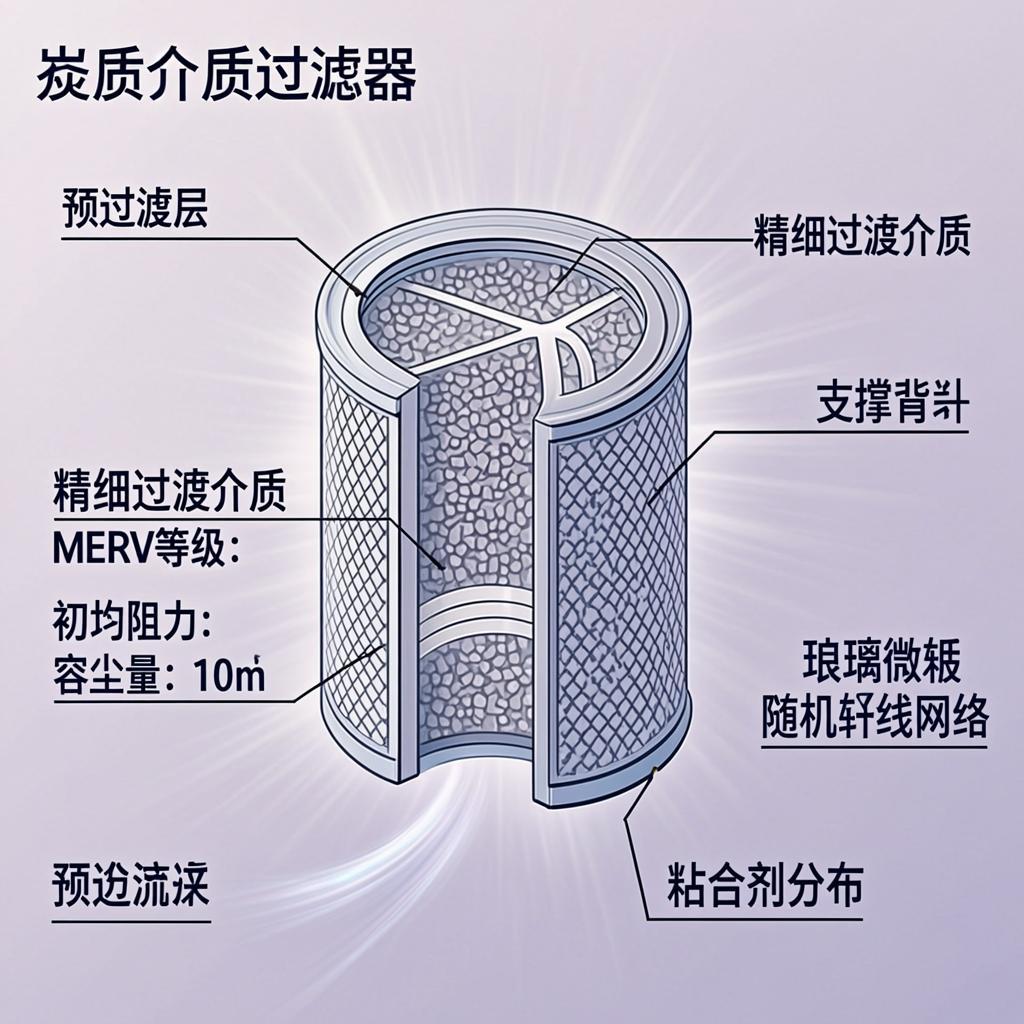
Our industrial-grade charcoal media filter is a versatile adsorption solution designed for integration into existing air handling units (AHUs), ventilation systems, and water treatment lines. The core of the filter consists of precisely graded activated carbon, selected for its optimal pore structure and high surface area, which maximizes contaminant capture. Housed in a durable, corrosion-resistant casing, this filter is built for longevity and consistent performance under continuous operation, making it an indispensable component for facilities prioritizing air quality and water purity.
Key Features
- Superior Adsorption Capacity: Manufactured from select raw materials (coconut shell or coal-based), our activated carbon media offers an exceptionally high surface area, ensuring maximum adsorption of gases, chemicals, and odors.
- Robust Construction: Features a heavy-duty galvanized steel or stainless-steel housing with reinforced mesh supports to prevent media channeling and ensure even airflow/water distribution.
- Customizable Configurations: Available in various vessel sizes, carbon bed depths, and mesh sizes to match specific flow rates, contact times, and contaminant removal targets.
- Easy Maintenance & Refill: Designed with serviceability in mind. Spent carbon media can be easily replaced via standard access ports, minimizing system downtime.
- Broad-Spectrum Removal: Effectively reduces chlorine, VOCs, sulfur compounds, unpleasant odors, and a wide range of organic contaminants from both air and water streams.
Technical Specifications
| Parameter | Specification |
|---|---|
| Filter Media Type | High-Grade Activated Carbon (Coconut Shell / Coal-Based) |
| Iodine Number | 900 - 1100 mg/g (indicative of adsorption capacity) |
| Standard Mesh Sizes | 4x8, 6x12, 8x16, 12x40 (Custom sizes available) |
| Housing Material | Galvanized Steel, 304 or 316 Stainless Steel |
| Operating Temperature | Up to 60°C (140°F) |
| Max Operating Pressure (Water) | 8 bar (116 psi) - Higher ratings on request |
| Connection Sizes | 1" to 12" Flanged or Threaded (NPT, BSP) |
| Applications | Air Scrubbing, Process Water Treatment, Odor Control, Pre-/Post-Filtration |
Application Scenarios
The versatility of a high-quality charcoal media filter makes it suitable for diverse industrial sectors:
- Manufacturing & Painting: Removal of solvent vapors, paint fumes, and VOCs from exhaust air in spray booths and workshops.
- Water Treatment Plants: Dechlorination and removal of organic matter, taste, and odor from process or potable water.
- Food & Beverage Processing: Purification of process water and control of odors in production and storage areas.
- Pharmaceutical & Chemical: Critical for purifying air in cleanrooms and removing impurities from process solvents and water.
- Wastewater & Biogas: Effective odor control in treatment facilities and purification of biogas streams.
- Commercial HVAC: Improving indoor air quality (IAQ) in hospitals, hotels, and office buildings by adsorbing airborne contaminants.
Advantages
Choosing our charcoal media filter delivers tangible benefits to your operation:
- Enhanced Operational Compliance: Helps facilities meet stringent environmental and workplace safety regulations for emissions and air/water quality.
- Protection of Downstream Equipment: By removing corrosive chemicals like chlorine, the filter extends the lifespan of sensitive machinery, membranes, and ion exchange resins.
- Improved Product Quality & Safety: Ensures purity in process water and air, which is crucial for product consistency and safety in sensitive industries like food and pharma.
- Cost-Effective Filtration: Offers a reliable and economical solution compared to more complex technologies, with low operational costs and easy media regeneration/replacement.
- Environmental Responsibility: Contributes to a cleaner, safer environment by effectively reducing pollutant release from industrial processes.
Why Choose Us
As a specialist manufacturer in industrial filtration, we provide more than just a product; we offer a partnership grounded in expertise and reliability.
- Deep Industry Expertise: Our engineering team possesses extensive knowledge in adsorption technology and can provide tailored recommendations for your specific challenge.
- Quality-Assured Manufacturing: Every charcoal media filter is produced under strict quality control protocols, from raw carbon sourcing to final assembly.
- Comprehensive Technical Support: We assist with system design, sizing calculations, and installation guidance to ensure optimal performance.
- Global Supply Chain: Our robust logistics network ensures timely delivery of products and replacement media to your facility, anywhere in the world.
- Proven Track Record: Trusted by a global clientele across multiple industries, our filters are synonymous with durability and performance.
Frequently Asked Questions (FAQ)
1. How often does the charcoal media need to be replaced?
Replacement intervals depend entirely on the contaminant load, flow rate, and the specific application. Saturation can be monitored through periodic water/air testing downstream or a noticeable decrease in performance (e.g., odor breakthrough). Typical service life ranges from 6 to 24 months in continuous operation.
2. Can this filter be used for both air and water applications?
Yes, the fundamental adsorption principle is the same. However, the filter design—particularly the housing pressure rating, internal distribution system, and sometimes the carbon grade—is optimized for either gas-phase (air) or liquid-phase (water) service. It is crucial to specify your intended application when ordering.
3. What is the difference between coconut shell and coal-based activated carbon?
Coconut shell carbon typically has a higher micro-pore volume, making it exceptionally effective for vapor phase adsorption and removal of low molecular weight compounds. Coal-based carbon often has a broader pore distribution, which can be advantageous for liquid phase applications and removing larger organic molecules. We can advise on the best media for your needs.
4. Do you offer custom sizes and configurations?
Absolutely. We specialize in engineering custom charcoal media filters to fit unique space constraints, flow requirements, and specialized purification targets. Contact our technical sales team with your parameters.
5. How do I determine the correct size and capacity for my system?
Sizing requires details such as flow rate, contaminant type and concentration, desired removal efficiency, temperature, and pressure. We provide a detailed questionnaire to gather this data and perform the necessary calculations to recommend the optimal filter configuration for your project.