

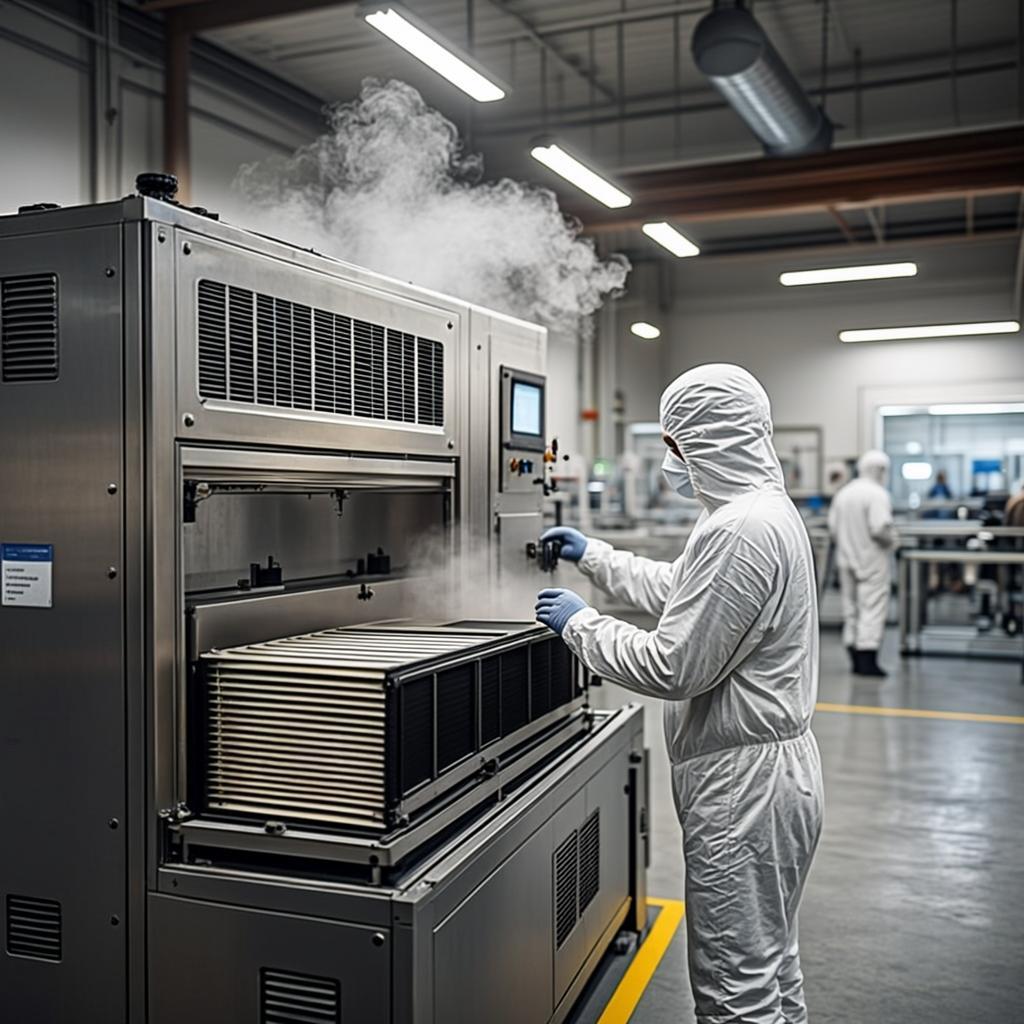
carbon filter uses
Activated carbon filters represent a cornerstone in modern industrial filtration solutions, leveraging the exceptional adsorption properties of high-grade activated carbon to capture contaminants,
Industrial Carbon Filters: Essential Carbon Filter Uses Across Industries
1. Product Overview
Activated carbon filters represent a cornerstone in modern industrial filtration solutions, leveraging the exceptional adsorption properties of high-grade activated carbon to capture contaminants, odors, and volatile organic compounds (VOCs). Our premium carbon filters are engineered for reliability and efficiency, addressing a wide array of carbon filter uses from air purification to water treatment. These filters utilize granular activated carbon (GAC), powdered activated carbon (PAC), or catalytic carbon, each tailored to specific operational demands.
In air quality management, carbon filter uses extend to removing harmful gases and particulates in HVAC systems and exhaust stacks. For water purification, they excel at eliminating chlorine, pesticides, and heavy metals, ensuring compliance with stringent environmental regulations. Beyond these, carbon filter uses include odor control in wastewater facilities, VOC abatement in manufacturing, and even solvent recovery in chemical processing. Our filters are available in various configurations—such as cartridge, pleated, or bulk media forms—to suit diverse system integrations. With a focus on sustainability, our products minimize replacement frequency while maximizing pollutant removal, making them indispensable for B2B operations seeking cost-effective, high-performance filtration.
Whether you're optimizing industrial processes or safeguarding public health, understanding carbon filter uses unlocks unparalleled efficiency. Our filters undergo rigorous testing to meet ISO 9001 standards, ensuring consistent performance across global applications.
2. Key Features
- Superior Adsorption Capacity: Engineered with high-iodine number carbon (minimum 1000 mg/g), ideal for diverse carbon filter uses in gas and liquid phase filtration.
- Customizable Configurations: Available in radial flow, axial flow, or loose-fill designs to match specific carbon filter uses in compact or large-scale systems.
- Extended Service Life: Up to 2-3 years in optimal conditions, reducing downtime and operational costs for continuous carbon filter uses.
- Low Pressure Drop: Optimized bed design ensures minimal airflow resistance, enhancing energy efficiency in HVAC and ventilation carbon filter uses.
- Chemical Resistance: Impregnated options for hydrogen sulfide (H2S) and formaldehyde removal, broadening carbon filter uses in corrosive environments.
- Easy Installation and Maintenance: Standardized housings and quick-change cartridges simplify integration into existing setups for all carbon filter uses.
- Certifications: Compliant with NSF/ANSI 42, 53, and EN 12915 standards, guaranteeing safety and efficacy across international carbon filter uses.
3. Technical Specifications
| Parameter | Description | Value/Range |
|---|---|---|
| Material | Activated Carbon Type | Granular (GAC), Powdered (PAC), Catalytic, Impregnated |
| Carbon Source | Iodine Number | 1000-1200 mg/g |
| Dimensions | Standard Cartridge Sizes | 2.5" x 10", 4.5" x 20", Custom up to 60" length |
| Flow Rate | Air/Water (Nominal) | 1-100 GPM (water), 500-5000 CFM (air) |
| Pressure Drop | @ Rated Flow | < 0.5 psi (water), < 0.2 in. w.g. (air) |
| Operating Temperature | Range | -20°C to 120°C |
| pH Compatibility | Range | 2-12 |
| Removal Efficiency | VOCs, Chlorine, Odors | >99% for targeted contaminants |
| Housing Material | Options | Polypropylene, Stainless Steel 304/316, FRP |
| Service Life | Estimated | 12-36 months (application-dependent) |
Note: Specifications are customizable based on specific carbon filter uses. Contact our engineering team for tailored solutions.
4. Application Scenarios
Carbon filter uses span critical sectors where contaminant control is paramount. In municipal water treatment plants, they effectively reduce taste and odor compounds, alongside disinfection byproducts, ensuring potable water quality. Industrial wastewater facilities rely on these filters for polishing effluent, removing pharmaceuticals and personal care products (PPCPs) before discharge.
For air purification, carbon filter uses in HVAC systems of commercial buildings and hospitals capture indoor pollutants like benzene and formaldehyde, improving occupant health and IAQ scores. In manufacturing, such as semiconductor fabs or paint booths, they scrub VOCs from exhaust streams, aiding compliance with EPA and EU VOC directives.
Odor control represents another key carbon filter uses area: sewage treatment plants employ impregnated carbon to neutralize H2S, while food processing uses catalytic variants for amine and mercaptan removal. Aquariums and aquaculture benefit from carbon filter uses in biological filtration, eliminating dissolved organics to maintain fish health.
In the oil and gas sector, carbon filter uses include natural gas sweetening and glycol dehydration units, where they adsorb moisture and sulfur compounds. Emergency response scenarios, like spill cleanup or hazmat situations, utilize portable carbon filter units for vapor suppression. These versatile carbon filter uses demonstrate adaptability across high-stakes environments, from pharmaceuticals to automotive emissions control.
5. Advantages
Our carbon filters offer distinct advantages for demanding carbon filter uses. High micropore volume ensures superior kinetics for rapid pollutant uptake, outperforming competitors in breakthrough testing. This translates to fewer replacements and lower total cost of ownership (TCO), critical for 24/7 operations.
Unlike basic media, our filters feature uniform particle size distribution, preventing channeling and maximizing bed utilization. For carbon filter uses involving aggressive chemicals, specialized impregnations (e.g., KOH, CuO) provide targeted reactivity without compromising structural integrity.
Sustainability is embedded: sourced from renewable coconut shells or coal, with regenerable options reducing waste by up to 80%. Rigorous quality control, including BET surface area analysis (>1000 m²/g), guarantees performance consistency. In comparative studies, our filters achieve 20-30% higher capacity for common carbon filter uses like chlorine reduction, validated by third-party labs.
6. Why Choose Us
As a leading manufacturer with over 20 years in filtration, we specialize in bespoke carbon filters optimized for your unique carbon filter uses. Our global supply chain ensures rapid delivery, while in-house R&D delivers innovations like hybrid carbon-HEPA media for multi-stage carbon filter uses.
We hold certifications including UL, CE, and REACH, with full traceability from raw material to shipment. Technical support includes system design, performance modeling via adsorption isotherms, and on-site commissioning. Partnering with us means reliable carbon filter uses backed by a 100% satisfaction guarantee and flexible MOQs for B2B scalability.
7. FAQ
Q: What are the most common carbon filter uses?
A: Primary carbon filter uses include VOC removal, odor control, water dechlorination, and air purification in industrial and commercial settings.
Q: How do I determine the right carbon filter for my application?
A: Assess contaminant type, concentration, flow rate, and contact time. Our experts can model via Langmuir isotherms for optimal carbon filter uses.
Q: Can carbon filters be regenerated?
A: Yes, thermal or steam regeneration extends life for many carbon filter uses, with efficiency retention above 90% after multiple cycles.
Q: What maintenance is required for carbon filters?
A: Monitor pressure drop and effluent quality; replace when breakthrough occurs, typically every 6-24 months based on carbon filter uses.
Q: Are your filters suitable for high-humidity environments?
A: Absolutely—our humidity-resistant formulations maintain efficacy in carbon filter uses up to 90% RH.
Q: Do you offer custom impregnations for specific carbon filter uses?
A: Yes, including for H2S, ammonia, or mercury, tailored to niche carbon filter uses.
Related product
- English
- Françai
- Español
- Deutsch
- Română
- العربية
- 한국어
- 日本語
- Italiano
- Português
- Gaeilge
- Dansk
- Čeština
- Русский
- Afrikaans
- Euskara
- Català
- Esperanto
- हिन्दी
- Ελληνικά
- Bahasa Melayu
- Polski
- Српски
- Kiswahili
- ภาษาไทย
- Tiếng Việt
- Türkçe
- Svenska
- Cymraeg
- Slovenčina
- Latviešu
- Malti
- Magyar
- Galego
- ગુજરાતી
- Eesti Keel
- বাংলা
- Shqip
- беларуская мова
- Nederlands
- Tagalog
- ქართული
- Íslenska
- Kreyòl Ayisyen
- Lietuvių
- Norsk
- slovenščina
- தமிழ்
- Українська
- ײִדיש
- اردو
- తెలుగు
- فارسی
- македонски
- ಕನ್ನಡ
- Bahasa Indonesia
- עברית
- Suomi
- Hrvatski
- Български
- Azerbaijani