

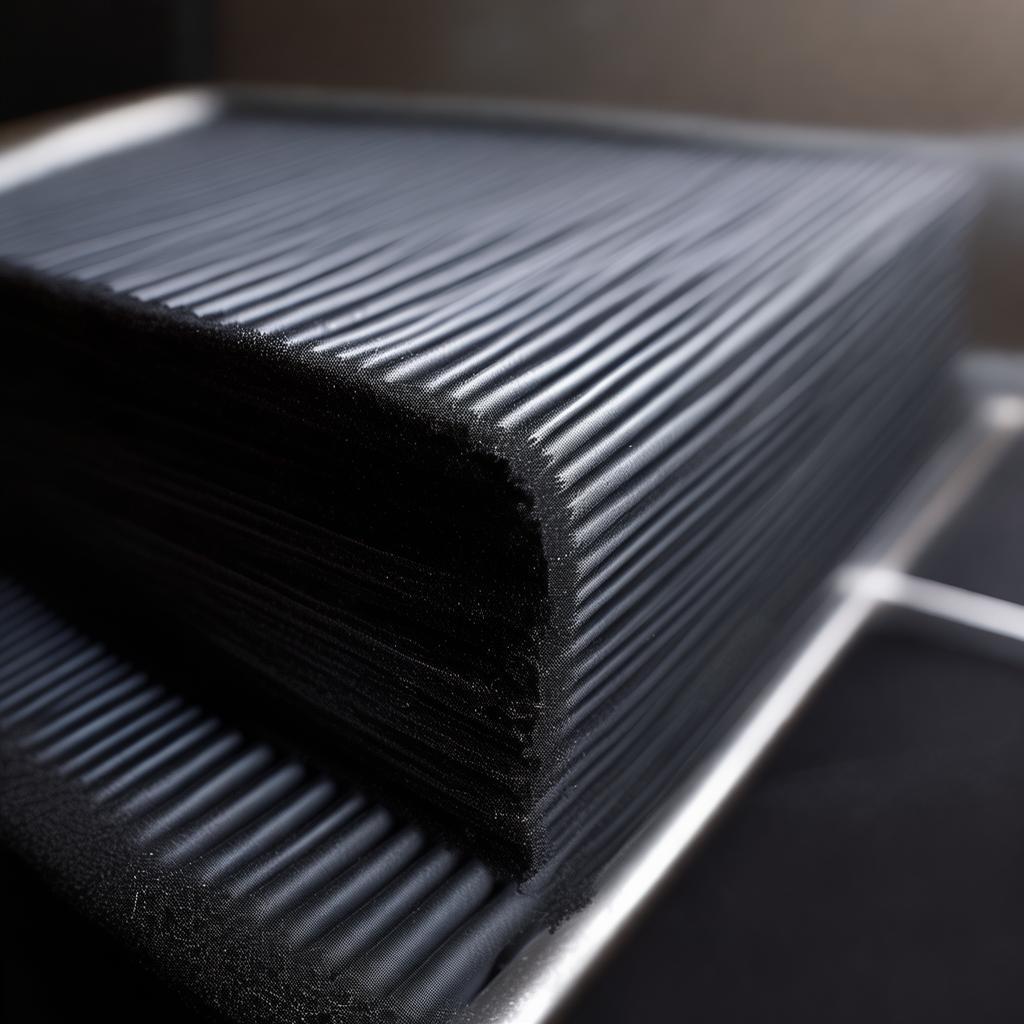
carbon fabric filter
The carbon fabric filter represents the pinnacle of advanced filtration technology, engineered for superior removal of volatile organic compounds (VOCs), odors, and harmful gases in demanding
Carbon Fabric Filter
1. Product Overview
The carbon fabric filter represents the pinnacle of advanced filtration technology, engineered for superior removal of volatile organic compounds (VOCs), odors, and harmful gases in demanding industrial environments. Constructed from high-quality activated carbon woven into a durable fabric matrix, this filter media offers exceptional adsorption performance while maintaining structural integrity under high airflow and pressure conditions.
Ideal for air purification systems, the carbon fabric filter excels in applications requiring precise control of airborne contaminants. Its porous structure, impregnated with premium activated carbon, provides a vast surface area—up to 1,000 m²/g—for efficient trapping of pollutants. Unlike traditional granular carbon filters, the fabric form factor ensures uniform gas flow distribution, minimizing pressure drop and extending service life. Available in rolls, sheets, or custom-cut panels, our carbon fabric filter is versatile for integration into HVAC systems, cleanrooms, and exhaust treatment units.
With a focus on sustainability, this filter is manufactured using eco-friendly processes, reducing waste and energy consumption during production. It meets stringent international standards for indoor air quality, making it a trusted choice for global B2B clients seeking reliable, high-efficiency solutions.
2. Key Features
- High Adsorption Capacity: Impregnated activated carbon fabric captures over 99% of VOCs, formaldehyde, and odors at low concentrations.
- Low Pressure Drop: Optimized weave design ensures minimal airflow resistance, ideal for energy-efficient systems.
- Flexible and Lightweight: Easily cut, shaped, and installed without specialized tools, reducing labor costs.
- Wide Chemical Resistance: Withstands exposure to acids, bases, and solvents common in industrial settings.
- Long Service Life: Up to 24 months in standard applications, depending on contaminant load.
- Customizable Impregnation: Options for specific target pollutants like H2S, NH3, or mercury.
- Fire Retardant: Meets UL 94 V-0 standards for enhanced safety in occupied spaces.
- Antibacterial Treatment: Integrated silver ions prevent microbial growth, ensuring hygienic performance.
3. Technical Specifications
| Parameter | Value | Unit | Test Method |
|---|---|---|---|
| Material | Activated Carbon Fabric (Viscose-based) | - | - |
| Carbon Content | ≥500 | g/m² | Gravimetric |
| Surface Area | 800 - 1200 | m²/g | BET Nitrogen Adsorption |
| Thickness | 0.5 - 3.0 | mm | ASTM D1777 |
| Areal Weight | 400 - 800 | g/m² | - |
| Air Permeability | 200 - 800 | L/m²/s | ISO 9237 |
| Pressure Drop (at 0.1 m/s) | ≤50 | Pa | EN 779 |
| VOC Removal Efficiency | ≥95 | % | ISO 10121-2 |
| Formaldehyde Removal | ≥90 | % | GB/T 18801 |
| Operating Temperature | -20 to +120 | °C | - |
| Humidity Tolerance | ≤90 | {RH % | - |
| Standard Width | 1.0 - 1.5 | m | - |
| Roll Length | Up to 100 | m | - |
| Flammability | UL 94 V-0 | - | UL 94 |
Note: Specifications are subject to customization based on application requirements. Contact our engineering team for tailored solutions.
4. Application Scenarios
The carbon fabric filter is deployed across diverse industries where air quality control is paramount. In HVAC systems for commercial buildings, it integrates seamlessly into fan coil units and AHUs to eliminate odors from kitchens or parking garages. For pharmaceutical cleanrooms, its high purity and low particle shedding ensure compliance with ISO 14644 standards, protecting sensitive processes from gaseous contaminants.
In industrial exhaust treatment, such as painting booths and chemical plants, the filter effectively neutralizes VOC emissions, aiding regulatory compliance with EPA and EU VOC directives. Wastewater treatment facilities utilize it in odor control scrubbers to capture H2S and ammonia, improving worker safety and community relations.
Additional scenarios include electronics manufacturing for solvent vapor removal during PCB assembly, food processing for aroma control in packaging lines, and hospital ventilation to mitigate anesthetic gases. Its adaptability extends to portable air purifiers and automotive cabin filters, showcasing versatility in both stationary and mobile applications.
5. Advantages
Choosing our carbon fabric filter delivers tangible benefits over conventional alternatives. Its fabric construction outperforms pelletized carbon beds by providing uniform gas contact, achieving higher removal efficiencies with 30-50% less material usage. This translates to reduced operational costs and smaller system footprints.
The filter's regenerability allows steam or thermal reactivation, extending lifespan and minimizing waste— a key advantage in sustainability-driven markets. Compared to powder-coated media, it exhibits superior durability, resisting tearing and delamination even after prolonged exposure to high-velocity air streams.
Engineered for scalability, it supports high-volume production without compromising quality, ensuring consistent performance batch-to-batch. Independent testing confirms its edge in low-concentration pollutant capture, where granular filters often falter. Ultimately, the carbon fabric filter optimizes total cost of ownership through lower energy use, easier maintenance, and reliable contaminant control.
6. Why Choose Us
As a leading manufacturer of filtration solutions, we bring decades of expertise in activated carbon technologies to every carbon fabric filter we produce. Our state-of-the-art facilities employ automated weaving and impregnation processes, guaranteeing uniformity and traceability via batch coding.
We hold certifications including ISO 9001, ISO 14001, and REACH compliance, reflecting our commitment to quality and environmental responsibility. Rigorous in-house testing—encompassing adsorption isotherms, life cycle simulations, and field trials—ensures each product exceeds industry benchmarks.
Our global supply chain supports rapid prototyping and volume scaling, with lead times as short as 2 weeks for standard orders. Backed by a team of filtration engineers, we offer free application consultations and performance modeling using CFD software. Partner with us for a filter that not only meets but anticipates your purification needs.
7. FAQ
What is a carbon fabric filter?
A carbon fabric filter is a specialized filtration media where activated carbon is integrated into a flexible fabric substrate, designed for efficient gaseous pollutant removal in air handling systems.
How does the carbon fabric filter differ from granular activated carbon?
Unlike granular carbon, which requires containment in beds or canisters, the fabric form offers easier installation, lower pressure drop, and better adaptability to curved or compact spaces.
What is the expected lifespan of the filter?
Typically 12-24 months, influenced by contaminant levels, airflow rates, and maintenance. Regular monitoring of pressure drop indicates replacement time.
Can the carbon fabric filter be regenerated?
Yes, via steam or hot air regeneration cycles, restoring up to 80% of original capacity for multiple uses, subject to application specifics.
Is it suitable for high-humidity environments?
Absolutely, with humidity tolerance up to 90% RH. Optional hydrophobic treatments enhance performance in condensing conditions.
Does it remove particulate matter?
Primarily gaseous, but when combined with pre-filters, it achieves comprehensive PM and VOC control in multi-stage systems.
What customization options are available?
Thickness, carbon loading, impregnants for targeted gases, and dimensions—all tailored to your exact specifications.
Related product
- English
- Françai
- Español
- Deutsch
- Română
- العربية
- 한국어
- 日本語
- Italiano
- Português
- Gaeilge
- Dansk
- Čeština
- Русский
- Afrikaans
- Euskara
- Català
- Esperanto
- हिन्दी
- Ελληνικά
- Bahasa Melayu
- Polski
- Српски
- Kiswahili
- ภาษาไทย
- Tiếng Việt
- Türkçe
- Svenska
- Cymraeg
- Slovenčina
- Latviešu
- Malti
- Magyar
- Galego
- ગુજરાતી
- Eesti Keel
- বাংলা
- Shqip
- беларуская мова
- Nederlands
- Tagalog
- ქართული
- Íslenska
- Kreyòl Ayisyen
- Lietuvių
- Norsk
- slovenščina
- தமிழ்
- Українська
- ײִדיש
- اردو
- తెలుగు
- فارسی
- македонски
- ಕನ್ನಡ
- Bahasa Indonesia
- עברית
- Suomi
- Hrvatski
- Български
- Azerbaijani