

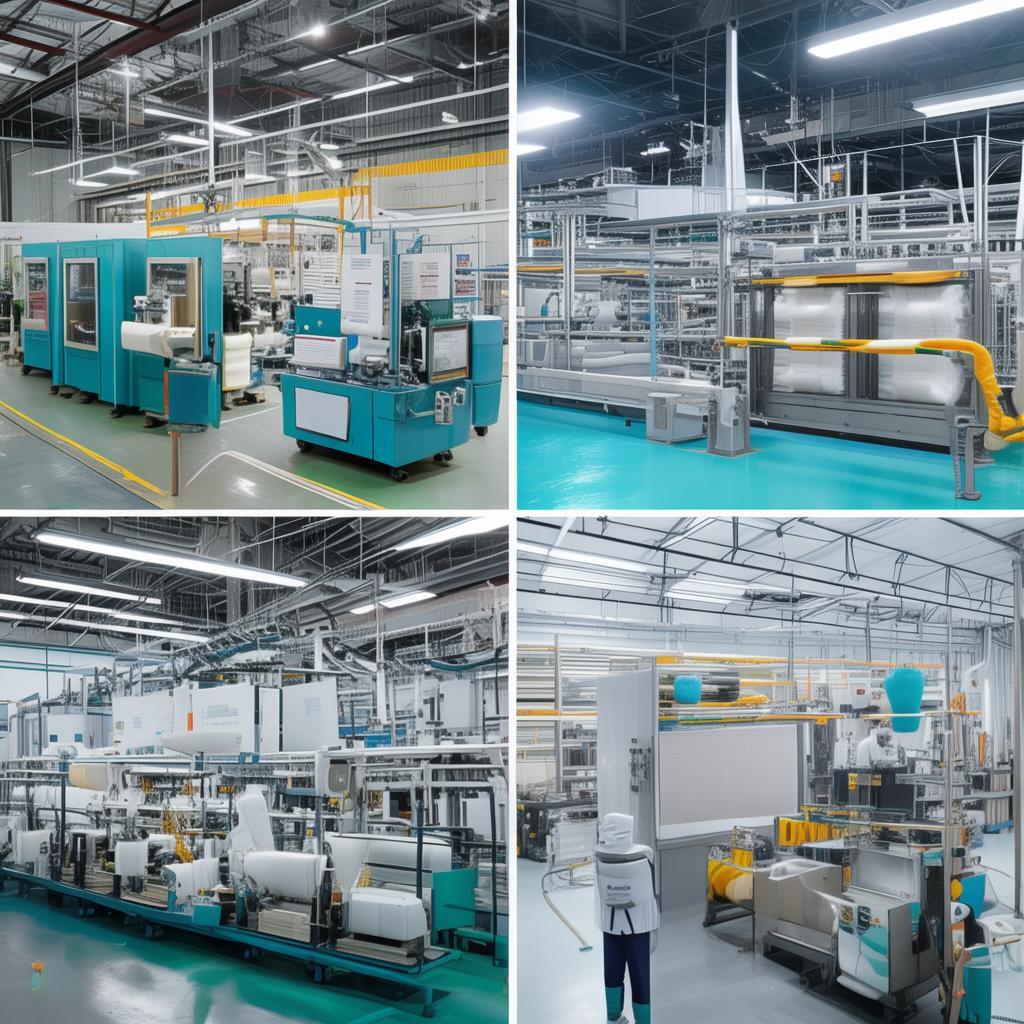
biofilter media for wastewater treatment
Our biofilter media for wastewater treatment represents the pinnacle of biological filtration technology, designed to optimize the removal of organic pollutants, nitrogen, and other contaminants from
Biofilter Media for Wastewater Treatment
Product Overview
Our biofilter media for wastewater treatment represents the pinnacle of biological filtration technology, designed to optimize the removal of organic pollutants, nitrogen, and other contaminants from wastewater streams. Engineered from high-quality, durable materials, this media provides an expansive surface area for microbial growth, fostering robust biofilm development that enhances biological degradation processes. Ideal for both aerobic and anoxic conditions, it is widely used in moving bed biofilm reactor (MBBR) systems, trickling filters, and submerged fixed-bed reactors.
In wastewater treatment plants, biofilter media for wastewater treatment serves as the core component for biological nutrient removal (BNR). By immobilizing microorganisms on its intricate structure, it achieves superior treatment efficiency compared to traditional activated sludge processes. This media's lightweight design and high void ratio ensure minimal hydraulic resistance, allowing for high flow rates without compromising performance. With proven efficacy in reducing BOD, COD, ammonia, and total nitrogen levels, it supports compliance with stringent environmental regulations such as those from the EPA and EU Water Framework Directive.
Available in various configurations including cylindrical rings, sheets, and saddles, our biofilter media is tailored to specific treatment requirements. Its chemical and UV resistance ensures longevity in harsh operational environments, making it a reliable choice for municipal, industrial, and aquaculture applications. By integrating this advanced biofilter media for wastewater treatment, operators can achieve energy savings of up to 30% through reduced aeration needs and smaller footprint designs.
Key Features
- High Specific Surface Area: Up to 500 m²/m³, promoting maximum biomass attachment and efficient pollutant degradation.
- Optimized Geometry: Patented designs that prevent clogging and ensure even distribution of wastewater flow.
- Premium Materials: Manufactured from virgin HDPE or PP, offering excellent resistance to corrosion, abrasion, and biological degradation.
- Self-Cleaning Mechanism: Low density enables fluidization in MBBR systems, reducing maintenance frequency.
- Customizable Sizes: Ranges from 10mm to 50mm media elements to suit diverse reactor configurations.
- Certifications: Compliant with ISO 9001, NSF/ANSI standards, and RoHS for environmental safety.
- Enhanced Biofilm Stability: Protected voids that shield microorganisms from shear forces and toxic shocks.
Technical Specifications
Below is a comprehensive table outlining the technical specifications of our biofilter media for wastewater treatment. These parameters ensure compatibility with a wide range of wastewater treatment systems.
| Parameter | MBBR Ring Media | Fixed Bed Sheet Media | Saddle Media |
|---|---|---|---|
| Material | Virgin HDPE | Virgin PP | Virgin HDPE |
| Density (g/cm³) | 0.93-0.96 | 0.90-0.92 | 0.94-0.97 |
| Specific Surface Area (m²/m³) | 300-500 | 250-400 | 350-450 |
| Void Ratio (%) | >95 | >92 | >96 |
| Media Size (mm) | 10x7, 12x9, 25x12 | Thickness: 1-2, Width: 1000 | Ø25x12, Ø38x22 |
| Operating Temperature (°C) | -10 to 60 | -5 to 55 | -10 to 60 |
| pH Tolerance | 1-14 | 2-13 | 1-14 |
| Service Life (years) | 15-20 | 12-18 | 15-20 |
| Fill Ratio in Reactor (%) | 30-70 | 50-80 | 40-65 |
Application Scenarios
Biofilter media for wastewater treatment excels in diverse scenarios where reliable biological treatment is essential. In municipal wastewater treatment plants (WWTPs), it is deployed in MBBR basins for secondary treatment, effectively handling high organic loads from urban sewage. For industrial applications, such as food processing, pharmaceuticals, and petrochemicals, the media manages complex effluents with elevated COD and nitrogen content, ensuring discharge limits are met.
In aquaculture, our biofilter media supports recirculating aquaculture systems (RAS) by nitrifying ammonia to nitrate, maintaining optimal water quality for fish farming. It is also ideal for decentralized treatment in remote areas or small communities, where compact MBBR units powered by this media provide efficient on-site solutions. Additionally, in upgrading existing activated sludge plants, retrofitting with biofilter media boosts capacity by 50% without expanding infrastructure.
Other key scenarios include stormwater treatment, landfill leachate processing, and river restoration projects. Its versatility allows integration into hybrid systems combining physical, chemical, and biological processes, delivering holistic wastewater management.
Advantages
Choosing our biofilter media for wastewater treatment offers distinct advantages over conventional media types. Its superior surface area-to-volume ratio supports higher biomass concentrations—up to 20 g/L—resulting in faster reaction kinetics and reduced hydraulic retention times (HRT) by 40%. This translates to smaller reactor volumes and lower capital expenditures.
The media's robustness minimizes operational disruptions; unlike random packing, it resists channeling and uneven flow, ensuring consistent performance even under shock loads. Energy efficiency is another hallmark, with aeration requirements reduced due to intimate gas-liquid-solid contact. Long-term durability cuts replacement costs, with field data showing over 15 years of service in aggressive environments.
Environmentally, it promotes sustainable practices by enhancing nutrient recovery and minimizing sludge production. Independent studies confirm 95% ammonia removal and 90% COD reduction in full-scale installations, outperforming competitors. Scalability from pilot to mega-plants makes it suitable for global projects.
Why Choose Us
As a leading manufacturer of biofilter media for wastewater treatment, we bring decades of expertise in polymer engineering and water treatment innovation. Our state-of-the-art production facilities employ advanced extrusion and molding techniques, ensuring batch-to-batch consistency and defect-free products. Rigorous quality control, including SEM analysis for surface topography and pilot-scale performance testing, guarantees reliability.
We offer comprehensive technical support, from system design to commissioning, backed by a global network of engineers. Customization services allow tailoring media properties to client-specific influents, optimizing ROI. Committed to sustainability, our products are recyclable and produced with low-carbon processes. Partner with us for proven solutions that elevate your wastewater treatment operations.
FAQ
What is biofilter media for wastewater treatment?
Biofilter media for wastewater treatment is a carrier material that provides a habitat for microorganisms to grow and degrade pollutants biologically. It enhances treatment efficiency in systems like MBBR and trickling filters.
How does it differ from activated sludge?
Unlike suspended growth in activated sludge, biofilter media uses attached growth, offering higher biomass retention, shock resistance, and smaller footprints.
What maintenance is required?
Minimal; periodic screening for debris in MBBR setups. No backwashing needed due to self-cleaning fluidization.
Is it suitable for high-salinity wastewater?
Yes, HDPE/PP materials withstand salinities up to 5% and are ideal for seafood processing or desalination brines.
Can it handle temperature fluctuations?
Absolutely, with operational range from -10°C to 60°C, suitable for tropical and temperate climates.
What packing density is recommended?
Typically 40-60% for MBBR; consult our engineers for site-specific optimization based on influent characteristics.
Are samples available for testing?
Yes, we provide free samples for pilot trials to validate performance in your wastewater matrix.
Related product
- English
- Françai
- Español
- Deutsch
- Română
- العربية
- 한국어
- 日本語
- Italiano
- Português
- Gaeilge
- Dansk
- Čeština
- Русский
- Afrikaans
- Euskara
- Català
- Esperanto
- हिन्दी
- Ελληνικά
- Bahasa Melayu
- Polski
- Српски
- Kiswahili
- ภาษาไทย
- Tiếng Việt
- Türkçe
- Svenska
- Cymraeg
- Slovenčina
- Latviešu
- Malti
- Magyar
- Galego
- ગુજરાતી
- Eesti Keel
- বাংলা
- Shqip
- беларуская мова