


Premium Bicomponent Thermal Padding Material: Engineered for Superior Insulation & Performance
In demanding industrial and commercial applications, effective thermal management is non-negotiable. Our advanced bicomponent thermal padding material represents the pinnacle of insulation technology, designed to deliver consistent, reliable thermal barrier performance where it matters most. As a leading manufacturer, we provide high-quality, custom-engineered solutions for OEMs and contractors worldwide. For tailored bicomponent thermal padding material quotes that match your specific project parameters, our engineering team is ready to assist.
1. Product Overview
Our bicomponent thermal padding material is a sophisticated, non-woven composite engineered through a specialized spunlace process. It integrates two distinct polymer fibers—typically a resilient core fiber for structure and a low-melting-point sheath fiber for bonding. When heated, the sheath component activates, creating a uniform, cohesive, and self-bonding mat with exceptional integrity. This innovative construction eliminates the need for additional adhesives or binders in many applications, resulting in a cleaner, more consistent, and high-performance thermal insulation pad. It is the material of choice for industries requiring precise thermal control, acoustic damping, and reliable sealing under variable temperatures and pressures.
2. Key Features
- Superior Thermal Insulation: Excellent resistance to heat transfer, providing an effective barrier against high temperatures and enhancing energy efficiency.
- Self-Bonding Capability: The bicomponent fibers fuse under heat, creating a stable, unified structure without delamination, simplifying installation.
- Exceptional Resilience & Compression Recovery: Maintains thickness and insulating properties under sustained compression and vibration, ensuring long-term performance.
- Lightweight & Flexible: Easy to cut, mold, and fit into complex geometries and tight spaces without compromising its insulating qualities.
- Chemical & Moisture Resistance: Inherently resistant to oils, mild chemicals, and moisture, preventing degradation in harsh environments.
- Acoustic Damping Properties: Contributes to noise reduction by absorbing sound waves, adding value in NVH (Noise, Vibration, and Harshness) sensitive applications.
3. Technical Specifications
| Parameter | Standard Specification | Available Customization |
|---|---|---|
| Base Material | PET/PET or PET/Co-PET Bicomponent Fibers | Fiber Type, Denier |
| Standard Thickness | 2mm, 3mm, 5mm, 10mm | 1mm - 25mm |
| Standard Density | 150 - 300 gsm | 100 - 600 gsm |
| Max Continuous Service Temperature | Up to 150°C (302°F) | Formulations for higher temps |
| Thermal Conductivity (k-value) | 0.035 - 0.045 W/m·K | Varies with density & thickness |
| Color | White, Grey | Custom colors available |
| Standard Roll Width | 1m, 1.5m | Up to 3.2m |
| Optional Treatments | - | Fire retardancy, Hydrophobicity, Laminations (foil, fabric) |
4. Application Scenarios
This versatile material is engineered to solve thermal management challenges across a broad industrial spectrum:
- Automotive Industry: Engine bay insulation, heat shields for exhaust components, battery pack thermal management in EVs, interior cabin insulation and padding.
- Appliance Manufacturing: Insulation for ovens, dryers, water heaters, and dishwashers; thermal and acoustic padding in HVAC units.
- Construction & Building: Pipe lagging, duct insulation, thermal breaks in wall and roof systems, and as an underlay for flooring.
- Industrial Equipment: Gasketing and sealing for high-temperature panels, insulation for industrial furnaces, ovens, and machinery guards.
- Consumer Goods & Packaging: Protective thermal packaging for sensitive goods, insulation in sporting goods and outdoor equipment.
5. Advantages Over Conventional Materials
Choosing our bicomponent thermal padding offers distinct benefits compared to traditional fiberglass, foam, or felt materials:
- Enhanced Safety & Cleanliness: No loose fibers or irritating particulates, creating a safer production environment and end product.
- Process Efficiency: Self-bonding nature speeds up assembly lines, reduces labor, and eliminates adhesive application steps.
- Consistent Quality: Uniform density and thickness across the entire roll ensure predictable performance and simplify quality control.
- Design Freedom: Excellent conformability allows engineers to design more compact and efficient thermal systems.
- Durability: Superior resistance to compression set ensures the insulation maintains its gap-filling properties over the product's lifetime.
6. Why Choose Us as Your Supplier
When you request bicomponent thermal padding material quotes from us, you are partnering with a dedicated specialist, not just a distributor.
- In-House Engineering & Customization: We modify density, thickness, treatment, and form factor to meet your exact technical drawings and performance requirements.
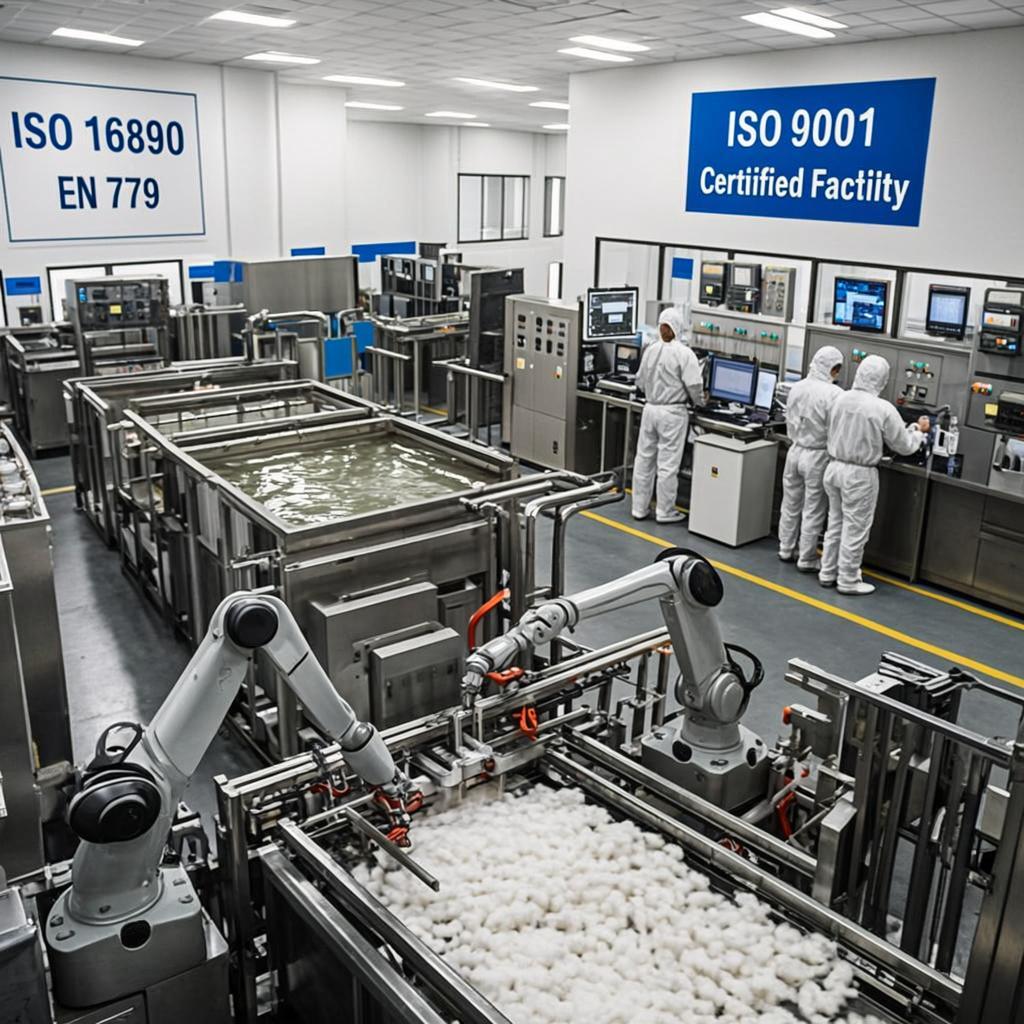
- Vertical Manufacturing Control: From raw polymer to finished roll, we control every step, guaranteeing quality, consistency, and supply chain security.
- Global B2B Logistics Expertise: We are experienced in packaging, documentation, and shipping for international trade, ensuring your order arrives on time and in perfect condition.
- Technical Support & Collaboration: Our sales engineers work with your team from prototype to production, providing material samples and data to validate performance.
- Competitive & Transparent Pricing: Our direct manufacturing model allows us to offer highly competitive value without compromising on material excellence.
7. Frequently Asked Questions (FAQ)
Q1: How do I request an accurate quote for this material?
A: For precise bicomponent thermal padding material quotes, please provide key details: desired thickness, density (gsm), roll dimensions (width & length), any special treatments (FR, lamination), and your estimated annual usage volume. Technical drawings are highly beneficial.
Q2: Can this material be die-cut or stamped into specific shapes?
A: Absolutely. The material is perfectly suited for precision die-cutting, kiss-cutting, and stamping. We can supply it in master rolls, slit coils, or pre-cut parts and gaskets ready for installation.
Q3: What is the lead time for sample requests and production orders?
A: Standard material samples are typically dispatched within 2-3 business days. For production orders, lead times vary based on customization and quantity but generally range from 2-4 weeks. We prioritize clear communication on timelines.
Q4: Is the material recyclable or environmentally friendly?
A: Our standard PET-based padding is technically recyclable. We also offer bio-based or recycled-content fiber options upon request for projects with specific sustainability goals.
Q5: How does it perform compared to ceramic fiber or silica-based blankets?
A: While ceramic fibers handle extreme temperatures (>1000°C), our bicomponent padding excels in the mid-temperature range (up to 150°C+). It offers superior handling safety, better compression recovery, and easier fabrication without the brittleness or health concerns associated with ceramic fibers.
Ready to Optimize Your Thermal Management Solution? Contact our technical sales team today to discuss your application. We will provide detailed bicomponent thermal padding material quotes and workable samples to help you validate the performance for your project.