

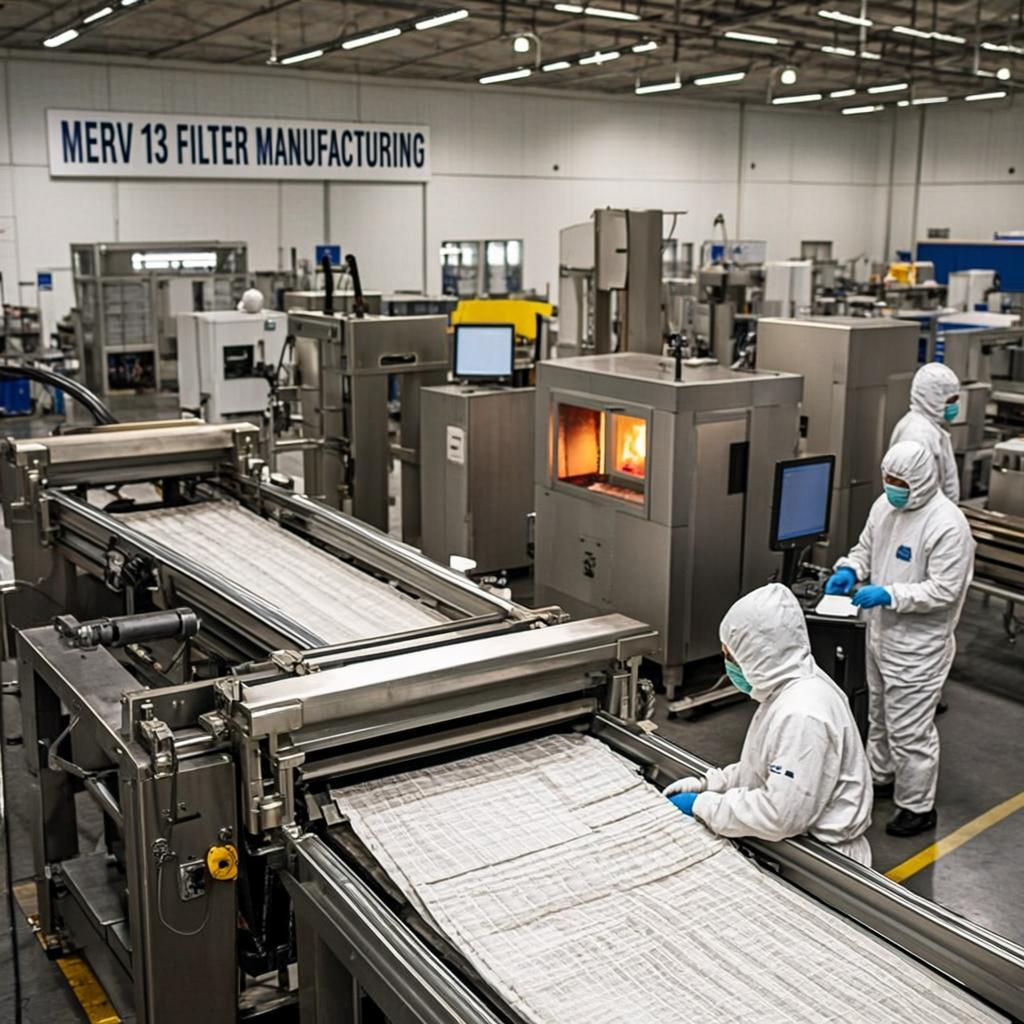
antistatic filter element
The antistatic filter element is a premium filtration solution engineered for demanding industrial environments where electrostatic discharge poses significant risks. Designed to effectively capture
Antistatic Filter Element
1. Product Overview
The antistatic filter element is a premium filtration solution engineered for demanding industrial environments where electrostatic discharge poses significant risks. Designed to effectively capture fine particulates while preventing static buildup, this filter element ensures safe and efficient air purification in dust-prone applications. Constructed with specialized conductive materials, the antistatic filter element dissipates static charges, reducing the potential for sparks that could ignite combustible dusts.
In industries handling flammable powders or fibers, such as chemicals, pharmaceuticals, and food processing, the antistatic filter element stands out for its compliance with international safety standards like ATEX and NFPA. It combines high dust-holding capacity with low pressure drop, extending service life and minimizing downtime. Whether integrated into baghouses, cartridge collectors, or pulse-jet systems, this filter element delivers reliable performance, safeguarding equipment and personnel while maintaining optimal airflow rates.
Our antistatic filter element is customizable to fit various housing dimensions and filtration requirements, making it an ideal choice for global B2B operations seeking robust, low-maintenance filtration solutions.
2. Key Features
- Conductive Media Construction: Incorporates carbon-impregnated or metallic fibers to provide inherent antistatic properties, ensuring safe dissipation of electrostatic charges without compromising filtration efficiency.
- High Filtration Efficiency: Achieves up to 99.99% efficiency on 0.3-micron particles, effectively trapping dust, smoke, and fumes while allowing maximum airflow.
- Durable End Caps and Frames: Reinforced with antistatic polyurethane or galvanized steel for superior structural integrity and resistance to corrosion in harsh conditions.
- Low Initial Pressure Drop: Optimized pleat design and media selection minimize energy consumption and extend operational cycles.
- Temperature Resistance: Rated for continuous operation up to 200°C, suitable for high-heat processes.
- Easy Installation and Replacement: Standardized dimensions compatible with major filter housings, featuring snap-fit or clamp seals for quick maintenance.
- Customizable Options: Available in various sizes, pleat counts, and surface treatments to match specific application needs.
3. Technical Specifications
| Parameter | Specification |
|---|---|
| Filter Media | Antistatic polyester spun-bonded or needlefelt with conductive fibers |
| Filtration Efficiency | 99.5% - 99.99% @ 0.3 μm (DOE or MERV 15+ equivalent) |
| Initial Pressure Drop | ≤ 120 Pa @ 1.0 m/min face velocity |
| Recommended Final Pressure Drop | 1500 Pa |
| Maximum Operating Temperature | Continuous: 200°C; Short-term: 250°C |
| Standard Dimensions (OD x L) | Ø324 x 600 mm, Ø324 x 900 mm, custom sizes available |
| Filtration Area | 15-45 m² per element (depending on pleat configuration) |
| End Cap Material | Antistatic polyurethane or epoxy-coated metal |
| Inner/Outer Support | Galvanized steel or stainless steel mesh |
| Static Dissipation Resistance | < 10^6 Ω (surface resistivity) |
| Airflow Rate | Up to 5.0 m/min recommended |
| Certifications | ATEX Zone 20/21, ISO 16890, UL 900 |
4. Application Scenarios
The antistatic filter element excels in scenarios where static electricity control is critical for safety and process efficiency. In chemical processing plants, it filters explosive dusts like aluminum or magnesium powders, preventing ignition risks during pneumatic conveying or drying operations. Pharmaceutical manufacturers rely on it for sterile air handling in tablet coating and granulation, ensuring compliance with GMP standards while eliminating static-induced contamination.
Food and beverage industries use the antistatic filter element in dust collection systems for flour, sugar, or milk powder milling, maintaining product purity and avoiding dust explosions. In electronics assembly, it captures soldering fumes and particulates without generating static that could damage sensitive components. Metalworking shops benefit from its deployment in shot blasting and grinding booths, where fine metallic dusts demand both high capture rates and spark-free operation.
Additional applications include coal handling, woodworking, and battery production, where the antistatic filter element integrates seamlessly into centralized or localized ventilation systems, supporting sustainable operations with reduced emissions and energy use.
5. Advantages
Superior to conventional filter elements, the antistatic filter element offers unmatched safety through its ability to ground static charges, significantly lowering explosion hazards in zoned environments. Its advanced media formulation provides extended service intervals—up to 30% longer than non-antistatic alternatives—reducing replacement frequency and operational costs.
With a low pressure drop profile, it enhances system efficiency, lowering blower energy demands by 15-20% and contributing to greener manufacturing. The robust construction withstands aggressive cleaning cycles in pulse-jet systems, maintaining consistent performance over thousands of hours. Unlike surface-loaded filters, its depth filtration captures a broader particle spectrum, minimizing emissions to meet stringent EPA or EU regulations.
Furthermore, the antistatic filter element's versatility allows retrofitting into existing housings without modifications, offering a cost-effective upgrade path for legacy equipment. Its proven track record in high-volume industrial settings underscores reliability, with field data showing zero static-related incidents in certified installations.
6. Why Choose Us
As a leading manufacturer of industrial filtration products, we specialize in antistatic filter elements tailored for international trade and B2B partnerships. Our state-of-the-art production facilities employ automated pleating and embedding processes to ensure batch-to-batch consistency, backed by ISO 9001 certification and rigorous third-party testing.
We offer extensive customization, from media blends to dimensional tolerances, supported by a global supply chain for rapid delivery worldwide. Our engineering team provides application-specific consultations, optimizing antistatic filter element selection for peak performance. With decades of expertise in explosive dust filtration, we deliver solutions that exceed expectations in safety, durability, and value.
Committed to innovation, we invest in R&D for next-generation antistatic technologies, ensuring our filter elements remain at the forefront of industry standards. Partner with us for filtration that protects your operations and drives efficiency.
7. FAQ
Q: What makes an antistatic filter element different from a standard filter?
A: Antistatic filter elements incorporate conductive materials to dissipate static electricity, preventing sparks in hazardous environments, while standard filters lack this critical safety feature.
Q: Is the antistatic filter element suitable for cleanroom applications?
A: Yes, models with HEPA-grade efficiency are available, combining antistatic properties with ultra-low particle emissions for electronics and pharma cleanrooms.
Q: How do I know when to replace the antistatic filter element?
A: Monitor differential pressure; replace when it reaches 1500 Pa or per your system's pulse-cleaning efficiency. Visual inspection for media tears is also recommended.
Q: Can antistatic filter elements handle high humidity?
A: Absolutely, with hydrophobic treatments optional, they perform reliably in humid conditions up to 95% RH without static bridging or media degradation.
Q: Are custom sizes available for antistatic filter elements?
A: Yes, we provide fully bespoke manufacturing, including non-standard diameters, lengths, and pleat densities to fit legacy or proprietary housings.
Q: What certifications do your antistatic filter elements carry?
A: They comply with ATEX for explosive atmospheres, ISO 16890 for filtration classification, and UL 900 for industrial air cleaners, ensuring global acceptability.
Related product
- English
- Françai
- Español
- Deutsch
- Română
- العربية
- 한국어
- 日本語
- Italiano
- Português
- Gaeilge
- Dansk
- Čeština
- Русский
- Afrikaans
- Euskara
- Català
- Esperanto
- हिन्दी
- Ελληνικά
- Bahasa Melayu
- Polski
- Српски
- Kiswahili
- ภาษาไทย
- Tiếng Việt
- Türkçe
- Svenska
- Cymraeg
- Slovenčina
- Latviešu
- Malti
- Magyar
- Galego
- ગુજરાતી
- Eesti Keel
- বাংলা
- Shqip
- беларуская мова
- Nederlands
- Tagalog
- ქართული
- Íslenska
- Kreyòl Ayisyen
- Lietuvių
- Norsk
- slovenščina
- தமிழ்
- Українська
- ײִדיש
- اردو
- తెలుగు
- فارسی
- македонски
- ಕನ್ನಡ
- Bahasa Indonesia
- עברית
- Suomi
- Hrvatski
- Български
- Azerbaijani