
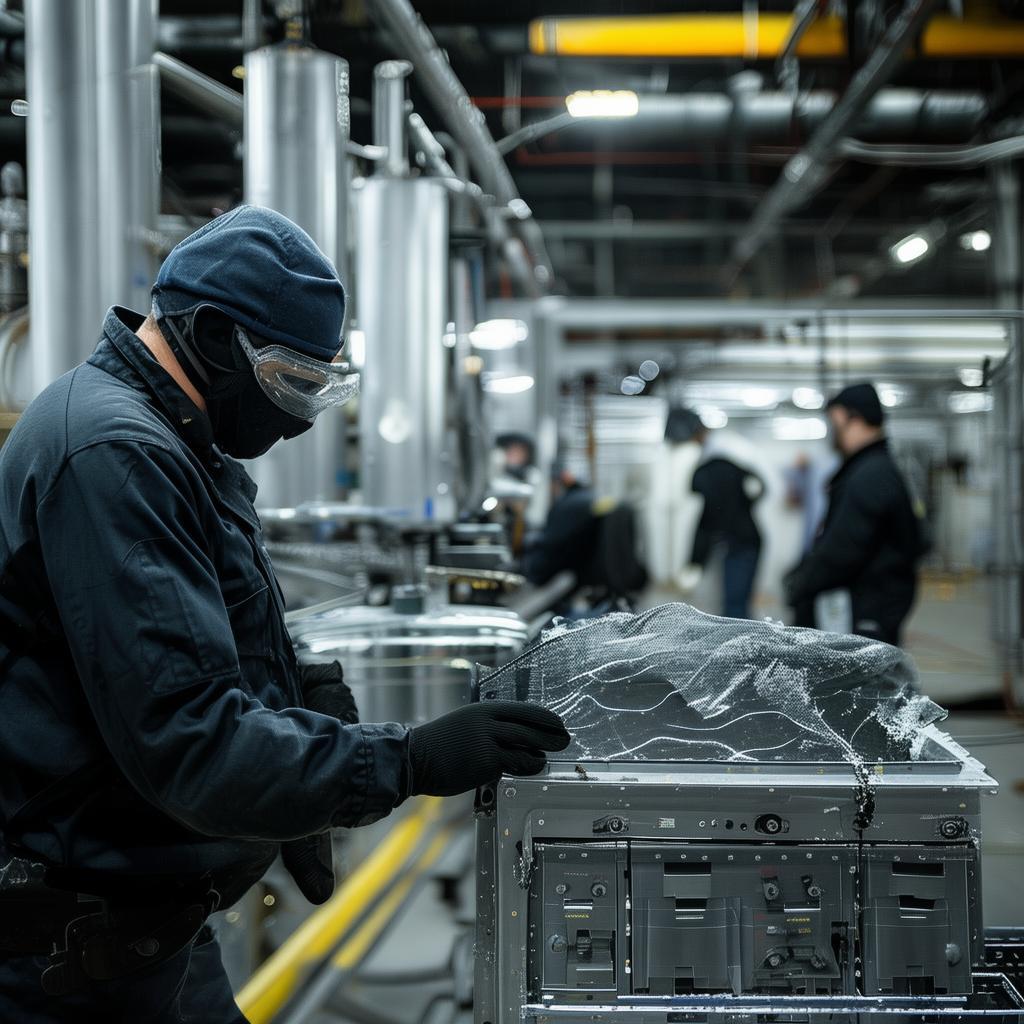
activated carbon filter used in water treatment plant
The activated carbon filter used in water treatment plant is a critical component designed to remove organic contaminants, odors, tastes, and chlorine residuals from water streams. Engineered for
Activated Carbon Filter Used in Water Treatment Plant
Product Overview
The activated carbon filter used in water treatment plant is a critical component designed to remove organic contaminants, odors, tastes, and chlorine residuals from water streams. Engineered for high-efficiency adsorption, this filter employs premium granular activated carbon (GAC) media to ensure superior purification in large-scale municipal and industrial applications. In water treatment plants, where consistent water quality is paramount, our activated carbon filter excels by trapping pollutants through a vast network of microscopic pores, achieving removal rates exceeding 99% for many targeted impurities.
Constructed with robust pressure vessels and advanced backwash systems, the activated carbon filter used in water treatment plant integrates seamlessly into multi-stage treatment processes. It effectively addresses challenges such as volatile organic compounds (VOCs), pesticides, and disinfection byproducts, safeguarding downstream equipment and end-users. With customizable configurations for varying flow rates and contaminant loads, this filter supports sustainable water management by extending the life of subsequent treatment stages like reverse osmosis or ion exchange.
Our design prioritizes longevity and minimal maintenance, making it an indispensable asset for operators seeking reliable performance. Backed by rigorous testing to international standards such as NSF/ANSI 61 and AWWA specifications, the activated carbon filter guarantees compliance with stringent regulatory requirements for drinking water and process water quality.
Key Features
- High Adsorption Capacity: Premium coconut shell or coal-based activated carbon with iodine number >1000 mg/g, ensuring maximum contaminant removal in water treatment plants.
- Robust Construction: FRP or carbon steel vessels with epoxy lining, rated for pressures up to 10 bar and temperatures up to 50°C, ideal for demanding plant environments.
- Automated Operation: Integrated PLC controls for backwashing, air scouring, and media regeneration, reducing downtime in continuous water treatment operations.
- Modular Design: Scalable from single units to multi-vessel systems, accommodating flow rates from 10 m³/h to 1000 m³/h for various plant scales.
- Low Pressure Drop: Optimized media bed depth and uniform distribution ensure <0.3 bar loss, maintaining energy efficiency in water treatment plant pipelines.
- Certifications: Compliant with ISO 9001, CE marking, and water quality standards, providing peace of mind for international installations.
- Easy Media Replacement: Top-loading access with minimal tools required, facilitating quick servicing without plant shutdowns.
Technical Specifications
| Parameter | Value | Unit |
|---|---|---|
| Filter Media | Granular Activated Carbon (GAC), 8x30 mesh | - |
| Iodine Number | >1000 | mg/g |
| Apparent Density | 450-550 | kg/m³ |
| Moisture Content | <5 | % |
| Vessel Material | FRP or Epoxy-Lined Carbon Steel | - |
| Design Pressure | 10 | bar |
| Design Temperature | 50 | °C |
| Bed Depth | 1200-2000 | mm |
| Service Flow Rate | 10-20 | BV/h (Bed Volume/hour) |
| Backwash Rate | 20-30 | m/h |
| Filtration Velocity | 5-15 | m/h |
| pH Range | 6.5-9.0 | - |
| Standard Diameters | 800, 1200, 1600, 2000 | mm |
| Media Volume per Unit | 5-50 | m³ |
Note: Specifications are customizable based on specific water treatment plant requirements. Contact our engineering team for tailored configurations.
Application Scenarios
In municipal water treatment plants, the activated carbon filter used in water treatment plant serves as a polishing step post-sedimentation and filtration, effectively eliminating taste and odor compounds like geosmin and 2-methylisoborneol (MIB). This ensures potable water meets organoleptic standards, enhancing consumer satisfaction.
For industrial applications, such as power plants and chemical manufacturing facilities, it removes organic precursors that could form harmful byproducts during chlorination. Integrated into ultrapure water systems, the filter protects RO membranes from fouling, extending system lifespan.
In wastewater reclamation plants, the activated carbon filter targets pharmaceuticals, personal care products (PPCPs), and endocrine disruptors, enabling water reuse in irrigation or cooling towers. Its versatility extends to groundwater remediation sites, where it adsorbs chlorinated solvents like TCE and PCE.
Additionally, in beverage production plants, it dechlorinates water to prevent flavor impacts, while in aquaculture facilities, it maintains optimal water quality by removing ammonia and organics. Scalable designs make it suitable for remote or decentralized treatment plants globally.
Advantages
Superior to traditional sand filters, the activated carbon filter used in water treatment plant offers unmatched organic removal efficiency without chemical dosing. Its adsorption mechanism provides instant results, unlike biological treatments that require acclimation periods.
Cost-effective over the lifecycle, with media replacement intervals of 12-24 months depending on influent, it minimizes operational expenses. Low effluent TOC levels (<1 mg/L) reduce sludge production and disposal costs.
Environmentally friendly, using regenerable carbon media, it supports circular economy principles in water treatment. Proven durability withstands aggressive waters, with vessels guaranteed for 15+ years.
Compared to powdered activated carbon (PAC) systems, our granular design avoids continuous dosing and settling issues, delivering consistent performance with simpler automation.
Why Choose Us
With over 20 years of expertise in water treatment solutions, we manufacture activated carbon filter used in water treatment plant under stringent quality controls. Our state-of-the-art facility in China employs advanced CNC machining and automated welding for precision engineering.
We source the highest-grade activated carbon from certified suppliers, ensuring batch-to-batch consistency verified by independent labs. Every unit undergoes hydrostatic testing and performance trials simulating real-world plant conditions.
Our global installations exceed 500 units across Asia, Europe, and the Middle East, demonstrating reliability in diverse climates and water chemistries. Comprehensive technical support includes CFD modeling for custom designs and on-site commissioning.
Commitment to innovation drives R&D in hybrid media blends, enhancing removal of emerging contaminants like PFAS. Partnering with us means accessing a trusted supply chain with rapid lead times and flexible MOQs for B2B buyers.
FAQ
Q: What contaminants does the activated carbon filter used in water treatment plant remove most effectively?
A: It excels at adsorbing organics such as chlorine, THMs, VOCs, pesticides, and odors, with efficiencies over 95% under optimal conditions.
Q: How often should the media in an activated carbon filter used in water treatment plant be replaced?
A: Typically every 12-36 months, based on influent quality, flow rates, and monitoring of breakthrough curves via TOC or UV254 analysis.
Q: Is backwashing required for the activated carbon filter used in water treatment plant?
A: Yes, automated backwash every 24-72 hours removes trapped particulates, with air scour options for enhanced media fluidization.
Q: Can this filter handle high-turbidity influent in water treatment plants?
A: For turbidities >5 NTU, pre-filtration is recommended to prevent rapid media clogging and maintain pressure differentials.
Q: What is the pressure drop across the activated carbon filter used in water treatment plant?
A: Initial drop is 0.1-0.2 bar, rising to 0.8-1.0 bar at exhaustion, designed for compatibility with plant pumping systems.
Q: Are custom sizes available for the activated carbon filter used in water treatment plant?
A: Absolutely; we offer diameters from 600mm to 3000mm and heights tailored to site constraints and capacity needs.
Q: Does the filter comply with drinking water standards?
A: Yes, certified to NSF/ANSI 61, EU 98/83/EC, and equivalent global regs, with low leaching of impurities.
Related product
- English
- Françai
- Español
- Deutsch
- Română
- العربية
- 한국어
- 日本語
- Italiano
- Português
- Gaeilge
- Dansk
- Čeština
- Русский
- Afrikaans
- Euskara
- Català
- Esperanto
- हिन्दी
- Ελληνικά
- Bahasa Melayu
- Polski
- Српски
- Kiswahili
- ภาษาไทย
- Tiếng Việt
- Türkçe
- Svenska
- Cymraeg
- Slovenčina
- Latviešu
- Malti
- Magyar
- Galego
- ગુજરાતી
- Eesti Keel
- বাংলা
- Shqip
- беларуская мова