


Introduction
Spray booth ceiling filters are critical components in maintaining air quality and ensuring the operational efficiency of spray painting facilities across various industries, including automotive, aerospace, furniture manufacturing, and general industrial coating applications. These filters function as the final stage of air purification, removing overspray particles before exhaust air is released into the environment. Their primary role is to prevent particulate matter from accumulating on exhaust fans, ductwork, and ultimately, being emitted into the surrounding atmosphere, thereby fulfilling environmental regulations and worker safety standards. The technical position of these filters lies at the intersection of fluid dynamics, material science, and air purification technology, demanding careful consideration of pore size, media loading capacity, and airflow resistance to achieve optimal performance. Core performance indicators include initial pressure drop, filter efficiency (typically measured by MERV rating or equivalent), dust holding capacity, and service life. Poor filter performance leads to increased energy consumption due to higher fan loads, reduced coating quality due to airborne contaminants, and potential regulatory non-compliance.
Material Science & Manufacturing
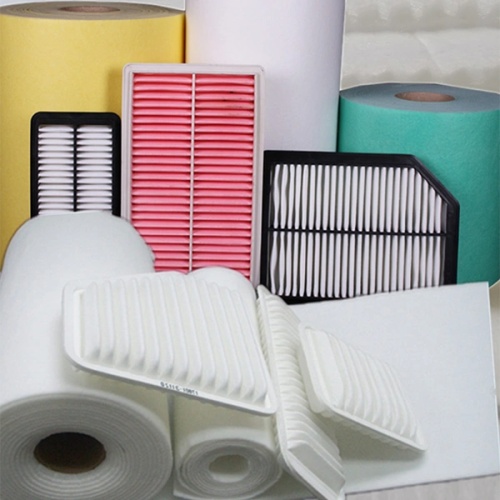
Spray booth ceiling filters commonly utilize a multi-layered construction, leveraging a combination of materials to maximize filtration efficiency and durability. The primary filtration media is typically comprised of progressively denser layers of synthetic fibers, most often polyester or polypropylene. These materials are selected for their high surface area-to-volume ratio, low cost, and resistance to chemical degradation from common paint solvents. The initial layers, known as pre-filters, are constructed from coarser fibers to capture larger particles and extend the lifespan of the more efficient downstream layers. These pre-filters are often manufactured through a spunbond process, creating a non-woven fabric with controlled pore sizes. The final filter layers, responsible for capturing sub-micron particles, employ a meltblown process, producing a microfibrous web with exceptional particle capture capabilities. These layers are often treated with a tackifier, a chemical substance that enhances particle adhesion. The filter media is typically supported by a rigid frame constructed from galvanized steel or plastic, providing structural integrity and ease of installation. Manufacturing processes involve precise control of fiber diameter, web formation, and media pleating (in pleated filter designs). Key parameters monitored include air permeability, basis weight (grams per square meter), and fiber denier. Chemical compatibility with various paint types (acrylics, epoxies, urethanes, etc.) is a critical consideration during material selection. Failure to account for solvent resistance can lead to premature filter degradation and reduced performance. Adhesive bonding used in pleat construction must also demonstrate resistance to temperature fluctuations and chemical exposure.
Performance & Engineering
The performance of spray booth ceiling filters is fundamentally governed by principles of fluid dynamics and particle physics. Airflow resistance, measured as pressure drop (in inches of water gauge), is a critical parameter; higher resistance necessitates more powerful and energy-consuming exhaust fans. Filter efficiency, typically quantified by MERV (Minimum Efficiency Reporting Value) or EN 779 ratings, indicates the filter’s ability to capture particles of varying sizes. Higher MERV ratings denote greater efficiency, but often come at the cost of increased pressure drop. Engineering design considerations include the filter’s surface area, pleat depth (for pleated filters), and the distribution of airflow across the filter media. Effective filter design aims to maximize surface area while minimizing pressure drop, ensuring optimal particle capture without excessively straining the exhaust system. Force analysis is essential to ensure the structural integrity of the filter under sustained airflow and particulate loading. The filter frame must withstand aerodynamic drag and the weight of accumulated dust without deformation or failure. Environmental resistance is another key factor. Filters must maintain their performance characteristics under a range of temperature and humidity conditions. Compliance requirements, dictated by local and national environmental regulations (such as those set by the EPA in the United States or equivalent agencies elsewhere), often specify minimum filtration efficiency standards and permissible emission levels. Proper seal design between the filter and the spray booth housing is crucial to prevent bypass leakage, ensuring that all exhaust air passes through the filter media. Computational Fluid Dynamics (CFD) modeling is frequently employed to optimize filter design and predict performance under various operating conditions.
Technical Specifications
| Parameter | Typical Value (Standard Filter) | High-Efficiency Filter | Extended Life Filter |
|---|---|---|---|
| MERV Rating | 8-11 | 13-16 | 8-11 (with increased media loading) |
| Initial Pressure Drop (in. w.g.) | 0.15 – 0.25 | 0.30 – 0.50 | 0.20 – 0.30 |
| Airflow Rate (CFM/sq. ft.) | 200 – 300 | 150 – 250 | 200 – 300 |
| Dust Holding Capacity (lbs/sq. ft.) | 5 – 8 | 8 – 12 | 10-15 |
| Media Material | Polyester/Polypropylene Blend | Progressively Dense Polyester/Polypropylene with Tackifier | Multi-Layer Polyester with Enhanced Loading Capacity |
| Frame Material | Galvanized Steel or Plastic | Galvanized Steel or Plastic | Galvanized Steel or Plastic |
Failure Mode & Maintenance
Spray booth ceiling filters are susceptible to several failure modes that can compromise their performance and lead to costly downtime. A common failure mode is media fatigue cracking, where repeated flexing and particulate loading cause the filter media to tear or develop holes, allowing unfiltered particles to pass through. This is exacerbated by high airflow rates and fluctuations in temperature and humidity. Another prevalent issue is media delamination, where the layers of the filter media separate, reducing the effective filtration area. This often results from inadequate adhesive bonding or exposure to aggressive solvents. Progressive media loading, while an inherent part of filter operation, can lead to increased pressure drop and reduced airflow, eventually necessitating filter replacement. Chemical degradation of the filter media, particularly from exposure to harsh solvents or corrosive substances, can diminish its capture efficiency and structural integrity. Oxidation of the filter frame (in galvanized steel frames) can lead to corrosion and structural weakening. Maintenance procedures should include regular visual inspections to identify signs of damage, such as tears, delamination, or corrosion. Pressure drop measurements should be taken periodically to assess filter loading and determine when replacement is necessary. Filters should be replaced in accordance with manufacturer recommendations and regulatory requirements. Proper disposal of used filters is essential to prevent environmental contamination. In some cases, filters can be regenerated through cleaning (e.g., compressed air blowback), but this is typically limited to pre-filters and may not be suitable for high-efficiency filters.
Industry FAQ
Q: What is the impact of filter efficiency (MERV rating) on energy consumption?
A: Higher MERV ratings generally correlate with increased pressure drop, meaning the exhaust fan must work harder to maintain the desired airflow. This increased effort translates directly into higher energy consumption. Therefore, selecting the lowest MERV rating that still meets regulatory requirements and coating quality standards is crucial for optimizing energy efficiency.
Q: How often should spray booth ceiling filters be replaced?
A: Filter replacement frequency depends on several factors, including the type of coating being applied, the volume of overspray, and the filter's dust-holding capacity. Regularly monitoring the pressure drop across the filter is the most reliable indicator. Replacement is typically recommended when the pressure drop reaches a predetermined threshold specified by the manufacturer or when visual inspection reveals significant damage.
Q: What are the risks associated with using filters that are not chemically compatible with the paints being sprayed?
A: Using incompatible filters can lead to premature filter degradation, reduced filtration efficiency, and even the release of harmful chemicals into the work environment. This can result in compromised coating quality, worker safety hazards, and potential regulatory violations. Always verify the filter material's chemical resistance before use.
Q: How does the pleat depth of a pleated filter affect its performance?
A: Greater pleat depth generally increases the filter's surface area, allowing it to capture more particulate matter before becoming clogged. This results in a longer service life and reduced pressure drop. However, excessively deep pleats can increase airflow resistance and may not be suitable for all applications.
Q: What are the best practices for filter installation to prevent bypass leakage?
A: Proper sealing between the filter and the spray booth housing is paramount. Ensure that the filter frame fits snugly within the housing and that any gaskets or seals are in good condition and properly positioned. Avoid over-tightening fasteners, as this can distort the frame and create gaps. Regular inspection of the seals is also recommended.
Conclusion
Spray booth ceiling filters represent a vital, yet often underestimated, component in maintaining efficient and compliant spray finishing operations. Understanding the underlying material science, manufacturing processes, and performance characteristics of these filters is crucial for selecting the optimal solution for a given application. Careful consideration of factors such as MERV rating, pressure drop, dust-holding capacity, and chemical compatibility is essential to ensure both air quality and operational efficiency.
Effective filter management, including regular inspections, pressure drop monitoring, and timely replacement, is critical for minimizing downtime, reducing energy consumption, and maintaining compliance with environmental regulations. Advancements in filter technology continue to focus on improving filtration efficiency, reducing airflow resistance, and extending filter service life, offering opportunities for further optimization of spray booth operations.