
Introduction
Nonwoven filter media represent a critical component in a diverse range of industrial processes, encompassing air and liquid filtration, separation, and purification. Unlike woven fabrics, nonwovens are engineered assemblies of fibers bonded together through mechanical, thermal, chemical, or solvent means. These materials are characterized by their isotropic properties, meaning performance is consistent regardless of direction, and their ability to be tailored for specific filtration requirements. Within the industrial chain, nonwoven filter media typically sit between raw material suppliers (polymer, cellulose, glass fibers) and the manufacturers of complete filtration systems – from HVAC filters and automotive cabin air filters to industrial process filters and medical applications. Core performance characteristics include particle retention efficiency, airflow resistance (pressure drop), and overall durability within the target operating environment. Understanding the nuances of nonwoven construction and material selection is paramount for optimizing filtration performance and addressing increasingly stringent regulatory demands.
Material Science & Manufacturing
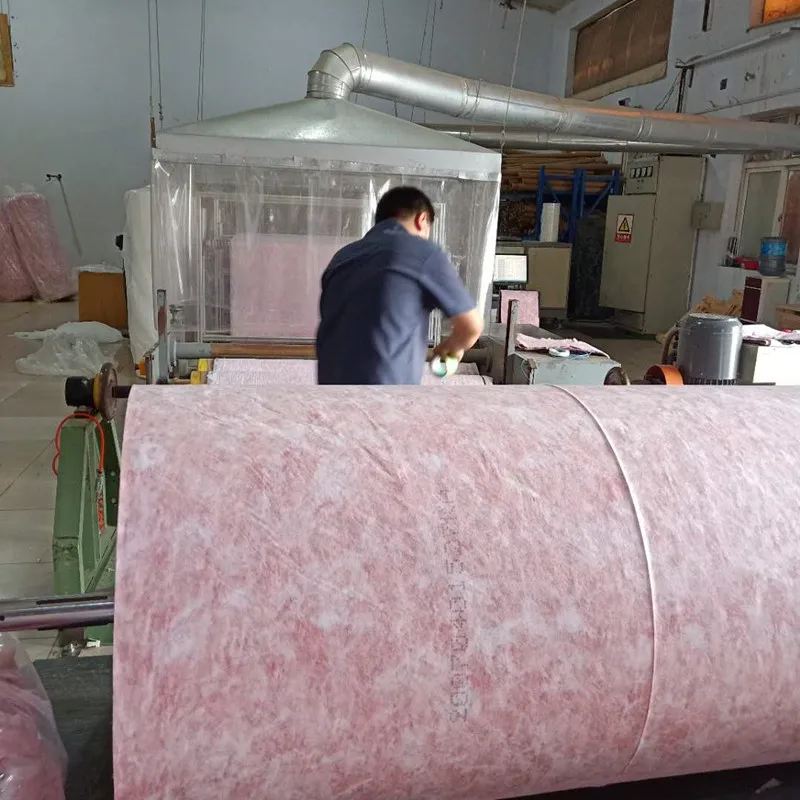
The material science underpinning nonwoven filter media is diverse, broadly categorized into synthetic polymers (polypropylene, polyester, polyamide, polyethylene), natural fibers (cellulose, cotton), and inorganic fibers (glass fiber). Polypropylene is widely used due to its cost-effectiveness and chemical resistance, while polyester offers higher temperature resistance and dimensional stability. Polyamide (Nylon) provides superior strength and abrasion resistance, often chosen for demanding applications. Glass fiber is critical for high-temperature filtration and often used in combination with synthetic polymers to enhance structural integrity. Manufacturing processes are equally varied. Spunbond nonwovens involve extruding molten polymer filaments and laying them down as a continuous web, then bonding them via thermal calendaring or chemical adhesion. Meltblown nonwovens utilize high-velocity air to attenuate molten polymer filaments into microfibers, creating a highly fibrous web with excellent filtration efficiency. Needlepunching mechanically interlocks fibers using barbed needles, producing a robust and durable fabric. Thermoforming utilizes heat and pressure to bond fibers, often used with bicomponent fibers to create unique properties. A critical parameter in all processes is fiber denier (fineness), which directly impacts pore size and filtration efficiency. Precise control of polymer molecular weight, extrusion temperature, and cooling rates are crucial for achieving consistent product quality. Chemical additives, such as antistatic agents and surfactants, are frequently incorporated to modify surface properties and enhance performance.

Performance & Engineering
Performance of nonwoven filter media is governed by a complex interplay of factors, primarily particle capture mechanisms: interception, inertial impaction, diffusion, and electrostatic attraction. Interception occurs when particles follow streamlines and come into contact with fibers. Inertial impaction is dominant for larger particles that cannot follow airflow bends. Diffusion becomes significant for very small particles exhibiting Brownian motion. Electrostatic attraction, often enhanced by electret treatment, draws charged particles towards the filter media. Airflow resistance (pressure drop) is directly related to fiber density, fiber diameter, and media thickness. Engineering considerations include stress-strain behavior under load, particularly for bag filters, where the media must withstand substantial pressure differentials. Environmental resistance is paramount; exposure to humidity, temperature fluctuations, and chemical contaminants can degrade performance. Compliance requirements vary widely by industry. For example, the pharmaceutical industry demands stringent validation protocols and adherence to GMP (Good Manufacturing Practice) standards. Automotive applications require compliance with ISO 16889, specifying filter performance for passenger vehicle cabin air filters. Industrial applications often adhere to EN 779 for air filtration and ISO 4793 for hydraulic fluid filtration. The selection of appropriate fiber type, bonding method, and post-treatment (e.g., electret charging, chemical coating) must be tailored to the specific application and operating environment.
Technical Specifications
| Parameter | Polypropylene (PP) Spunbond | Polyester (PET) Meltblown | Glass Fiber Composite | Polypropylene/Cellulose Blend |
|---|---|---|---|---|
| Basis Weight (g/m²) | 15 - 100 | 20 - 80 | 50 - 200 | 70 - 150 |
| Thickness (mm) | 0.5 - 2.0 | 0.2 - 1.0 | 1.0 - 5.0 | 0.8 – 2.5 |
| Air Permeability (@ 125 Pa) (m³/min/m²) | 50 - 300 | 10 - 80 | 5 - 50 | 80 - 250 |
| Minimum Efficiency Reporting Value (MERV) | 6 - 13 | 8 - 16 | 14 - 19 | 8 - 12 |
| Tensile Strength (MD/CD) (N/50mm) | 100/80 | 50/40 | 200/150 | 120/90 |
| Maximum Operating Temperature (°C) | 80 | 120 | 250 | 60 |
Failure Mode & Maintenance
Nonwoven filter media are susceptible to several failure modes. Mechanical failure can occur through tearing, delamination, or fiber breakage, often exacerbated by excessive pressure drop or cyclical loading. Chemical degradation results from exposure to corrosive substances, leading to fiber embrittlement and loss of filtration efficiency. Biological growth, particularly in humid environments, can clog pores and promote microbial proliferation. Electrostatic discharge can neutralize the charge on electret filters, diminishing their performance. Fiber shedding, particularly from meltblown media, can release particles into the downstream process. Maintenance strategies depend on the application. For disposable filters, replacement is the primary maintenance action. For reusable filters, regular cleaning is essential. Cleaning methods include compressed air blowback, backwashing with liquid, and ultrasonic cleaning. It’s critical to avoid harsh chemicals or abrasive cleaning agents that can damage the filter media. Regular inspection for tears, discoloration, or reduced airflow is crucial for identifying potential failures before they compromise performance. Proper storage conditions (dry, dust-free environment) are essential for extending the lifespan of nonwoven filter media. Failure analysis should include microscopic examination of fibers to identify damage mechanisms and material defects.
Industry FAQ
Q: What is the impact of humidity on the performance of polypropylene nonwoven filter media?
A: High humidity can plasticize polypropylene, reducing its tensile strength and increasing its susceptibility to deformation. Moisture can also promote the growth of microorganisms, leading to filter clogging and reduced efficiency. Furthermore, water droplets can coalesce on the fiber surface, increasing surface tension and potentially altering particle capture mechanisms.
Q: How does electret treatment enhance filtration efficiency?
A: Electret treatment imparts a permanent electrostatic charge to the filter fibers. This charge attracts charged particles, enhancing particle capture through electrostatic attraction, especially for sub-micron particles that are difficult to capture by inertial impaction or interception. The efficiency gain is significant, often exceeding that of mechanically bonded media alone.
Q: What are the advantages of using a glass fiber composite media over a purely synthetic nonwoven?
A: Glass fiber composites offer superior temperature resistance, dimensional stability, and mechanical strength compared to purely synthetic nonwovens. They are well-suited for high-temperature filtration applications and can withstand higher pressure differentials without deformation. Glass fibers also provide a reinforcing effect, preventing media collapse under load.
Q: What is the role of basis weight in determining filter performance?
A: Basis weight, measured in grams per square meter (g/m²), represents the mass of the nonwoven fabric. Higher basis weights generally correspond to greater fiber density and increased filtration efficiency, but also higher pressure drop. Optimizing basis weight is a crucial trade-off between performance and airflow resistance.
Q: How do you assess the chemical compatibility of a nonwoven filter media with a specific process fluid?
A: Chemical compatibility is assessed through immersion testing, where the filter media is exposed to the process fluid for a specified period at a defined temperature. Changes in weight, tensile strength, appearance, and filtration efficiency are monitored to determine the media’s resistance to chemical degradation. Compatibility charts and expert consultation are valuable resources.
Conclusion
Nonwoven filter media represent a sophisticated technology driven by material science and engineered manufacturing processes. Their versatility and customizability make them indispensable across a wide spectrum of industrial applications. Optimizing performance requires a thorough understanding of filtration mechanisms, material properties, and the specific demands of the operating environment.
Future trends in nonwoven filter media development include the integration of nanomaterials to enhance filtration efficiency, the development of biodegradable and sustainable materials, and the implementation of smart filtration systems with real-time monitoring and predictive maintenance capabilities. Continued innovation in this field will be critical for addressing emerging challenges in air and liquid purification.