

Introduction
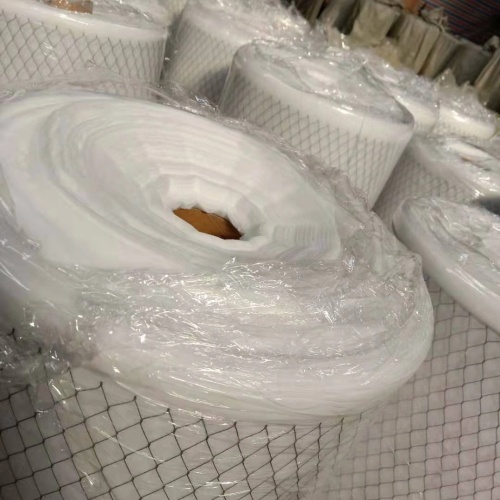
Microfiber filter paper is a critical component in numerous industrial filtration processes, utilized for the separation of particulate matter from liquids and gases. Characterized by its exceptionally fine fiber diameter—typically less than 10 micrometers—it provides a high surface area to volume ratio, enabling superior filtration efficiency and capacity compared to traditional cellulose-based filter papers. Its position within the industrial chain is primarily as a consumable component in liquid and gas purification systems, analytical instrumentation, and process monitoring. Core performance characteristics include particle retention size, flow rate, wet strength, and chemical compatibility. The increasing demand for high-purity products across industries like pharmaceuticals, biotechnology, food & beverage, and microelectronics drives the continued innovation and adoption of microfiber filter paper.
Material Science & Manufacturing
Microfiber filter paper is primarily constructed from synthetic polymer fibers, most commonly polypropylene (PP), polyester (PET), and nylon (polyamide). Polypropylene is favored for its cost-effectiveness and resistance to a broad range of chemicals. Polyester offers improved temperature resistance and tensile strength, while nylon exhibits high chemical resistance and abrasion resistance. The raw materials undergo melt spinning, a process where the polymer is heated and extruded through a spinneret to create continuous filaments. These filaments are then drawn and oriented to enhance their mechanical properties. Manufacturing involves a complex non-woven process, typically utilizing thermal bonding or wet-laid techniques. Thermal bonding employs heat and pressure to fuse the fibers together, creating a cohesive web. Wet-laid processing disperses the fibers in a water suspension before forming a web on a moving wire mesh, followed by drying and calendaring. Key parameter control during manufacturing includes fiber denier (fineness), web uniformity, bonding parameters (temperature, pressure, time), and basis weight (grams per square meter). Variations in these parameters directly impact the filter paper’s porosity, permeability, and filtration efficiency. The addition of chemical binders or surface treatments can further modify properties such as hydrophobicity, hydrophilicity, and particle binding capacity.

Performance & Engineering
The performance of microfiber filter paper is dictated by several engineering principles. Darcy’s Law governs fluid flow through the porous media, correlating flow rate, permeability, viscosity, and pressure drop. Particle retention is primarily achieved through a combination of mechanisms: straining (physical capture of particles larger than the pore size), interception (particles following streamlines contacting fibers), diffusion (Brownian motion of small particles leading to collision with fibers), and electrostatic attraction. The filter’s efficiency is characterized by its beta ratio, which represents the ratio of upstream to downstream particle concentration for a specific particle size. Environmental resistance is a critical consideration, particularly in applications involving exposure to corrosive chemicals or elevated temperatures. Polypropylene exhibits good chemical resistance but limited temperature stability, while polyester and nylon offer improved performance in harsh environments. Mechanical strength, measured by tensile strength and burst strength, determines the filter paper’s ability to withstand pressure differentials and handling stresses. Compliance requirements vary depending on the application. For pharmaceutical filtration, adherence to USP (United States Pharmacopeia) and EU GMP (Good Manufacturing Practice) guidelines is essential, focusing on leachables and extractables testing to ensure product purity. For food & beverage applications, the filter paper must comply with FDA regulations for food contact materials.
Technical Specifications
| Material | Pore Size (µm) | Basis Weight (g/m²) | Tensile Strength (N/50mm) |
|---|---|---|---|
| Polypropylene | 0.2 | 70 | 20 |
| Polypropylene | 0.45 | 90 | 25 |
| Polyester | 0.2 | 80 | 35 |
| Polyester | 0.6 | 100 | 40 |
| Nylon | 0.45 | 75 | 30 |
| Nylon | 1.0 | 95 | 38 |
Failure Mode & Maintenance
Microfiber filter paper is susceptible to several failure modes. Channeling, where the fluid finds preferential paths through the filter media, reduces filtration efficiency and can lead to breakthrough of particulates. This is often caused by uneven loading or damage to the filter media. Filter clogging occurs when excessive particulate matter accumulates, increasing pressure drop and eventually halting flow. Chemical degradation can occur if the filter paper is exposed to incompatible chemicals, leading to swelling, dissolution, or loss of mechanical strength. Hydrolytic degradation, particularly for polyester filters, can occur in the presence of moisture and elevated temperatures. Mechanical failure, such as tearing or delamination, can result from excessive pressure differentials or improper handling. Maintenance primarily involves regular replacement of the filter paper, following the manufacturer’s recommendations based on application and fluid characteristics. Pre-filtration, using a coarser filter upstream, can extend the lifespan of the microfiber filter. Proper handling procedures, avoiding excessive pressure and sharp objects, are crucial to prevent mechanical damage. Regular monitoring of pressure drop across the filter provides an indication of clogging and the need for replacement.
Industry FAQ
Q: What is the impact of pore size selection on filtration efficiency and flow rate?
A: Smaller pore sizes provide higher filtration efficiency by capturing smaller particles, but they also result in lower flow rates due to increased resistance. The optimal pore size is a trade-off between efficiency and flow, determined by the specific application requirements. Selecting a pore size too small can cause rapid clogging, while a pore size that’s too large may not remove the target contaminants.
Q: How does the chemical compatibility of the filter material affect its performance?
A: Chemical compatibility is paramount. Exposure to incompatible chemicals can lead to swelling, dissolution, or degradation of the filter media, compromising its integrity and filtration efficiency. It’s crucial to verify the chemical resistance of the filter material against all fluids it will encounter during operation.
Q: What are the implications of using a filter paper with low wet strength in applications involving aqueous solutions?
A: Low wet strength can result in tearing or delamination of the filter paper when wetted, leading to bypass of unfiltered fluid and potential contamination. Filters designed for aqueous applications should possess adequate wet strength to maintain their integrity throughout the filtration process.
Q: How can channeling be prevented during filtration?
A: Channeling can be prevented by ensuring even distribution of fluid across the filter surface, using a properly sized filter housing, and avoiding damage to the filter media. Using a pre-filter to remove larger particles can also reduce the risk of channeling. Careful installation and monitoring are also key.
Q: What are the considerations for selecting a microfiber filter paper for sterile filtration?
A: For sterile filtration, the filter paper must have an absolute pore size rating (verified by bubble point testing) to guarantee the removal of all microorganisms. The filter material must also be validated for its ability to withstand autoclaving or gamma irradiation for sterilization without compromising its integrity. Material leachables must also be minimized.
Conclusion
Microfiber filter paper represents a sophisticated filtration solution, offering a compelling combination of high efficiency, capacity, and versatility. The performance characteristics are intricately linked to the material science – specifically the polymer selection, fiber morphology, and manufacturing process – necessitating careful consideration of application-specific requirements. Understanding the interplay between pore size, basis weight, and chemical compatibility is vital for optimal filter selection and performance.
Future advancements will likely focus on developing filter papers with enhanced chemical resistance, improved wet strength, and reduced protein binding for biopharmaceutical applications. Integration of nanomaterials to impart antimicrobial properties or self-cleaning capabilities represents another promising area of research. The continued evolution of microfiber filter paper will play a crucial role in enabling advancements across a broad spectrum of industries requiring high-purity products and efficient separation processes.