

Introduction
Laminated air filter media rolls represent a significant advancement in particulate filtration technology. They consist of multiple layers of filtration media, often a combination of synthetic fibers (polypropylene, polyester) and potentially activated carbon, bonded together through lamination processes. These rolls are crucial components in HVAC systems, cleanrooms, automotive cabin air filtration, and industrial dust collection, offering improved efficiency, extended service life, and specialized filtration capabilities. The technical position in the industry chain places laminated media downstream of polymer and fiber production, and upstream of filter assembly and end-user applications. Core performance characteristics include high dust holding capacity, low pressure drop, and the ability to capture a wide range of particle sizes, from coarse dust to submicron aerosols. Understanding the nuances of material selection, lamination techniques, and performance metrics is critical for optimizing filter performance and addressing specific air quality challenges.
Material Science & Manufacturing
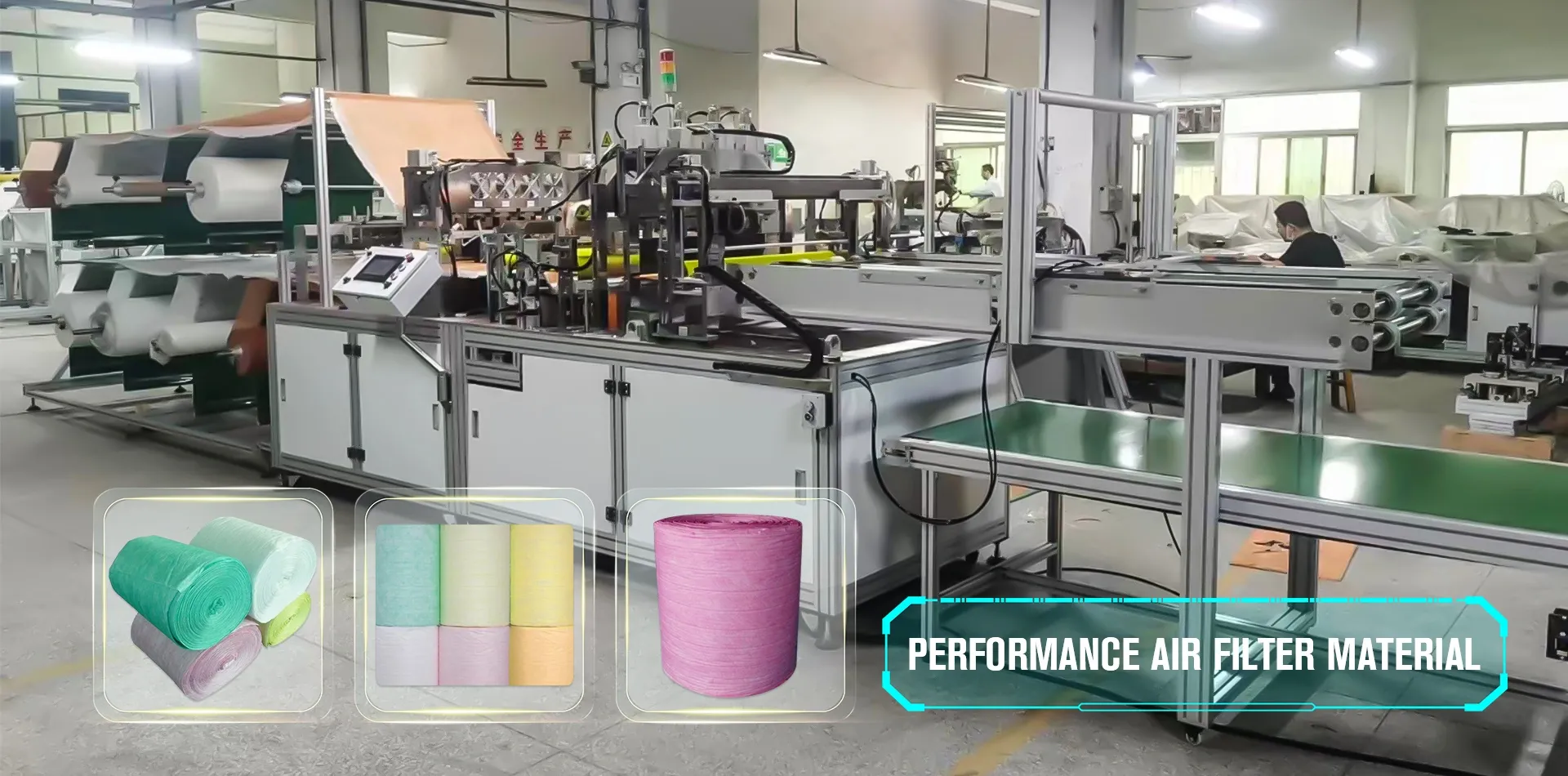
The core materials in laminated air filter media are typically polypropylene (PP), polyester (PET), and, in some cases, acrylic (PMMA) fibers. Polypropylene offers excellent chemical resistance and is cost-effective, while polyester provides higher temperature resistance and dimensional stability. Acrylic fibers contribute to electrostatic attraction of particles. Lamination adhesives are critical, with hot melt adhesives (based on polymers like EVA or polyolefin) being commonly used due to their low VOC content and rapid bonding characteristics. The manufacturing process typically begins with fiber formation through meltblowing or spunbond techniques, creating nonwoven fabrics. These fabrics are then layered according to the desired filtration grade and properties. Lamination is achieved through calendaring, where heat and pressure are applied to bond the layers together. Key parameter control involves precise temperature regulation during lamination to prevent fiber damage or adhesive degradation, consistent web tension to avoid wrinkles or distortions, and accurate adhesive application to ensure uniform bonding. The media's basis weight (g/m²) – the mass per unit area – directly impacts its dust-holding capacity and pressure drop. Fiber diameter influences filtration efficiency, with smaller fibers generally leading to better capture of submicron particles. The pore size distribution, characterized by bubble point tests and air permeability measurements, is also a critical factor.
Performance & Engineering
The performance of laminated air filter media is governed by several engineering principles. Darcy's Law dictates the relationship between pressure drop, airflow rate, and media permeability. A lower permeability (due to finer fibers and tighter lamination) increases pressure drop but also improves filtration efficiency. The BET (Brunauer-Emmett-Teller) surface area measurement is used to quantify the available surface area for particle capture. Electrostatic attraction, particularly when acrylic fibers are present, enhances the capture of charged particles. Force analysis considers the drag force exerted by the airflow on particles, the inertial impaction force, and the diffusional forces. Environmental resistance is a critical consideration. Media must withstand temperature fluctuations, humidity variations, and exposure to potential chemical contaminants without significant degradation of filtration performance. Compliance requirements vary by application. For HVAC systems, ASHRAE standards (specifically ASHRAE 52.2) dictate minimum efficiency reporting values (MERV). For automotive applications, SAE standards specify filtration efficiency and pressure drop requirements. For cleanroom applications, ISO 14644 standards define air cleanliness classes and filtration requirements. The media’s structural integrity under sustained airflow is assessed through burst pressure testing and tensile strength analysis.
Technical Specifications
| Parameter | Unit | Typical Value (Grade M5-M12 Equivalent) | Testing Standard |
|---|---|---|---|
| MERV Rating | - | 8 – 16 | ASHRAE 52.2 |
| Initial Pressure Drop | Pa | 150 – 350 | ISO 8508 |
| Average Arrestance | % | 60 – 95 | ASHRAE 52.2 |
| Minimum Efficiency Reporting Value (MERV) | - | 5 – 12 | ASHRAE 52.2 |
| Basis Weight | g/m² | 120 – 250 | ISO 536 |
| Air Permeability | m³/min/m² | 50 – 150 | ISO 9000 |
Failure Mode & Maintenance
Laminated air filter media can experience several failure modes. Fatigue cracking can occur due to prolonged exposure to cyclic airflow and pressure fluctuations, particularly at lamination seams. Delamination, or separation of layers, can result from adhesive failure caused by temperature extremes or chemical exposure. Degradation of the filtration media itself can occur due to UV exposure (leading to brittleness) or hydrolysis (breakdown of polymer chains due to moisture). Oxidation can affect the media's fibers, reducing their strength and filtration efficiency. Clogging, or excessive dust loading, leads to increased pressure drop and reduced airflow. Maintenance typically involves regular filter replacement based on manufacturer recommendations or pressure drop monitoring. Pre-filters can be used to extend the life of laminated media filters by capturing larger particles. Visual inspection for tears, holes, or delamination is crucial. For pleated filters using laminated media, ensuring proper pleat spacing and support structure is vital to prevent pleat collapse and bypass leakage. Proper disposal methods should be followed, adhering to local environmental regulations.
Industry FAQ
Q: What is the impact of humidity on the performance of laminated filter media?
A: High humidity can plasticize the polymer fibers, reducing their stiffness and potentially increasing pressure drop. It can also lead to microbial growth within the filter, further reducing efficiency and potentially releasing allergens. Selecting media with inherently hydrophobic fibers (like polypropylene) and ensuring proper sealing can mitigate these effects.
Q: How do activated carbon layers contribute to the filtration process?
A: Activated carbon layers adsorb gaseous pollutants, VOCs, and odors, in addition to particulate filtration. The carbon's large surface area and porous structure provide ample sites for adsorption. However, carbon layers can contribute to increased pressure drop and have a limited adsorption capacity, requiring periodic replacement.
Q: What are the key differences between spunbond and meltblown nonwovens used in laminated media?
A: Spunbond fabrics are made from continuous filaments, offering higher tensile strength and dimensional stability. Meltblown fabrics are made from very fine, discontinuous fibers, providing higher surface area and better filtration efficiency for smaller particles. Laminated media often combine both for optimal performance.
Q: How is the lamination adhesive chosen to ensure compatibility with the filter media?
A: The adhesive must exhibit strong adhesion to the chosen fiber types, maintain flexibility over the operating temperature range, and be chemically inert to prevent degradation of the media or release of harmful VOCs. Hot melt adhesives are common, but their compatibility must be verified through adhesion testing and chemical resistance studies.
Q: What testing protocols are used to verify the long-term performance and durability of laminated media?
A: Long-term performance is evaluated through accelerated aging tests, including exposure to elevated temperatures, humidity, and chemical contaminants. Cyclic pressure drop testing simulates real-world operating conditions. Tensile strength and elongation tests assess the media’s structural integrity after aging. Particle capture efficiency is monitored throughout the testing period.
Conclusion
Laminated air filter media rolls represent a sophisticated filtration solution offering a balance of efficiency, capacity, and durability. The selection of appropriate materials, precise control of manufacturing parameters, and a thorough understanding of performance characteristics are essential for maximizing their effectiveness. Continued advancements in fiber technology, adhesive formulations, and lamination techniques are driving further improvements in filter performance and addressing evolving air quality challenges.
Future trends include the development of antimicrobial filter media to inhibit microbial growth, integration of sensor technology for real-time monitoring of filter performance, and the use of sustainable materials to reduce environmental impact. Optimizing the layering configuration and utilizing gradient density structures will further enhance the dust-holding capacity and efficiency of laminated media filters, leading to reduced energy consumption and improved indoor air quality.