
Introduction
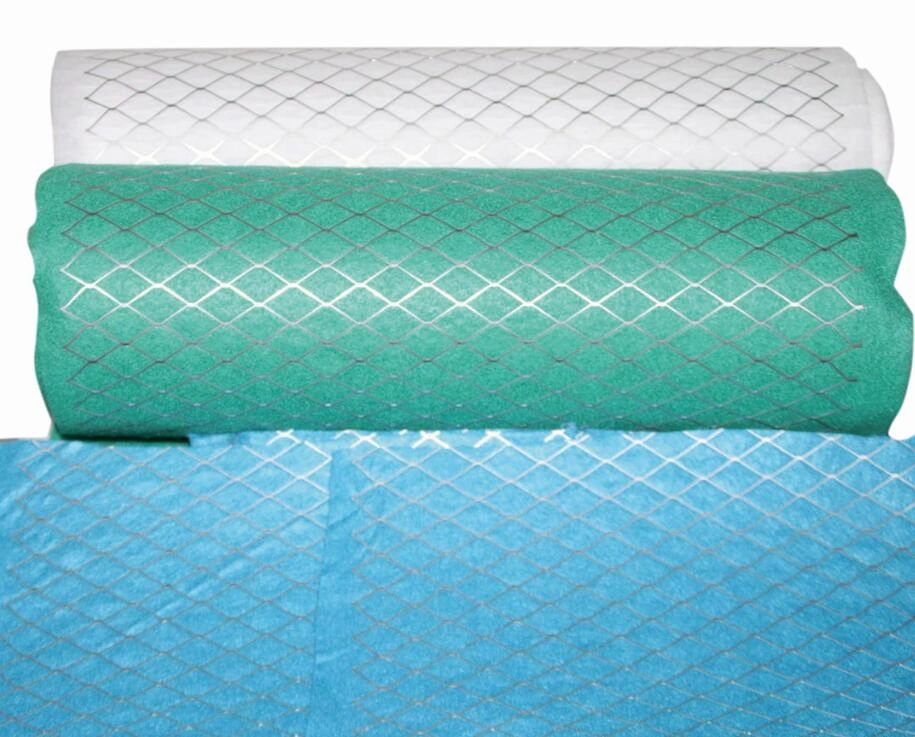
Electrostatic filter cotton represents a critical component in modern air filtration systems, particularly within Heating, Ventilation, and Air Conditioning (HVAC), cleanrooms, and industrial process filtration. Unlike traditional mechanical filters relying solely on fiber density, electrostatic filter cotton leverages the principles of triboelectricity and electret bonding to enhance particle capture efficiency. This technology enables the capture of submicron particles with significantly lower pressure drop compared to High-Efficiency Particulate Air (HEPA) filters, offering a compelling balance between performance and energy consumption. The manufacturing process, focusing on polymer selection and electrostatic charge embedding, directly dictates the filter's effectiveness. This guide provides a comprehensive technical overview of high-quality electrostatic filter cotton, covering material science, manufacturing techniques, performance characteristics, failure modes, and relevant industry standards. A key industry pain point lies in maintaining consistent electrostatic charge over the filter's lifespan and mitigating performance degradation due to humidity and chemical exposure.
Material Science & Manufacturing
The core material for electrostatic filter cotton is typically polypropylene (PP), chosen for its low cost, chemical resistance, and inherent dielectric properties. However, premium formulations often incorporate a blend of PP with polyethylene (PE) or polyester fibers to modify fiber diameter, improve web formation, and enhance mechanical strength. The manufacturing process begins with meltblowing, a nonwoven fabric production technique where molten polymer is extruded through a die and drawn by high-velocity air, creating microfibers. Fiber diameter is a crucial parameter, typically ranging from 0.5 to 5 micrometers, directly influencing filtration efficiency. These fibers are then laid down to form a web, which undergoes a critical electrostatic charging process. This is achieved through corona discharge or triboelectric charging. Corona discharge utilizes a high-voltage electrode to ionize the air around the filter media, depositing charges onto the fibers. Triboelectric charging relies on friction between the fibers and a charging roller or another material with a different triboelectric series position. The choice of charging method and voltage/pressure parameters significantly affects charge density and durability. A critical aspect is the use of electret additives during the meltblowing process. These additives, often polymeric compounds, help to stabilize the electrostatic charge and prevent its rapid dissipation. Parameter control during meltblowing – including melt temperature, airflow velocity, die pressure, and collector distance – are paramount to achieving consistent fiber morphology and electrostatic charge distribution.

Performance & Engineering
The performance of electrostatic filter cotton is primarily characterized by its Minimum Efficiency Reporting Value (MERV) rating, a standard established by ASHRAE (American Society of Heating, Refrigerating and Air-Conditioning Engineers). Higher MERV ratings indicate greater efficiency in capturing smaller particles. Electrostatic filter cotton typically achieves MERV ratings ranging from 8 to 13, effectively capturing dust, pollen, mold spores, and some bacteria. Pressure drop is a critical engineering consideration. While electrostatic charging enhances filtration efficiency, excessive charge density can lead to fiber agglomeration, increasing airflow resistance and reducing filter lifespan. Force analysis considers the electrostatic forces between the filter media and charged particles, as well as the drag force exerted by the airflow. Environmental resistance is a key concern. Humidity can significantly reduce the electrostatic charge, diminishing filtration efficiency. Similarly, exposure to certain chemicals, such as oils and solvents, can neutralize the charge or damage the polymer fibers. Filter life is directly related to particle loading and electrostatic charge decay. As the filter accumulates particles, the electrostatic charge diminishes, reducing its effectiveness. Compliance requirements, such as those outlined in EN 779 (European standard for air filters) and GB/T 32887 (Chinese national standard for air filters), dictate minimum efficiency levels and pressure drop limitations.
Technical Specifications
| Parameter | Unit | Typical Value (Grade A) | Typical Value (Grade B) |
|---|---|---|---|
| MERV Rating | - | 11 | 8 |
| Initial Pressure Drop | Pa | 15 | 10 |
| Air Permeability | m³/h·m² | 600 | 800 |
| Electrostatic Charge Density | µC/m² | ±150 | ±100 |
| Fiber Diameter | µm | 1.5 - 3 | 2 - 4 |
| Basis Weight | g/m² | 80 | 60 |
Failure Mode & Maintenance
Electrostatic filter cotton is susceptible to several failure modes. Electrostatic discharge decay is the most common, leading to reduced filtration efficiency over time. This is accelerated by high humidity, exposure to ozone, and certain volatile organic compounds (VOCs). Mechanical degradation, including fiber breakage and web tearing, can occur due to excessive airflow or physical damage. Chemical attack from oils, solvents, and acidic gases can dissolve electret additives and damage the polymer fibers, leading to charge neutralization and structural weakening. Differential pressure fatigue occurs as particle loading increases, creating stress on the filter media and potentially leading to tearing or collapse. Maintenance is limited, as electrostatic filter cotton is typically disposable. However, extending service life can be achieved by pre-filtering larger particles with a coarser filter to reduce the loading rate. Proper handling and storage are crucial to prevent contamination and electrostatic discharge prior to installation. Regularly monitoring pressure drop across the filter can indicate when replacement is necessary. Failure analysis should include microscopic examination of the fibers to assess damage and charge distribution. Corrosion, although less common, can occur if the filter is exposed to corrosive environments. Electret decay is often irreversible, requiring filter replacement.
Industry FAQ
Q: What is the impact of humidity on the performance of electrostatic filter cotton?
A: Increased humidity significantly reduces the electrostatic charge on the filter fibers, leading to a decrease in filtration efficiency, particularly for submicron particles. Water molecules can effectively neutralize the charge, reducing the attraction between the filter and charged particles. High humidity environments necessitate more frequent filter replacement or the use of filters with enhanced electret stability.
Q: How does electrostatic filter cotton compare to HEPA filters in terms of efficiency and pressure drop?
A: HEPA filters offer higher efficiency in capturing smaller particles (typically 99.97% of 0.3-micron particles), but they also have significantly higher pressure drop. Electrostatic filter cotton provides a good balance between efficiency (typically MERV 8-13) and lower pressure drop, making it suitable for applications where airflow is critical and absolute filtration isn't required.
Q: What is the role of electret additives in electrostatic filter cotton manufacturing?
A: Electret additives are incorporated into the polymer matrix during meltblowing to enhance and stabilize the electrostatic charge. These additives have a high dielectric constant and help to trap and retain charges within the fibers, prolonging the filter's effective lifespan and maintaining its filtration efficiency.
Q: Can electrostatic filter cotton be cleaned and reused?
A: Generally, electrostatic filter cotton is designed for single-use applications. Cleaning can damage the fibers and significantly reduce the electrostatic charge, diminishing its filtration efficiency. Attempting to wash or vacuum the filter is not recommended.
Q: What types of chemicals can negatively impact the performance of electrostatic filter cotton?
A: Oils, solvents, acidic gases (e.g., sulfur dioxide, nitrogen oxides), and certain VOCs can neutralize the electrostatic charge or chemically degrade the polymer fibers, reducing filtration efficiency and potentially causing structural damage. The specific chemical resistance depends on the polymer composition of the filter media.
Conclusion
High-quality electrostatic filter cotton represents a compelling filtration solution, offering a balance between efficiency, pressure drop, and cost-effectiveness. The performance characteristics are inextricably linked to the material science – specifically the selection of polymers and electret additives – and the precision of the manufacturing process, particularly the meltblowing and electrostatic charging stages. Understanding the degradation mechanisms, such as electrostatic discharge decay and chemical attack, is critical for proper application and maintenance.
Future development in this field will likely focus on enhancing electret stability, improving chemical resistance, and exploring novel charging techniques to create filters with longer lifespans and improved performance in challenging environments. Continued research into nanotechnology and advanced polymer materials holds the potential to further optimize the properties of electrostatic filter cotton, expanding its applicability across a wider range of industrial and commercial applications.