
Introduction
HEPA filter roll represents a critical component in particulate matter control across a diverse range of industrial and commercial applications. Technically defined as a High-Efficiency Particulate Air filter, these rolls consist of a media capable of arresting at least 99.97% of airborne particles 0.3 micrometers in diameter. Within the filtration industry chain, HEPA filter roll serves as a foundational input for manufacturing finished HEPA filters, used in HVAC systems, cleanrooms, pharmaceutical production, semiconductor fabrication, and increasingly, in advanced respiratory protection. Core performance characteristics revolve around filtration efficiency, pressure drop, airflow resistance, and structural integrity, all governed by precise material composition and manufacturing parameters. The increasing demand for improved indoor air quality and stringent regulatory compliance are primary drivers for ongoing innovation in HEPA filter roll technology.
Material Science & Manufacturing
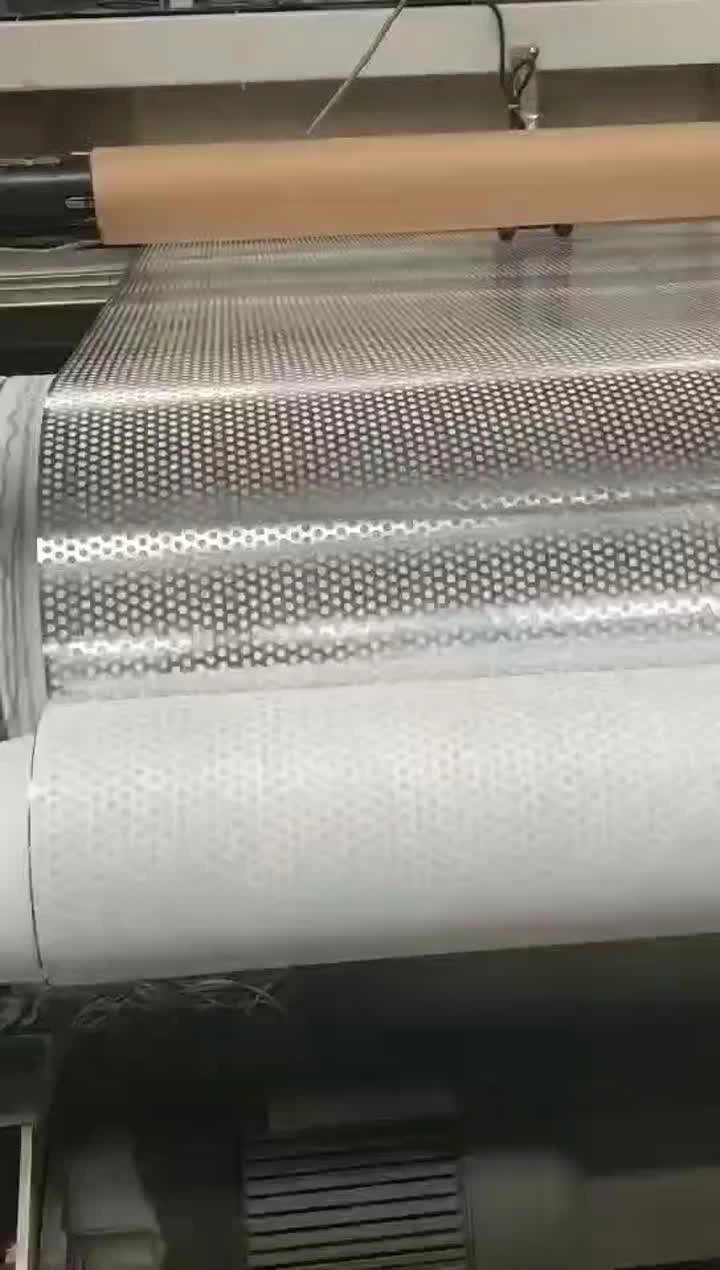
The primary material for HEPA filter roll media is typically a complex web of randomly arranged glass microfibers, often blended with synthetic fibers like polypropylene or polyester. Glass microfibers provide the high surface area crucial for efficient particle capture through diffusion and interception. Polypropylene and polyester contribute to media strength, hydrophobicity, and reduced fiber shedding. Raw material purity is paramount; even trace contaminants can degrade filter performance. Manufacturing commonly involves melt-blown nonwoven technology, where molten polymer is extruded through a die with high-velocity air, creating microfibers that are collected on a conveyor belt to form the web. Critical parameters include polymer melt temperature, air velocity, die geometry, and conveyor speed, all tightly controlled to achieve the desired fiber diameter and web basis weight. Post-processing may involve calendaring to compress the web and improve its uniformity, and impregnation with a surfactant to enhance moisture resistance and prevent fiber clumping. Electrostatic charging is also often applied to further increase filtration efficiency by enhancing particle attraction. Chemical compatibility with potential contaminants (e.g., corrosive gases) is a key consideration in material selection. Fiber diameter distribution is assessed using microscopy, while basis weight is measured gravimetrically. The consistency of the microfiber arrangement directly impacts airflow characteristics and overall performance.

Performance & Engineering
Performance of HEPA filter roll is dictated by several interconnected engineering principles. The fundamental mechanism of particle capture involves interception (particles following airflow lines come into contact with fibers), impaction (particles with inertia collide directly with fibers), and diffusion (Brownian motion causes particles to collide with fibers). The most penetrating particle size (MPPS), around 0.3 micrometers, represents the point of lowest filtration efficiency, and is the benchmark for HEPA filter certification. Force analysis considers airflow resistance, which translates to pressure drop across the filter. Higher efficiency generally correlates with increased pressure drop, necessitating a trade-off in filter design. Environmental resistance is vital; the media must withstand temperature fluctuations, humidity variations, and exposure to chemicals without significant degradation. Compliance requirements are stringent, governed by standards like EN 1822 (Europe), AS1716 (Australia/New Zealand), and IEST-RP-CC007.1 (United States). Filter integrity testing, including particle challenge tests and leak testing, verifies performance and identifies potential defects. Media loading capacity is a crucial factor, determining the filter's lifespan before performance degrades. Computational Fluid Dynamics (CFD) modeling is increasingly used to optimize filter geometry and predict airflow patterns, improving overall efficiency and reducing energy consumption. The structural integrity of the rolled media is paramount to prevent media tearing or bypass during operation.
Technical Specifications
| Parameter | Unit | Typical Value (Range) | Test Method |
|---|---|---|---|
| Filtration Efficiency (0.3µm particles) | % | ≥99.97 | EN 1822, IEST-RP-CC007.1 |
| Airflow Resistance (@ 1 inch w.g.) | Pa | 150 - 300 | ASTM D2986 |
| Basis Weight | g/m² | 80 – 120 | ISO 536 |
| Media Thickness | mm | 0.5 – 1.0 | ISO 534 |
| Maximum Operating Temperature | °C | 80 | Manufacturer Specification |
| Maximum Relative Humidity | % | 95 | Manufacturer Specification |
Failure Mode & Maintenance
Common failure modes for HEPA filter roll include media tearing due to excessive airflow or mechanical stress, media channeling caused by improper pleating or sealing, fiber shedding leading to reduced efficiency, and degradation of the media due to exposure to corrosive chemicals or high humidity. Fatigue cracking can occur in the support structure if subjected to repeated vibrations or pressure fluctuations. Delamination of the media layers can happen if the bonding agents degrade. Oxidation can degrade the fibers, especially in environments with high ozone concentrations. Preventive maintenance involves regular visual inspection for signs of damage, such as tears, holes, or discoloration. Differential pressure monitoring provides an indication of filter loading and can predict when replacement is necessary. Periodic leak testing ensures filter integrity. Proper handling and storage are crucial to prevent damage during installation or prolonged storage. Replacement should be performed according to the manufacturer's recommendations or when performance degrades below acceptable limits. Avoid exposing the filter media to direct sunlight or extreme temperatures. When discarding used filters, adhere to local regulations regarding hazardous waste disposal.
Industry FAQ
Q: What is the impact of initial pressure drop on the long-term performance of HEPA filter roll?
A: A lower initial pressure drop generally indicates a more open media structure, which can lead to faster loading and a shorter filter lifespan. Conversely, a higher initial pressure drop suggests a denser media structure with higher initial efficiency, but may limit airflow. Finding the optimal balance is crucial, considering the specific application and operating conditions.
Q: How does electrostatic charging affect the lifespan of a HEPA filter roll?
A: Electrostatic charging enhances initial filtration efficiency but can diminish over time due to environmental factors like humidity and exposure to certain gases. This decay in charge can lead to a gradual decrease in efficiency. Some HEPA filter rolls employ permanent electrostatic charging mechanisms to mitigate this effect.
Q: What are the key considerations when selecting a HEPA filter roll for use in a pharmaceutical cleanroom?
A: In pharmaceutical cleanrooms, sterility and low particle shedding are paramount. The HEPA filter roll must be manufactured in a controlled environment, undergo rigorous testing to ensure sterility, and demonstrate minimal fiber release. Compliance with ISO 14644-1 standards is essential.
Q: Can HEPA filter rolls be used in environments with high humidity?
A: Exposure to high humidity can cause the media to swell and potentially lose efficiency. Filters designed for humid environments often incorporate hydrophobic treatments or utilize synthetic fibers that are less susceptible to moisture absorption.
Q: What is the significance of media uniformity in HEPA filter roll manufacturing?
A: Media uniformity is critical for consistent performance across the entire filter area. Variations in fiber density or basis weight can create areas of lower efficiency and potential leakage paths. Precise control over the manufacturing process is essential to ensure uniformity.
Conclusion
HEPA filter roll technology represents a sophisticated intersection of material science, engineering, and regulatory compliance. Its performance is dictated by a complex interplay of factors, including fiber composition, manufacturing parameters, airflow dynamics, and environmental conditions. Achieving optimal filtration efficiency necessitates a thorough understanding of these principles and careful selection of materials and manufacturing processes.
Continued innovation in HEPA filter roll technology focuses on enhancing efficiency, reducing pressure drop, improving durability, and developing sustainable materials. As air quality standards become increasingly stringent and the demand for clean environments grows, HEPA filter roll will remain a critical component in protecting human health and ensuring the integrity of sensitive industrial processes.