

Introduction
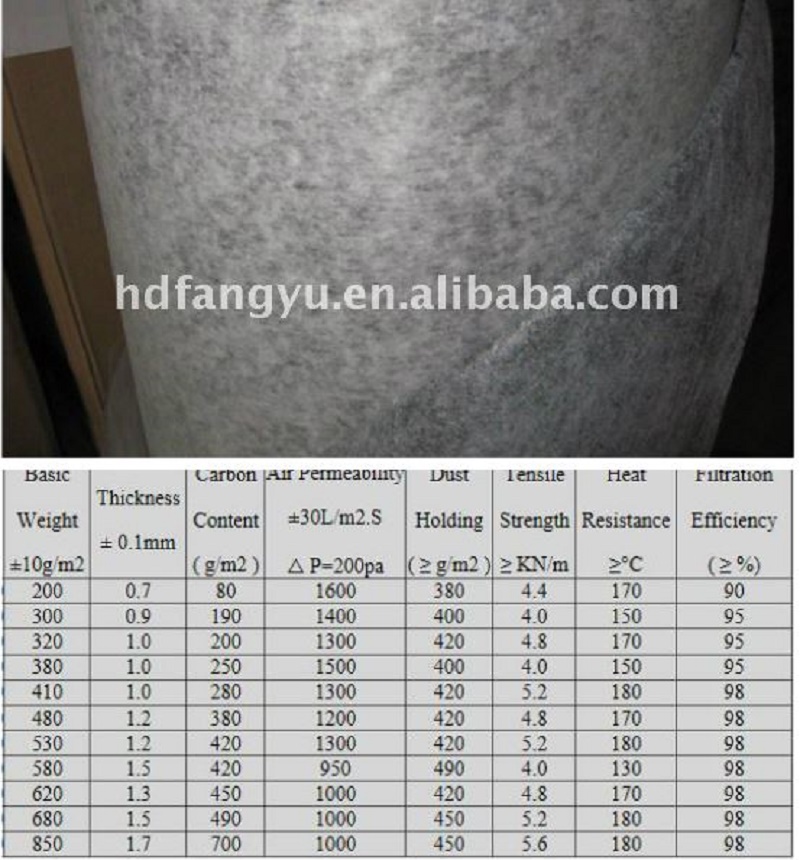
Activated carbon foam (ACF) represents a significant advancement in adsorption technology, serving as a porous material with exceptional capabilities for gas and liquid phase purification. Manufactured by numerous facilities in China, these foams are increasingly vital across diverse industrial applications, including air and water treatment, automotive emission control, and specialized filtration systems. ACF distinguishes itself from granular activated carbon through its structural integrity, allowing for lower pressure drop and enhanced mass transfer. The manufacturing landscape in China has become a dominant force due to competitive pricing and substantial production capacity, but varying quality control standards necessitate a thorough understanding of material properties and manufacturing processes. This guide provides a comprehensive technical overview of ACF, focusing on the nuances of Chinese manufacturing, performance characteristics, failure modes, and relevant industry standards. Core performance metrics revolve around surface area, pore size distribution, adsorption capacity (specifically for VOCs, mercury, and other targeted pollutants), and mechanical strength, all critically impacting long-term operational efficiency.
Material Science & Manufacturing
ACF’s material science is rooted in carbonaceous precursors, commonly coal, pitch, or polymers. The dominant Chinese manufacturing process utilizes phenolic resin as a precursor due to its cost-effectiveness and ease of foam formation. The process begins with resin polymerization, followed by foaming – typically achieved through chemical blowing agents (e.g., azodicarbonamide) that generate gaseous byproducts, creating the cellular structure. Critical parameters at this stage include agent concentration, temperature control (typically between 80-120°C), and mixing uniformity, directly influencing pore size and density. Following foaming, the material undergoes carbonization, usually in a nitrogen atmosphere at temperatures ranging from 800-1100°C. This crucial step transforms the carbonaceous foam into a highly porous network. Activation, the final stage, is achieved through either physical (steam or CO2) or chemical (KOH, ZnCl2) methods. KOH activation is prevalent in China, offering high surface area development but requiring careful wastewater treatment due to potassium hydroxide residue. Physical properties are heavily influenced by precursor type and activation conditions: higher carbonization temperatures generally yield greater graphitization and mechanical strength, while KOH activation promotes a finer pore structure and increased adsorption capacity for smaller molecules. Chemical compatibility is vital; ACF’s inherent carbon structure makes it generally resistant to most acids and alkalis but susceptible to oxidation in strong oxidizing environments.

Performance & Engineering
The engineering performance of ACF is dictated by its adsorption kinetics, mechanical robustness, and resistance to operational stressors. Force analysis under compressive loading reveals that ACF exhibits non-linear elastic behavior, with initial compliance followed by a plateau region indicative of cell wall collapse. This behavior is critical in applications involving dynamic loading, such as automotive filters. Environmental resistance is a key concern. ACF is susceptible to degradation in the presence of moisture, particularly at elevated temperatures, leading to a reduction in adsorption capacity. This is exacerbated by the presence of contaminants that can catalyze oxidative decomposition. Compliance requirements vary significantly by application. For potable water treatment, ACF must meet NSF/ANSI Standard 61 for material safety. Automotive applications demand adherence to stringent emission standards (e.g., Euro 6) and require ACF capable of effectively removing hydrocarbons and NOx. Functional implementation involves considerations of pressure drop, airflow velocity, and contact time. Optimizing these parameters ensures maximal adsorption efficiency. Furthermore, the hydrodynamics of fluid flow through the foam matrix must be carefully modeled to prevent channeling and ensure uniform utilization of the ACF’s adsorption capacity. Proper integration with sealing materials and housing structures is crucial to prevent bypass and maintain system integrity.
Technical Specifications
| Parameter | Unit | Typical Value (Range) | Test Method |
|---|---|---|---|
| Bulk Density | g/cm³ | 0.15 - 0.40 | ASTM D3854 |
| BET Surface Area | m²/g | 800 - 1500 | ASTM D4607 |
| Total Pore Volume | cm³/g | 1.5 - 3.0 | ASTM D4284 |
| Mean Pore Diameter | nm | 5 - 20 | Barrett-Joyner-Halenda (BJH) |
| Compressive Strength | kPa | 50 - 200 | ASTM D695 |
| Moisture Content | % wt | < 5 | ASTM D2867 |
Failure Mode & Maintenance
ACF is susceptible to several failure modes. Fatigue cracking occurs under cyclic loading, particularly in applications with vibration, leading to structural disintegration. Delamination can arise from improper manufacturing, creating internal voids and reducing mechanical strength. Degradation due to oxidation is accelerated by high temperatures and exposure to oxidizing agents, diminishing adsorption capacity. Adsorption of irreversibly bound contaminants can ‘poison’ the ACF, reducing its effectiveness. Blockage of pores by particulate matter reduces airflow and adsorption efficiency. Maintenance strategies include periodic backflushing to remove accumulated particulates, thermal regeneration to desorb adsorbed contaminants (typically at 400-600°C in an inert atmosphere), and chemical regeneration using appropriate solvents. Preventative measures involve pre-filtration to remove large particles, control of operating temperature and humidity, and selection of ACF grades tailored to the specific application. Regular monitoring of pressure drop and adsorption capacity provides early warning signs of degradation and facilitates timely maintenance interventions. Failure analysis should include microscopic examination (SEM) to identify cracking or delamination, and adsorption isotherm measurements to assess capacity reduction.
Industry FAQ
Q: What differentiates Chinese ACF manufacturers in terms of quality control?
A: Quality control varies significantly. Tier 1 manufacturers invest heavily in process control (e.g., statistical process control, real-time monitoring of carbonization and activation parameters) and rigorous testing (BET, pore size distribution, compressive strength, adsorption isotherms). Lower-tier manufacturers may prioritize cost reduction, leading to inconsistencies in material properties and reduced performance. Independent certification (e.g., ISO 9001) is a strong indicator of quality management.
Q: How does the precursor material (e.g., phenolic resin vs. coal) impact the ACF’s final properties?
A: Phenolic resin-based ACF generally exhibits a finer pore structure, higher surface area, and superior mechanical strength compared to coal-based ACF. However, phenolic resin can be more expensive and may generate different volatile organic compounds during manufacturing. Coal-based ACF is often more cost-effective and offers good thermal stability.
Q: What are the long-term effects of humidity on ACF performance?
A: Long-term exposure to humidity can lead to water adsorption within the pores, reducing the available surface area for contaminant adsorption. Repeated wetting and drying cycles can also cause structural degradation, particularly if the ACF is subjected to freezing temperatures. Proper drying procedures and the use of hydrophobic coatings can mitigate these effects.
Q: What are the key considerations when selecting an ACF for volatile organic compound (VOC) removal?
A: Pore size distribution is crucial. ACF with a high proportion of micropores (<2 nm) is most effective for adsorbing small VOC molecules. Surface chemistry also plays a role; modifying the ACF surface with functional groups (e.g., amine groups) can enhance its selectivity for specific VOCs. Adsorption capacity and breakthrough time must be considered for the target VOC concentration.
Q: What is the typical lifespan of ACF in a gas-phase filtration application?
A: Lifespan depends heavily on the contaminant load, operating conditions, and ACF grade. Typical lifespans range from 6 months to 2 years. Monitoring pressure drop and effluent contaminant concentrations are key indicators of depletion. Regeneration can extend the lifespan, but eventually, the ACF will require replacement due to irreversible fouling or structural degradation.
Conclusion
China’s activated carbon foam manufacturing industry presents a complex landscape of varying quality and performance characteristics. Understanding the intricacies of material science, manufacturing processes (particularly the impact of precursor selection and activation methods), and potential failure modes is paramount for successful application. The technical specifications outlined in this guide provide a framework for evaluating different ACF grades and ensuring compatibility with specific industrial needs.
Ultimately, a holistic approach – encompassing meticulous quality control, appropriate maintenance strategies, and adherence to relevant industry standards – is critical for maximizing the lifespan and performance of ACF in diverse applications. Continued research and development efforts focused on enhancing mechanical strength, improving resistance to degradation, and developing novel activation techniques will further solidify ACF’s position as a leading adsorbent material in the future.