

Introduction
Air filter paper roll is a critical component in numerous industrial and commercial air filtration systems. Positioned within the air purification value chain between raw material suppliers (pulp, synthetic fibers) and end-users (HVAC manufacturers, cleanroom operators, automotive assembly), its performance dictates system efficiency and operational longevity. Fundamentally, it’s a non-woven or woven material engineered to capture particulate matter from a gaseous stream. Core performance characteristics include particle capture efficiency (rated by MERV, HEPA, ULPA standards), airflow resistance (pressure drop), dust holding capacity, and mechanical strength under operational stress. The selection of appropriate air filter paper roll is a key factor in maintaining indoor air quality, protecting sensitive equipment, and adhering to stringent regulatory compliance requirements across industries. The primary industry pain points revolve around balancing high filtration efficiency with acceptable pressure drop to minimize energy consumption, ensuring long-term material stability against harsh operating environments, and maintaining consistent manufacturing quality to avoid system failures.
Material Science & Manufacturing
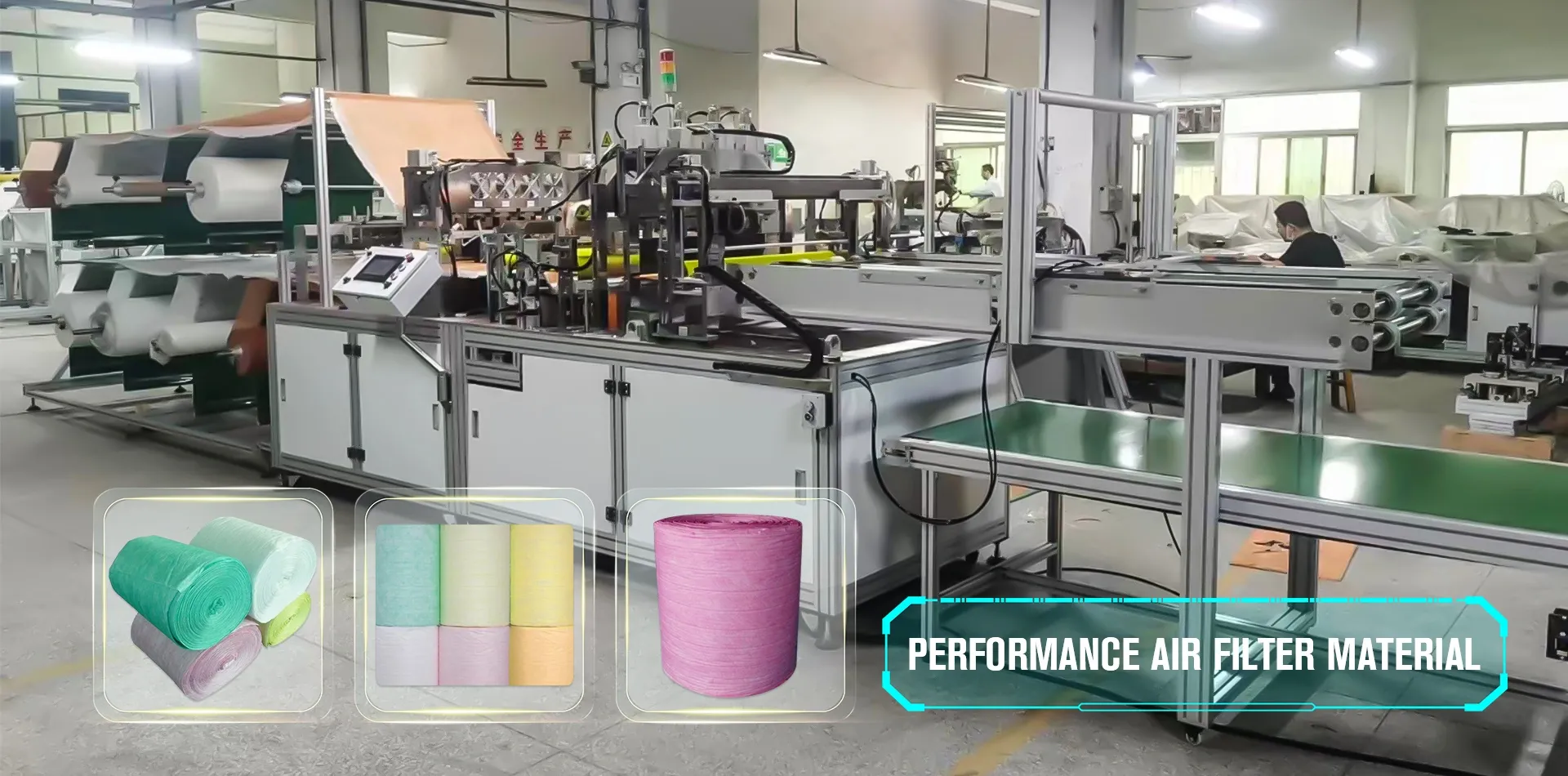
Air filter paper roll construction primarily relies on cellulose fibers (derived from wood pulp), synthetic fibers (polypropylene, polyester, polyamide), or a blend of both. Cellulose provides inherent filtration capabilities due to its naturally fibrous structure, however, it's susceptible to degradation in high humidity environments. Synthetic fibers enhance durability, moisture resistance, and can be engineered for specific pore sizes. Manufacturing processes vary depending on the desired filter grade and performance. Wet-laid non-woven processes involve dispersing fibers in water, forming a web, and then bonding them using chemical binders or thermal calendaring. This method is cost-effective for lower-grade filters. Melt-blown non-woven processes utilize high-velocity air to draw molten polymer into fine fibers, creating a highly porous and efficient filtration medium, common in HEPA filters. Woven processes, typically utilizing synthetic fibers, offer increased mechanical strength but may have lower filtration efficiency due to larger pore sizes. Key parameters in production include fiber diameter control (influences pore size and efficiency), binder selection (affects chemical resistance and airflow), web formation uniformity (impacts filtration consistency), and calendaring temperature/pressure (regulates density and pressure drop). Chemical compatibility of the binder with the intended filtration environment (e.g., exposure to oils, solvents) is crucial to prevent degradation and off-gassing. The basis weight (grams per square meter) directly correlates with dust holding capacity and pressure drop.
Performance & Engineering
The performance of air filter paper roll is governed by several engineering principles. Particle capture mechanisms include inertial impaction (for larger particles), diffusion (for smaller particles), interception (particles following airflow stream but contacting fibers), and electrostatic attraction (in electret filters). Airflow resistance, a critical performance metric, is analyzed using Darcy's Law, which relates pressure drop to flow rate and permeability. The permeability is a function of pore size distribution and fiber density. Mechanical strength is assessed through tensile testing (measuring resistance to tearing) and burst testing (measuring resistance to pressure). Environmental resistance is evaluated by exposing filters to various temperature, humidity, and chemical concentrations, monitoring changes in efficiency and pressure drop. Compliance requirements vary depending on the application. HEPA filters, used in cleanrooms and medical facilities, must meet the standards defined in EN 1822 (Europe) and UL 154 (USA), demonstrating a filtration efficiency of at least 99.97% for particles 0.3 microns in diameter. Automotive cabin air filters must meet OEM specifications, often requiring resistance to humidity, odors, and pollen. Force analysis during operation considers pressure differentials and potential stresses on the filter media, necessitating robust construction to prevent media deformation or failure. Electret filters leverage triboelectric charging to enhance particle capture, but performance degrades over time due to charge dissipation and contamination.
Technical Specifications
| Parameter | Unit | Typical Value (G4 Filter) | Typical Value (HEPA Filter) |
|---|---|---|---|
| MERV Rating | - | 4-8 | 17-20 |
| Particle Capture Efficiency (0.3µm) | % | 30-60 | ≥99.97 |
| Airflow Resistance (@ 1 inch w.g.) | Pa | 50-100 | 250-400 |
| Dust Holding Capacity | g/m² | 200-400 | 500-800 |
| Basis Weight | g/m² | 80-120 | 150-250 |
| Maximum Operating Temperature | °C | 80 | 85 |
Failure Mode & Maintenance
Air filter paper roll is susceptible to several failure modes. Media rupture can occur due to excessive pressure drop or mechanical stress, leading to unfiltered air bypass. Fiber shedding contributes to downstream contamination and reduced efficiency. Media degradation from humidity or chemical exposure causes loss of structural integrity and filtration performance. Electret filter performance declines over time due to charge dissipation and particle accumulation. Clogging, the most common failure mode, increases pressure drop, reduces airflow, and ultimately limits filter lifespan. Preventative maintenance includes regular visual inspections for tears, damage, or excessive dust accumulation. Differential pressure monitoring is critical; exceeding the manufacturer's recommended pressure drop indicates the need for filter replacement. For applications involving oily or chemically reactive environments, filters should be replaced more frequently. Avoid washing or attempting to clean filters, as this can damage the media and release captured contaminants. Proper storage in a dry, clean environment is essential to prevent pre-mature degradation. Failure analysis should consider the operating environment, filter age, and observed failure characteristics to determine the root cause and implement corrective actions.
Industry FAQ
Q: What is the difference between MERV and HEPA filtration, and when should each be used?
A: MERV (Minimum Efficiency Reporting Value) ratings indicate a filter’s ability to capture larger particles (dust, pollen). Lower MERV ratings (1-4) are suitable for pre-filtration, protecting more expensive filters. Higher MERV ratings (8-13) are used for general HVAC systems, improving indoor air quality. HEPA (High Efficiency Particulate Air) filters, with a MERV rating of 17-20, are designed to capture 99.97% of particles 0.3 microns in diameter and are essential in applications requiring ultra-clean air, such as hospitals, pharmaceutical manufacturing, and semiconductor fabrication.
Q: How does humidity affect the performance of air filter paper roll?
A: High humidity can significantly degrade the performance of cellulose-based filters, causing the fibers to swell and lose structural integrity. This leads to reduced efficiency, increased pressure drop, and potential media failure. Synthetic filters exhibit better humidity resistance, making them preferable in humid environments. Some filters utilize hydrophobic treatments to improve water repellency.
Q: What are electret filters, and what are their limitations?
A: Electret filters utilize a permanent electrostatic charge embedded within the filter media to attract and capture particles. This enhances filtration efficiency without significantly increasing pressure drop. However, the electrostatic charge gradually dissipates over time, particularly in humid or contaminated environments, leading to reduced performance. Exposure to certain chemicals can also neutralize the charge.
Q: How do I determine the appropriate pressure drop for my air filtration system?
A: The appropriate pressure drop depends on the system's fan capacity and desired airflow rate. Excessive pressure drop strains the fan, reduces airflow, and increases energy consumption. The filter manufacturer's specifications provide recommended pressure drop limits. Monitoring differential pressure across the filter is crucial to ensure optimal performance and prevent system overload. A pressure drop that exceeds the recommended limit signals the need for filter replacement.
Q: What are the considerations for selecting air filter paper roll for automotive cabin air filters?
A: Automotive cabin air filters require resistance to high humidity, temperature fluctuations, road dust, pollen, and potentially harmful gases. Activated carbon layers are often incorporated to absorb odors and volatile organic compounds (VOCs). Filters must also exhibit good airflow characteristics to maintain HVAC system performance. OEM specifications dictate the required filtration efficiency, pressure drop, and durability standards.
Conclusion
Air filter paper roll represents a sophisticated material engineered to address critical air quality challenges across diverse industries. Its performance is intricately linked to material science, manufacturing processes, and a comprehensive understanding of filtration mechanics. Optimizing filter selection involves carefully balancing efficiency, airflow resistance, durability, and cost considerations.
Ongoing advancements in filter media technology, including the development of novel synthetic fibers and enhanced electret materials, promise to further improve filtration performance and address emerging air quality concerns. Continued research into failure modes and maintenance strategies will be crucial for ensuring the long-term reliability and effectiveness of air filtration systems.