

Introduction
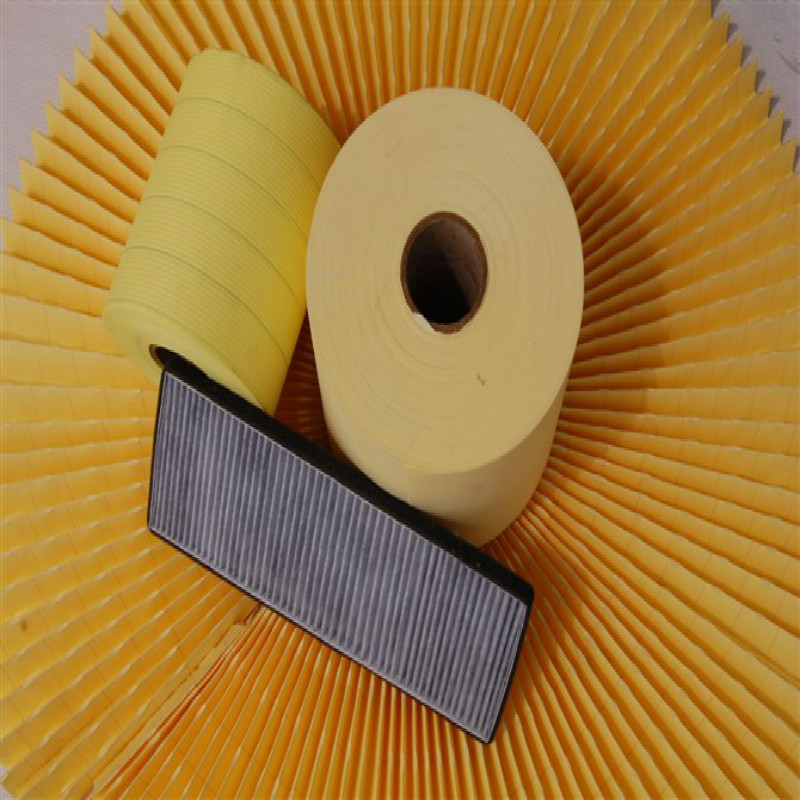
Activated carbon filters are ubiquitous in industrial and environmental engineering, functioning as a critical adsorption technology for removing contaminants from both gaseous and liquid streams. These filters leverage the exceptionally high surface area of activated carbon – typically derived from sources like coal, wood, coconut shell, or petroleum coke – to capture a wide range of pollutants. Their position within the broader process chain ranges from pre-filtration to polishing stages, depending on the application. Core performance characteristics are defined by adsorption capacity (expressed as weight percent or volume percent adsorption), adsorption kinetics (rate of contaminant removal), selectivity (preference for certain contaminants), and mechanical strength (resistance to attrition and pressure drop). Industries reliant on these filters include water treatment, air purification, food and beverage processing, pharmaceutical manufacturing, and chemical processing, all demanding increasingly stringent purity standards. The key industrial pain point centers on optimizing filter lifespan, managing regeneration or disposal costs, and ensuring consistent performance across variable feed stream compositions.
Material Science & Manufacturing
Activated carbon’s effectiveness stems from its unique material properties. The raw materials – typically carbonaceous precursors – undergo a two-stage process: carbonization and activation. Carbonization, conducted at temperatures between 600-900°C in an inert atmosphere, thermally decomposes the raw material, driving off volatile matter and leaving behind a fixed carbon matrix. Activation, critical for developing the extensive pore structure, is achieved through either physical or chemical methods. Physical activation employs oxidizing gases like steam or carbon dioxide at elevated temperatures (800-1100°C) to etch away carbon atoms, creating pores. Chemical activation utilizes activating agents (e.g., phosphoric acid, potassium hydroxide, zinc chloride) during carbonization, influencing pore size distribution and surface chemistry. The resulting activated carbon exhibits a complex pore structure classified into micropores (<2 nm), mesopores (2-50 nm), and macropores (>50 nm). The pore size distribution significantly impacts adsorption capacity and selectivity. Manufacturing filters involves forming the activated carbon into various configurations – granular activated carbon (GAC), powdered activated carbon (PAC), extruded activated carbon, or impregnated activated carbon – and incorporating them into filter housings. Key parameters controlled during manufacturing include carbonization temperature, activation time and temperature, activating agent concentration, and particle size distribution. Impregnation with metal oxides or other compounds enhances adsorption of specific contaminants like hydrogen sulfide or mercury. Binder selection in forming the carbon matrix is also critical, influencing mechanical strength and minimizing carbon fines release.

Performance & Engineering
The performance of activated carbon filters is governed by adsorption isotherms, which describe the relationship between adsorbate concentration and adsorbent loading. The Langmuir and Freundlich isotherms are commonly used models, each with limitations. The Langmuir model assumes monolayer adsorption onto a homogeneous surface, while the Freundlich model accounts for heterogeneous surfaces and multilayer adsorption. Force analysis involves evaluating pressure drop across the filter bed, dependent on carbon particle size, bed depth, and flow rate. Excessive pressure drop increases energy consumption and can lead to filter bypassing. Environmental resistance is a key consideration, particularly in applications involving high humidity or corrosive environments. Activated carbon can degrade over time due to oxidation, hydrolysis, or biological activity. Compliance requirements vary depending on the application. For potable water treatment, filters must meet NSF/ANSI Standard 61 for drinking water system components and NSF/ANSI Standard 53 for health effects. Air purification filters must comply with standards set by organizations like ASHRAE (American Society of Heating, Refrigerating and Air-Conditioning Engineers) and EN standards for air quality. Functional implementation demands careful consideration of pre-filtration to remove particulate matter and extend activated carbon lifespan. Periodic backwashing or filter replacement is essential to maintain optimal performance.
Technical Specifications
| Parameter | Granular Activated Carbon (GAC) | Powdered Activated Carbon (PAC) | Extruded Activated Carbon | Impregnated Activated Carbon |
|---|---|---|---|---|
| Particle Size (mm) | 0.2 – 5 | <0.1 | 0.8 – 4 | 0.5 – 3 |
| Surface Area (m²/g) | 500 – 1500 | 800 – 1200 | 600 – 1000 | 400 – 800 |
| Iodine Number (mg/g) | 600 – 1200 | 800 – 1100 | 400 – 800 | Varies based on impregnant |
| Apparent Density (g/cm³) | 0.4 – 0.7 | 0.4 – 0.6 | 0.5 – 0.8 | 0.6 – 0.9 |
| Adsorption Capacity (VOCs, wt%) | 10 – 30 | 15 – 25 | 8 – 20 | Dependent on impregnant and target VOC |
| Pressure Drop (@ specified flow rate) (Pa) | 200 – 800 | 500 – 1500 | 300 – 700 | 250 – 900 |
Failure Mode & Maintenance
Activated carbon filters are subject to several failure modes. Carbon fines release leads to downstream contamination and reduced filter efficiency. This is exacerbated by mechanical stress and improper handling. Pressure drop increase indicates pore blockage due to contaminant loading or biological growth. Channeling, where fluid preferentially flows through less resistant pathways, reduces contact time and adsorption effectiveness. Oxidation of the carbon surface diminishes adsorption capacity, particularly in the presence of oxidizing agents or high temperatures. Biological growth within the filter bed can consume adsorbed contaminants and foul the carbon surface. Regeneration, typically through thermal oxidation or steam stripping, restores adsorption capacity by removing adsorbed contaminants. However, regeneration can also lead to carbon loss and structural degradation. Maintenance involves regular pressure drop monitoring, periodic backwashing to remove accumulated solids, and scheduled filter replacement. In situations with high fouling potential, pre-filtration with sediment filters or membrane technologies can extend filter lifespan. Proper storage of activated carbon is crucial; exposure to moisture or air can activate the carbon prematurely and reduce its effectiveness. Disposal of spent activated carbon must comply with local environmental regulations, often requiring incineration or landfilling.
Industry FAQ
Q: What is the impact of feed stream pH on activated carbon performance?
A: Feed stream pH significantly affects the adsorption of many contaminants. Extremely acidic or alkaline conditions can alter the surface chemistry of activated carbon, reducing its adsorption capacity. For example, adsorption of certain metal ions is pH-dependent, with optimal adsorption occurring at specific pH ranges. Pre-treatment to neutralize the pH may be necessary to optimize filter performance.
Q: How does the choice of raw material affect the characteristics of the activated carbon?
A: The raw material profoundly influences the resulting pore structure, surface chemistry, and mechanical strength of the activated carbon. Coconut shell-based carbon typically exhibits a high proportion of micropores, making it ideal for gas-phase adsorption. Coal-based carbon offers a wider pore size distribution and is often used for liquid-phase applications. Wood-based carbon is relatively inexpensive but has lower mechanical strength.
Q: What are the advantages and disadvantages of chemical versus physical activation?
A: Chemical activation generally produces activated carbon with higher surface area and a narrower pore size distribution than physical activation. However, chemical activation introduces residual chemicals that require removal. Physical activation is environmentally friendlier, but results in lower surface area and a broader pore size distribution.
Q: How do I determine when an activated carbon filter needs to be replaced or regenerated?
A: Monitor the pressure drop across the filter. A significant increase indicates pore blockage. Regularly analyze the effluent stream for breakthrough of the target contaminants. When contaminant levels exceed acceptable limits, the filter needs regeneration or replacement. Periodic carbon activity testing can also assess adsorption capacity.
Q: What considerations are important when selecting an impregnated activated carbon?
A: The choice of impregnant depends on the target contaminant. For example, potassium permanganate is used to oxidize hydrogen sulfide and other odor-causing compounds. Silver impregnation provides antimicrobial properties. The impregnant concentration must be optimized to maximize adsorption without compromising filter performance.
Conclusion
Activated carbon filtration remains a cornerstone of purification technologies across diverse industries. Its efficacy hinges on a complex interplay of material science, manufacturing precision, and meticulous engineering design. Understanding the nuances of pore structure, adsorption isotherms, and potential failure modes is paramount for optimizing filter performance and minimizing operational costs.
Future advancements will likely focus on developing more sustainable activated carbon production methods, utilizing waste biomass as a feedstock, and engineering tailored pore structures for specific applications. Furthermore, integrating activated carbon filtration with other separation technologies, such as membrane processes, offers promising avenues for enhancing treatment efficiency and reducing environmental impact. A holistic approach to filter selection, operation, and maintenance is crucial for achieving long-term reliability and cost-effectiveness.