

The Arterial Syringe Vent has become a benchmark component in modern medical filtration, reflecting the broader transformation occurring across specialty materials industries. As healthcare demands evolve toward higher precision and reliability, the materials that underpin these critical devices must also advance, driving innovation in porous material engineering.
The demand for engineered porosity in specialty materials has grown exponentially across sectors ranging from medical devices to chemical processing. This surge is driven by the need for more efficient separation, controlled flow rates, and enhanced durability in harsh environments — challenges that traditional materials often fail to address. Engineers and material scientists are now turning to precisely controlled porous structures to solve problems that once seemed insurmountable.
The Convergence of Material Science and Application Engineering
In the world of high-performance specialty materials, the line between material science and application engineering is increasingly blurred. Today's most demanding applications require materials that are not only chemically compatible and thermally stable but also possess precisely controlled microstructures. Porous materials, in particular, have emerged as a critical enabler for technologies ranging from advanced filtration systems to catalytic reactors and biomedical implants.
The ability to engineer pore size, distribution, and connectivity at the micrometer and nanometer scales has opened new possibilities for separation efficiency, flow dynamics, and mechanical integrity. Industries that once relied on conventional mesh or membrane technologies are now adopting sintered porous materials that offer superior strength, thermal resistance, and consistent performance over extended service life.
Precision Filtration in Laboratory and Clinical Environments
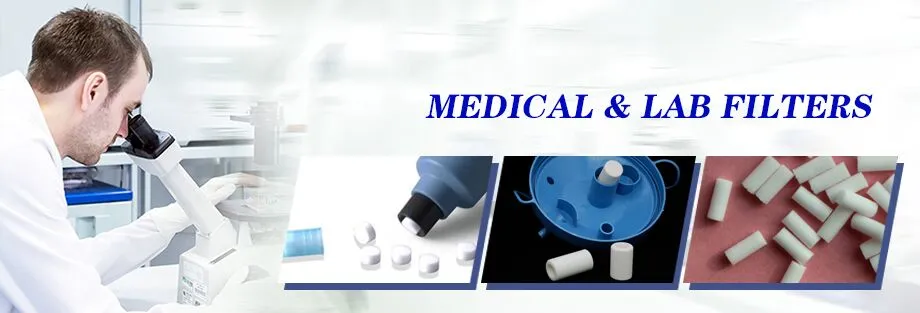
Laboratory and clinical settings demand exceptional levels of precision and reliability from every component in the fluid path. The Pipette Filter is a prime example of how engineered porous materials have become indispensable in ensuring sample integrity and preventing cross-contamination. These small but critical components must deliver consistent flow characteristics while maintaining absolute particle retention — a balance that requires meticulous control over pore structure and material composition.
In clinical diagnostics, pharmaceutical research, and biotechnology, the reliability of filtration components directly impacts the accuracy of test results and the quality of final products. The shift toward higher throughput and automated processing has further intensified the need for durable, long-lasting filter elements that can withstand repeated use without degradation in performance.
Overcoming Industry Pain Points with Advanced Porous Materials
Across the petrochemical, water treatment, and food and beverage industries, the challenges are strikingly similar: how to achieve efficient separation in aggressive environments while minimizing downtime and maintenance costs. Traditional filter media often fall short when exposed to high temperatures, corrosive chemicals, or abrasive particulates. Sintered porous materials, however, offer a compelling alternative due to their inherent structural integrity and resistance to extreme operating conditions.
In the oilfield and chemical processing sectors, for example, operators are turning to metal sintered porous filters that can handle high-pressure differentials and aggressive fluid chemistries without compromising separation efficiency. The ability to regenerate these filters through backwashing or chemical cleaning further extends their service life, reducing total cost of ownership and environmental waste.
The pharmaceutical and medical device industries present another set of requirements — biocompatibility, cleanability, and validation. Porous materials engineered from medical-grade polymers and metals are now being specified for applications ranging from venting and sterile filtration to drug delivery systems. The trend toward miniaturization and portability in medical devices is driving demand for compact, high-performance filter elements that can be integrated into increasingly smaller form factors.
The Role of Specialized Manufacturers in Material Innovation
Advancements in porous material technology do not happen in isolation. They are the result of deep collaboration between material scientists, application engineers, and specialized manufacturers who possess the expertise to tailor material properties to specific performance requirements. Companies like POROYAL, with their dedicated focus on powder sintered porous filter technology, exemplify the kind of deep-domain knowledge required to push the boundaries of what is possible with engineered porous materials.
By maintaining integrated capabilities across metal sintered porous filters, plastic sintered porous filters, metal fibers, and medical and laboratory filtration solutions, these specialists can offer a comprehensive approach to material selection and component design. This vertical integration allows for tighter control over quality, consistency, and innovation — factors that are critical when engineering materials for life-critical and mission-critical applications.
Looking Ahead: The Future of Engineered Porous Materials
As industries continue to push the boundaries of performance, the demand for customized porous materials will only intensify. Emerging trends such as additive manufacturing, advanced surface coatings, and multi-material architectures are expected to further expand the design space for porous components. The ability to create gradient pore structures, combine different materials within a single component, and integrate sensing or actuation capabilities will open new frontiers in filtration, separation, and fluid management.
Sustainability considerations are also reshaping the materials landscape. The push for longer-lasting, more efficient filtration solutions that reduce waste and energy consumption aligns well with the inherent advantages of sintered porous materials. Their durability, regenerability, and high separation efficiency make them an attractive choice for companies seeking to meet environmental goals without compromising operational performance.
In this rapidly evolving landscape, the partnership between application engineers and materials specialists will be more important than ever. The ability to translate complex performance requirements into precisely engineered porous structures is what separates commodity solutions from true high-performance materials. For industries that depend on reliable, efficient, and durable filtration — whether in medical, laboratory, industrial, or environmental applications — the era of porosity by design has truly arrived.