

Introduction
Paint booth filters are critical components within the automotive, aerospace, and manufacturing sectors, serving as the final stage of air purification before exhaust to the atmosphere. These filters are engineered to capture overspray, dust particles, and other contaminants generated during the painting process, ensuring both a high-quality surface finish and compliance with stringent environmental regulations. Their technical position lies at the intersection of fluid dynamics, material science, and air pollution control. Core performance metrics include filtration efficiency (expressed as MERV – Minimum Efficiency Reporting Value – and percentage arrestance), pressure drop, dust holding capacity, and lifespan. A key industry pain point is balancing these parameters: higher efficiency often results in increased pressure drop, demanding more powerful (and energy-intensive) ventilation systems. Furthermore, improper filter selection and maintenance lead to reduced coating quality, increased material waste, and potential regulatory non-compliance.
Material Science & Manufacturing
Paint booth filters are typically constructed from progressively denser layers of synthetic materials. The initial stage often comprises a coarse pre-filter, typically constructed from spun polypropylene, designed to capture large particles and extend the lifespan of subsequent filter stages. These polypropylene fibers are manufactured through a melt-blown process, controlling parameters like polymer flow rate, air velocity, and collector distance to achieve desired fiber diameter and web porosity. The primary filtration layer commonly utilizes fiberglass or a synthetic blend (e.g., polyester, acrylic). Fiberglass filters offer excellent efficiency and are relatively inexpensive, but require careful handling due to fiber release. Synthetic blends provide improved dimensional stability and reduce fiber shedding. Manufacturing involves layering the filter media, often with a progressive density gradient, and encasing it within a rigid frame – commonly cardboard, metal (galvanized steel or aluminum), or plastic. Key parameters during manufacturing include media weight (grams per square meter – GSM), air permeability (cubic feet per minute – CFM), and frame construction integrity. Chemical compatibility is also crucial; filters must resist degradation from paint solvents, thinners, and cleaning agents. The adhesive used to bond the media layers must maintain its structural integrity in the presence of these chemicals and across a broad temperature range. Quality control procedures include pressure drop testing, particle capture efficiency testing (using standardized dust), and visual inspection for defects.

Performance & Engineering
The performance of paint booth filters is governed by principles of fluid dynamics and particle physics. Airflow through the filter creates a pressure drop, which is directly proportional to the air velocity and inversely proportional to the filter’s permeability. The relationship is often described by the Darcy-Weisbach equation, incorporating factors like filter media porosity, fiber diameter, and fluid viscosity. Filtration efficiency is determined by the mechanisms of interception, impaction, and diffusion. Larger particles are captured primarily through impaction (direct collision with fibers), while smaller particles rely on interception (particles following airflow streamlines and contacting fibers) and diffusion (random Brownian motion leading to collisions). The Minimum Efficiency Reporting Value (MERV) rating quantifies a filter’s ability to capture particles of different sizes, ranging from MERV 1 (low efficiency) to MERV 16 (very high efficiency). Engineering considerations include selecting the appropriate MERV rating based on the type of paint being used (e.g., waterborne, solvent-borne, high-solids), the required coating quality, and environmental regulations. Filter lifespan is influenced by dust loading, airflow rate, and the concentration of contaminants. Excessive pressure drop indicates filter clogging and necessitates replacement. The ventilation system must be engineered to account for the pressure drop characteristics of the chosen filter media to maintain adequate airflow and prevent paint fumes from accumulating in the booth. Consideration must also be given to filter disposal, ensuring compliance with hazardous waste regulations.
Technical Specifications
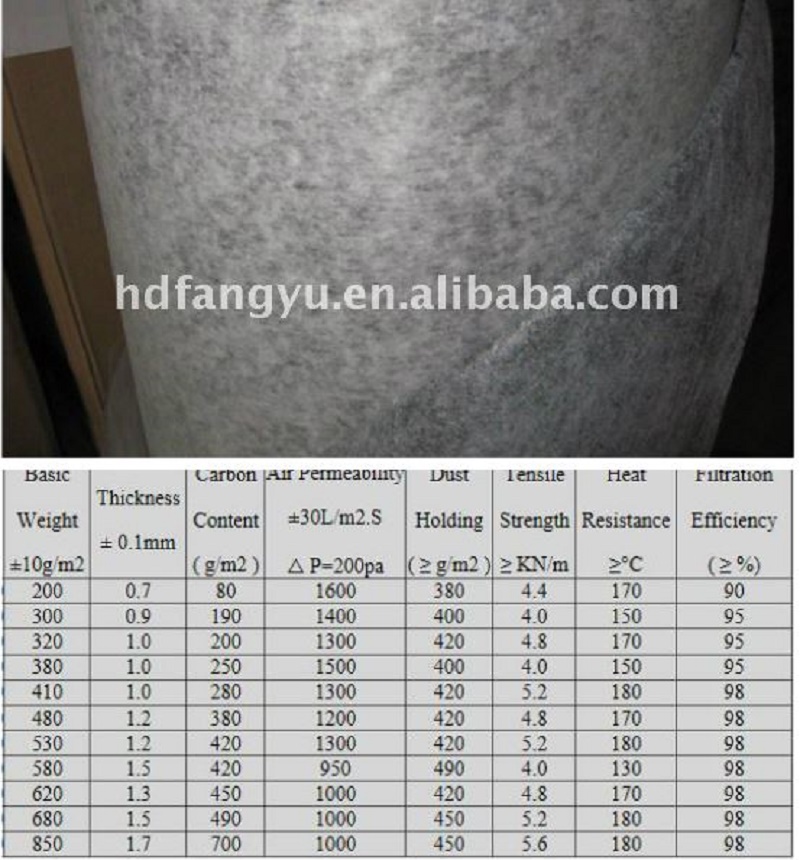
| Filter Type | MERV Rating | Pressure Drop (in. w.g.) @ Specified CFM | Dust Holding Capacity (grams/m²) | Initial Efficiency (%) | Maximum Operating Temperature (°C) |
|---|---|---|---|---|---|
| Pre-Filter (Polypropylene) | 1-4 | 0.05 - 0.10 @ 1000 CFM | 100 - 200 | 30-50 | 80 |
| Standard Fiberglass Filter | 6-8 | 0.15 - 0.25 @ 1000 CFM | 250 - 350 | 60-80 | 60 |
| Synthetic Media Filter | 8-12 | 0.20 - 0.35 @ 1000 CFM | 300 - 450 | 75-90 | 80 |
| High-Efficiency Pleated Filter | 13-16 | 0.30 - 0.50 @ 1000 CFM | 400 - 600 | 90-98 | 60 |
| Activated Carbon Filter (odor control) | Variable | 0.25 - 0.40 @ 1000 CFM | N/A (absorption capacity) | N/A | 40 |
| Disposable Cartridge Filter | 6-10 | 0.18 - 0.28 @ 1000 CFM | 300-400 | 65-85 | 70 |
Failure Mode & Maintenance
Paint booth filters are susceptible to several failure modes. Filter clogging is the most common, resulting from the accumulation of paint particles and contaminants, leading to increased pressure drop and reduced airflow. This can cause uneven coating application and potentially trigger alarms in the ventilation system. Media degradation occurs due to chemical attack from paint solvents and thinners, reducing filtration efficiency and potentially releasing fibers into the airstream. Frame failure can result from moisture absorption or physical damage, compromising the filter’s structural integrity and allowing bypass of unfiltered air. Fiber shedding (particularly with fiberglass filters) poses a health hazard and can contaminate the painted surface. Delamination of the filter media layers can occur due to inadequate bonding or exposure to high humidity. Maintenance practices include regular visual inspection for damage, monitoring pressure drop, and adhering to a scheduled replacement program. Pre-filters should be changed more frequently than primary filters. When replacing filters, proper personal protective equipment (PPE) – including respirators and gloves – should be worn. Dispose of used filters according to local hazardous waste regulations. Implementing a preventative maintenance schedule based on operating hours and paint volume can minimize downtime and ensure optimal filter performance. Regular cleaning of the booth environment also reduces the filter loading rate, extending its lifespan.
Industry FAQ
Q: What MERV rating is appropriate for a waterborne coating application?
A: For waterborne coatings, a MERV rating of 8-11 is generally sufficient. Waterborne coatings typically generate fewer airborne particles than solvent-borne coatings. However, the specific MERV rating should be determined based on the desired coating quality and local environmental regulations. Using a higher MERV rating than necessary can increase energy consumption due to higher pressure drop.
Q: How often should I replace the pre-filter?
A: The pre-filter should be replaced much more frequently than the primary filter, typically every 1-3 months, depending on paint usage and booth conditions. A visual inspection can indicate when the pre-filter is significantly loaded with dust. Replacing the pre-filter extends the life of the more expensive primary filter.
Q: What are the consequences of using a filter with an insufficient MERV rating?
A: Using a filter with an insufficient MERV rating can lead to several issues, including reduced coating quality (due to dust contamination), increased material waste (from rejected parts), and potential regulatory non-compliance (due to excessive emissions of volatile organic compounds (VOCs) or particulate matter). It also can create a hazardous working environment for paint booth operators.
Q: How can I minimize pressure drop across the filter system?
A: Minimizing pressure drop involves selecting filters with appropriate permeability, regularly replacing pre-filters, and ensuring the ventilation system is properly sized and maintained. Avoid over-tightening filters in the frame, as this can restrict airflow. Consider using staged filtration, with progressively denser filters, to optimize efficiency and minimize pressure drop.
Q: Are there any specific disposal requirements for used paint booth filters?
A: Yes. Used paint booth filters are often considered hazardous waste due to the absorbed paint residue and contaminants. They must be disposed of in accordance with local, state, and federal regulations. This typically involves packaging the filters in sealed containers and transporting them to a licensed hazardous waste disposal facility.
Conclusion
Paint booth filters represent a critical, yet often overlooked, component in maintaining optimal painting operations. Their selection and maintenance are integral to achieving high-quality surface finishes, complying with environmental regulations, and ensuring a safe working environment. Understanding the underlying principles of material science, fluid dynamics, and filtration mechanisms allows for informed decision-making regarding filter type, MERV rating, and replacement schedules.
Future advancements in paint booth filter technology will likely focus on developing more efficient filter media, reducing pressure drop, and improving filter lifespan. Biodegradable and recyclable filter materials are also gaining traction as manufacturers strive for greater sustainability. Furthermore, integrating real-time filter monitoring systems – utilizing sensors to measure pressure drop and particle concentration – will enable proactive maintenance and optimize filter performance.