

Introduction
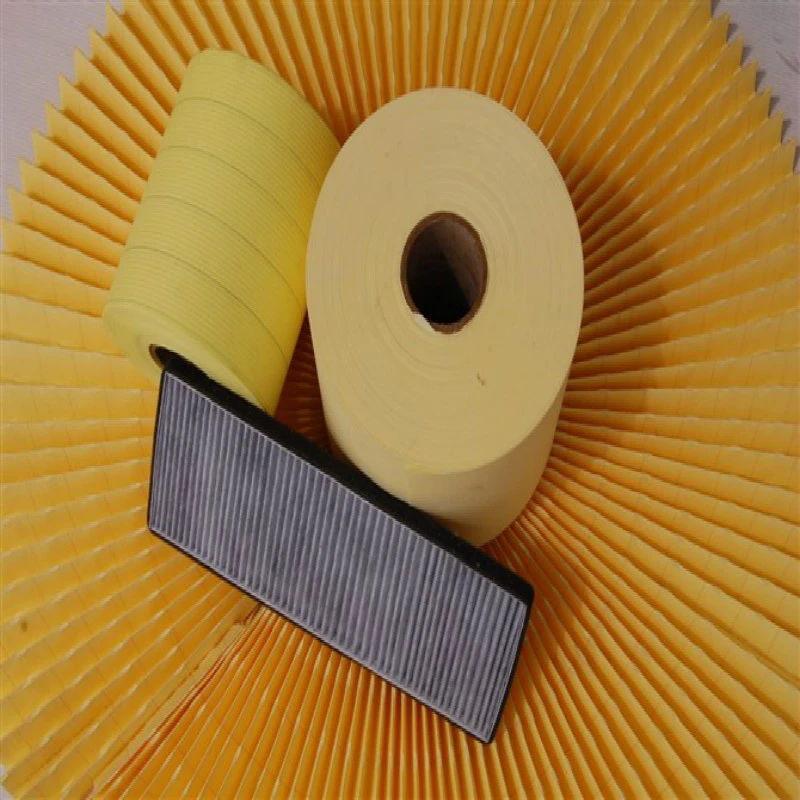
Mini pleat filter media represents a significant advancement in air filtration technology, primarily utilized in applications demanding high efficiency within a compact form factor. These media are critical components in HVAC systems, automotive cabin air filters, and industrial dust collection systems. Their defining characteristic is the densely packed, narrow pleat structure, maximizing surface area for contaminant capture while minimizing pressure drop. This guide provides a comprehensive technical overview of mini pleat filter media, covering material science, manufacturing processes, performance characteristics, failure modes, and relevant industry standards, geared towards B2B procurement and engineering professionals within the filtration and related industries. The core performance parameters center around particulate matter capture efficiency (PM), pressure drop, and lifespan, directly impacting overall system performance and operational costs. A key industry pain point revolves around balancing high efficiency with acceptable airflow resistance and ensuring consistent media integrity during prolonged operation and exposure to varying environmental conditions.
Material Science & Manufacturing
Mini pleat filter media commonly utilizes a multi-layered structure built upon a support material, typically a nonwoven polypropylene or polyester substrate. The filtration layer itself is often comprised of meltblown polypropylene microfiber, chosen for its excellent fiber fineness and high surface area. Electrostatic charge is frequently imparted to the fibers during manufacturing to enhance particulate capture via electrostatic attraction. Key raw material properties include fiber diameter (typically 1-10 micrometers), basis weight (ranging from 50 to 150 gsm), and inherent fiber hydrophobicity. Manufacturing involves a precise pleating process. This often begins with continuous sheet formation of the meltblown layer onto the support substrate. Critical parameters in pleating include pleat height (typically 5-15mm), pleat spacing (1-5mm), and pleat density (pleats per meter). The pleating is achieved through mechanical folding, often employing heated rollers to set the pleat shape and maintain structural integrity. Parameter control during pleating is paramount; inconsistent pleat depth or spacing significantly impacts airflow distribution and filtration efficiency. The media is then framed, typically with a plastic or metal frame, and sealed to prevent bypass leakage. Quality control focuses on measuring pleat uniformity, air permeability, and initial pressure drop.

Performance & Engineering
The performance of mini pleat filter media is largely dictated by its ability to capture particulate matter while minimizing airflow restriction. Force analysis focuses on calculating the drag force exerted by the air stream on the filter media and the interception/impaction forces acting on particles. Environmental resistance is critical, particularly in automotive applications. The media must withstand temperature fluctuations (-40°C to 85°C), humidity exposure (0-100% RH), and exposure to road salts and other contaminants. Compliance requirements vary by application. For HVAC systems, ASHRAE standards (ASHRAE 52.4) govern filtration efficiency and pressure drop testing. Automotive cabin air filters must meet OEM specifications, often involving demanding tests for particle capture, airflow resistance, and chemical resistance (e.g., VOC filtration). The media's ability to maintain consistent performance over its lifespan is a key engineering consideration. This is assessed through extended life testing, monitoring pressure drop and efficiency over time under simulated operating conditions. Functional implementation necessitates careful consideration of the filter’s housing design to ensure proper sealing and prevent bypass leakage. Computational Fluid Dynamics (CFD) modeling is often used to optimize airflow patterns and minimize pressure drop within the filter assembly.
Technical Specifications
| Parameter | Unit | Typical Value (HVAC Grade) | Typical Value (Automotive Grade) |
|---|---|---|---|
| MERV Rating | - | 13-16 | 8-11 |
| Efficiency (@ 0.3 µm) | % | 85-95 | 50-80 |
| Initial Pressure Drop | Pa | 150-250 | 50-100 |
| Recommended Air Velocity | m/s | 0.5-1.0 | 0.8-1.2 |
| Maximum Operating Temperature | °C | 85 | 85 |
| Maximum Humidity | % RH | 100 | 95 |
Failure Mode & Maintenance
Mini pleat filter media is susceptible to several failure modes. Mechanical failure includes pleat collapse due to excessive pressure drop or impact from large particles, leading to reduced surface area and increased airflow resistance. Media degradation occurs through fiber shedding, particularly in high-humidity environments, reducing filtration efficiency. Chemical attack from gaseous pollutants (e.g., VOCs, ozone) can compromise the media's structural integrity and filtration performance. Microbial growth is a concern in HVAC systems, leading to biofilm formation and reduced airflow. Fatigue cracking can develop in the pleats over time due to repeated flexing from airflow pulsations. Failure analysis often involves microscopic examination of the media to identify fiber breakage, chemical degradation, or microbial contamination. Maintenance primarily involves regular filter replacement. The frequency of replacement depends on the operating environment and the filter's loading capacity. Pre-filters can be used to extend the lifespan of mini pleat filters by capturing larger particles. In automotive applications, periodic inspection of the cabin air filter is recommended, and replacement should occur according to the vehicle manufacturer's guidelines. For industrial applications, pressure drop monitoring is a critical indicator of filter loading and the need for replacement.
Industry FAQ
Q: What is the impact of electrostatic charge decay on long-term filter performance?
A: Electrostatic charge is crucial for enhancing particulate capture in many mini pleat filters. However, the charge decays over time, particularly in humid environments. This leads to a gradual decrease in filtration efficiency. Manufacturers mitigate this through charge stabilization additives or by employing multiple layers of filtration to compensate for charge loss. Monitoring pressure drop and periodic efficiency testing are essential to assess the impact of charge decay.
Q: How do different framing materials affect filter lifespan and performance?
A: Framing materials significantly influence filter integrity. Plastic frames are lightweight and corrosion-resistant but may be susceptible to deformation at high temperatures. Metal frames provide superior structural support and temperature resistance but are prone to corrosion. The choice of framing material should align with the application's operating environment and temperature range.
Q: What is the significance of the media's basis weight in relation to pressure drop?
A: Basis weight, the mass per unit area of the filter media, directly correlates with pressure drop. Higher basis weights generally provide higher filtration efficiency but also result in increased airflow resistance. Optimizing basis weight is critical for achieving the desired balance between efficiency and pressure drop. It's a key design parameter influenced by the specific application requirements.
Q: How does the pleat geometry (height, spacing, density) impact filter efficiency and pressure drop?
A: Pleat geometry is a crucial design element. Narrower pleats and higher pleat density maximize surface area, leading to improved filtration efficiency. However, excessively narrow pleats and high density can increase airflow resistance and potentially lead to pleat collapse. Optimal pleat geometry depends on the particle size distribution of the contaminants and the desired airflow rate.
Q: What testing standards are used to verify the performance claims of mini pleat filters?
A: Commonly used testing standards include ASHRAE 52.4 (for HVAC filters), ISO 16890 (for general ventilation filters), and EN 779 (European standard for air filters). Automotive cabin air filters are typically tested according to OEM-specific standards. These standards define procedures for measuring filtration efficiency, pressure drop, and dust holding capacity.
Conclusion
Mini pleat filter media represents a sophisticated filtration solution, offering a compelling combination of high efficiency and compact design. Successful implementation hinges on a thorough understanding of the underlying material science, manufacturing parameters, and performance characteristics. Optimizing pleat geometry, selecting appropriate raw materials, and employing robust quality control measures are essential for ensuring consistent and reliable performance.
Future development efforts are likely to focus on enhancing media durability, improving charge stabilization techniques, and developing more sustainable materials. Addressing the industry pain point of balancing efficiency with airflow resistance through advanced media designs and coating technologies will continue to be a key area of innovation. Proper selection and maintenance, guided by established industry standards, are critical for maximizing the lifespan and effectiveness of these filters.