


Introduction
Media air filters represent a crucial component in maintaining indoor air quality (IAQ) across a wide spectrum of applications, ranging from HVAC systems in commercial buildings to cleanrooms in pharmaceutical manufacturing and particulate control in industrial processes. Positioned within the broader air filtration industry chain, these filters serve as the final barrier against airborne contaminants, effectively removing particulate matter, allergens, and potentially harmful microorganisms. Their performance is defined by metrics such as Minimum Efficiency Reporting Value (MERV), High-Efficiency Particulate Air (HEPA) certification, and pressure drop characteristics. A core challenge within the industry is balancing high filtration efficiency with minimal airflow resistance, ensuring both effective contaminant capture and energy-efficient operation. Furthermore, the growing demand for enhanced IAQ, driven by increasing awareness of health impacts and stricter regulatory standards, necessitates continuous advancements in filter media technologies and manufacturing processes.
Material Science & Manufacturing
The core material science of media air filters centers on the characteristics of fibrous media, typically constructed from synthetic polymers such as polypropylene, polyester, or fiberglass. Polypropylene offers a cost-effective solution with reasonable filtration efficiency and moisture resistance. Polyester provides enhanced temperature resistance and durability, making it suitable for demanding environments. Fiberglass, while offering excellent filtration capabilities, requires careful handling due to potential health concerns related to fiber release. The manufacturing processes vary depending on the filter's grade and construction. Electrostatic precipitation is a common method where fibers are charged to enhance particle capture. Melt-blown nonwoven fabric production involves extruding molten polymer through a die, creating fine fibers that interlock to form a web. This process is critical for producing microfiber media exhibiting high surface area and efficient particulate capture. Pleating is a subsequent step, increasing the filter's surface area within a given volume. Precise pleat spacing and depth are key parameters affecting airflow resistance and dust-holding capacity. Filter media impregnation with antimicrobial agents or activated carbon is also employed to address specific contaminant concerns, such as mold spores or volatile organic compounds (VOCs). Control of polymer molecular weight, fiber diameter distribution, and web formation uniformity are critical process parameters. Quality control relies on statistical process control (SPC) and rigorous testing of media properties like air permeability, tensile strength, and electrostatic charge density.
Performance & Engineering
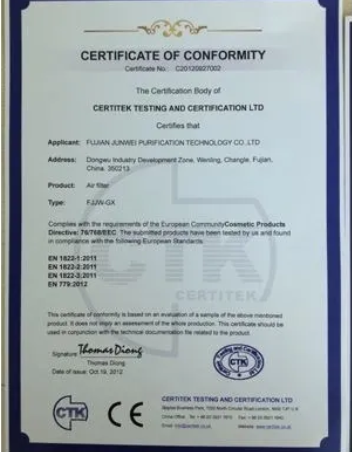
The performance of media air filters is governed by principles of fluid dynamics and particle physics. Airflow resistance, quantified as pressure drop, is a critical parameter directly influencing HVAC system energy consumption. Higher MERV ratings correlate with increased filtration efficiency, but also generally lead to higher pressure drop. Engineers must carefully balance these competing factors to optimize filter selection. Force analysis involves understanding the drag force acting on airborne particles as they approach the filter media, and the adhesive forces responsible for particle capture. These forces are influenced by particle size, shape, density, and the electrostatic charge of both the particles and the filter fibers. Environmental resistance is a key consideration, particularly in applications involving exposure to high humidity, temperature fluctuations, or corrosive substances. Filter media must maintain structural integrity and filtration efficiency under these conditions. Compliance requirements are stringent, with standards like ASHRAE 52.2 (testing methods for particulate air filters) and EN 779 (classification of air filters) dictating performance benchmarks. Functional implementation involves appropriate filter sizing, sealing to prevent bypass leakage, and regular monitoring of pressure drop to determine filter loading and replacement intervals. Computational Fluid Dynamics (CFD) modeling is increasingly used to optimize filter designs and predict performance under various operating conditions.
Technical Specifications
| MERV Rating | Pressure Drop (Pa) @ Nominal Airflow (CFM) | Efficiency (%) - 0.3 µm Particles | Maximum Airflow Velocity (m/s) | Initial Resistance (Pa) | Filter Media Material |
|---|---|---|---|---|---|
| MERV 8 | 120 @ 300 CFM | 85% | 2.5 | 80 | Polypropylene |
| MERV 11 | 180 @ 300 CFM | 95% | 2.0 | 130 | Polyester Blend |
| MERV 13 | 250 @ 300 CFM | 98% | 1.8 | 180 | Electrostatic Polypropylene |
| MERV 16 | 350 @ 300 CFM | 99.9% | 1.5 | 280 | HEPA-grade Fiberglass |
| HEPA (EN 1822) | 300 @ 300 CFM | >99.97% | 1.2 | 320 | Borosilicate Microglass |
| ULPA (EN 1822) | 400 @ 300 CFM | >99.999% | 1.0 | 400 | Specialty Microglass |
Failure Mode & Maintenance
Failure modes in media air filters are multifaceted. Mechanical failure includes media tearing due to excessive pressure drop or airflow velocity, and frame deformation leading to bypass leakage. Filter loading, the accumulation of particulate matter, is a primary cause of performance degradation, increasing pressure drop and reducing filtration efficiency. Media degradation can occur due to prolonged exposure to moisture, UV radiation, or chemical contaminants, leading to fiber embrittlement and reduced capture capacity. Electrostatic charge decay is common in electrostatically enhanced filters, diminishing their effectiveness over time. Biological growth, such as mold and bacteria, can proliferate on loaded filters, releasing harmful byproducts into the airstream. Preventative maintenance is crucial. Regular pressure drop monitoring provides an early indication of filter loading. Visual inspection can identify media damage or biological growth. Filter replacement intervals should be based on manufacturer recommendations and site-specific conditions. Pre-filters, coarser filters installed upstream of finer filters, can extend the lifespan of expensive HEPA or ULPA filters by removing larger particles. Proper handling and disposal of used filters are essential to prevent the release of captured contaminants. Automated filter monitoring systems, utilizing pressure sensors and data analytics, can optimize filter replacement schedules and minimize downtime.
Industry FAQ
Q: What is the difference between MERV and HEPA filtration, and when should each be used?
A: MERV (Minimum Efficiency Reporting Value) ratings indicate a filter's ability to capture particles of varying sizes, ranging from 1 to 16. HEPA (High-Efficiency Particulate Air) filters are a specific standard (EN 1822 in Europe, UL 177 in the US) requiring at least 99.97% efficiency at capturing 0.3-micron particles. MERV filters are suitable for general IAQ improvement in commercial buildings, while HEPA filters are essential in critical environments like hospitals, pharmaceutical manufacturing, and cleanrooms where highly controlled air quality is paramount.
Q: How does filter media material affect performance and cost?
A: Polypropylene is the most cost-effective option, suitable for basic filtration. Polyester offers better temperature and chemical resistance, increasing cost slightly. Fiberglass provides high filtration efficiency but requires careful handling. Specialty materials like microglass, used in HEPA filters, are significantly more expensive but deliver the highest levels of particle capture.
Q: What is the impact of pressure drop on HVAC system efficiency?
A: Higher pressure drop forces HVAC fans to work harder, increasing energy consumption. Selecting a filter with the appropriate MERV rating for the application is crucial to balance filtration efficiency with acceptable pressure drop. Regularly monitoring pressure drop and replacing filters when necessary minimizes energy waste.
Q: What are the best practices for filter replacement and disposal?
A: Follow the manufacturer's recommended replacement schedule, but also consider site-specific conditions like dust loading and airflow rates. Wear appropriate personal protective equipment (PPE) during filter replacement to avoid exposure to captured contaminants. Dispose of used filters according to local regulations, as they may contain hazardous materials.
Q: How can I determine the optimal filter for my specific application?
A: Consider the types of contaminants you need to remove, the required air quality level, the HVAC system's capabilities, and budgetary constraints. Consulting with an air filtration specialist can provide tailored recommendations based on a comprehensive assessment of your needs.
Conclusion
Media air filters are essential components in modern air quality management, demanding a nuanced understanding of material science, manufacturing processes, and performance engineering. The selection of an appropriate filter requires careful consideration of factors like MERV rating, pressure drop, media material, and application-specific requirements. Addressing challenges related to filter loading, media degradation, and energy efficiency is paramount to ensuring optimal performance and long-term cost-effectiveness.
Future advancements in media air filter technology will likely focus on developing more sustainable materials, improving filtration efficiency at lower pressure drops, and incorporating intelligent sensor technologies for real-time monitoring and predictive maintenance. Continued research into nanomaterials and advanced fiber structures holds promise for further enhancing filter performance and addressing emerging air quality concerns.