

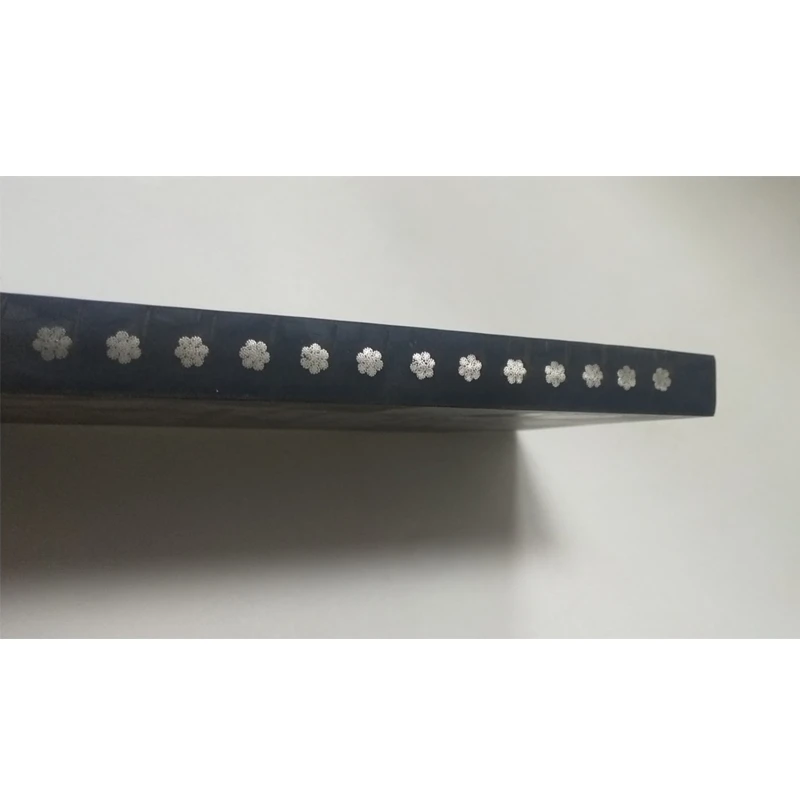
Deploying a heavy-duty wire rope conveyor belt ensures structural resilience when transporting aggregate materials across high-tonnage mining operations. Material handling in heavy industries like metallurgy, coal, and chemical engineering imposes extreme mechanical stresses on transport media. A deep understanding of material fatigue, impact resistance, and vulcanization dynamics is paramount for engineers seeking to prevent catastrophic mechanical failures and costly production halts.
Understanding Structural Degradation in Bulk Conveyance
Bulk materials—ranging from crushed granite to raw iron ore—exert multi-directional impact forces during loading operations. Standard textile-ply belts often suffer from longitudinal tearing, ply separation, and accelerated elastomer degradation when exposed to sharp, heavy aggregates. Reinforcing the internal core with high-tensile steel cords provides superior impact distribution, preventing dynamic deformation under heavy linear loads.
Addressing Geometric and Structural Trajectory Complexities
In facilities requiring tight turning radii or enclosed material protection, geometry plays as vital a role as chemical composition. Systems utilizing a custom-engineered circle conveyor belt configuration require specialized rubber formulations that resist fatigue cracking along torsional stress points. Sourcing components from a high-quality provider ensures that belt compounds contain optimal ratios of natural rubber and synthetic polymers, maximizing tensile recovery and chemical resistance in harsh environments.
Extending Asset Lifespan Through Material Specification
Selecting transport materials matched to specific bulk characteristics prevents premature degradation. Advanced polymer testing and high-tensile internal reinforcement remain the cornerstone of reliable bulk material logistics.