


Introduction
Filter media for water treatment constitutes a critical component within industrial and municipal water purification systems. These media, ranging from granular materials to membrane technologies, are designed to remove suspended solids, microorganisms, dissolved contaminants, and other undesirable substances from water sources. Their technical position lies between raw water intake and disinfection/final polishing stages, impacting the efficiency and longevity of downstream processes. Core performance is defined by metrics like filtration rate (gallons per minute per square foot - GPM/ft²), particle size retention (microns), pressure drop (psi), and contaminant removal efficiency (percentage). The selection of appropriate filter media directly addresses industry pain points related to regulatory compliance (Safe Drinking Water Act, discharge permits), operational costs (energy consumption, backwashing frequency), and water quality consistency. Improper media selection leads to frequent clogging, reduced flow rates, and potential breakthrough of contaminants, impacting process reliability and end-product quality.
Material Science & Manufacturing
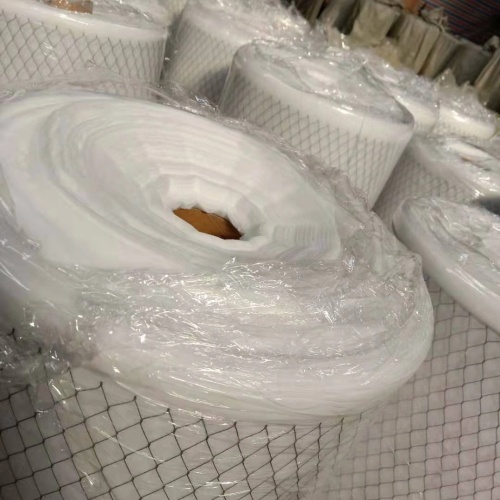
The manufacturing of filter media is highly dependent on the specific material employed. Common materials include sand, gravel, anthracite, activated carbon, polypropylene, polyester, and specialized polymeric resins. Sand and gravel, derived from quartz and other silicate minerals, are selected for their mechanical strength and controlled particle size distribution. Anthracite, a naturally occurring coal, offers lower density and improved backwashing characteristics. Activated carbon, produced through pyrolysis of organic materials (wood, coconut shells, coal), possesses a large surface area for adsorption of organic compounds and chlorine. Polymeric materials, like polypropylene and polyester, are extruded or spun into fibrous or granular forms. Manufacturing processes include crushing/screening (sand & gravel), activation (carbon), melt-blowing/spinning (polymers), and resin polymerization. Key parameter control focuses on particle size distribution (using sieve analysis), porosity (measured via mercury intrusion porosimetry), surface area (BET method for activated carbon), and material purity (chromatographic analysis). Chemical compatibility is crucial; for example, activated carbon can be oxidized by strong oxidizing agents, reducing its adsorption capacity. Fiber tensile strength (ASTM D7264) is critical for polymeric media to prevent tearing during backwashing.
Performance & Engineering
Filter media performance is governed by several engineering principles. Darcy's Law dictates the relationship between flow rate, permeability, viscosity, and pressure drop across the media bed. The filter's efficiency is determined by mechanisms including straining (physical capture of particles larger than the media pores), sedimentation (settling of particles under gravity), adsorption (surface adhesion of dissolved substances), and biological activity (microorganism removal). Force analysis involves assessing the compressive strength of the media under the weight of the water column and the shear forces during backwashing. Environmental resistance is a critical concern. UV exposure can degrade polymeric media, reducing their mechanical integrity. Temperature fluctuations affect viscosity and contaminant solubility, impacting filtration efficiency. Compliance requirements, dictated by agencies like the EPA (US) and WHO (global), mandate specific removal rates for regulated contaminants (arsenic, lead, pathogens). Membrane filtration, a prominent engineering implementation, utilizes pressure-driven separation across semi-permeable membranes (microfiltration, ultrafiltration, nanofiltration, reverse osmosis) offering precise control over particle and molecular separation.
Technical Specifications
| Media Type | Particle Size (μm) | Porosity (%) | Specific Surface Area (m²/g) |
|---|---|---|---|
| Sand (Silica) | 200-1200 | 30-40 | 1-5 |
| Anthracite | 500-2000 | 40-50 | 2-8 |
| Activated Carbon (Granular) | Variable | 50-70 | 500-1500 |
| Polypropylene Fiber | 10-100 | 70-85 | 10-30 |
| Polyester Fiber | 5-50 | 75-90 | 15-40 |
| Reverse Osmosis Membrane | 0.0001-0.001 | Variable | Variable |
Failure Mode & Maintenance
Filter media failure modes are diverse. Fatigue cracking in granular media occurs due to repeated stress during backwashing and operation. Biofouling, the accumulation of microorganisms on the media surface, reduces permeability and promotes corrosion. Channeling, the preferential flow of water through paths of least resistance, diminishes filtration efficiency. For activated carbon, adsorption saturation leads to breakthrough of contaminants. Polymeric media can undergo degradation due to chlorine exposure or UV radiation. Oxidation of anthracite can release fine particles, impacting water clarity. Maintenance involves periodic backwashing to remove accumulated solids, chemical cleaning to address biofouling and scaling, and media replacement when performance declines. Regular monitoring of pressure drop, turbidity, and contaminant levels is essential for proactive maintenance. Failure analysis should include microscopic examination of the media to identify the root cause of degradation (e.g., cracks, biofilms, chemical attack). Proper storage of spare media is also crucial to prevent contamination or degradation before use.
Industry FAQ
Q: What is the optimal backwashing frequency for a granular activated carbon (GAC) filter?
A: The optimal backwashing frequency depends on the influent water quality and the GAC loading. Typically, backwashing is initiated when the pressure drop across the filter reaches 5-10 psi. More frequent backwashing is required with higher turbidity or organic load. Automated differential pressure sensors and timers can optimize the backwashing schedule, minimizing water loss and maximizing filter run time. Backwashing should be conducted at an upward velocity sufficient to fluidize the GAC bed without causing media attrition.
Q: How do you determine the effectiveness of a multi-media filter in removing turbidity?
A: Turbidity removal effectiveness is assessed by measuring the influent and effluent turbidity levels using a nephelometer. The percentage removal is calculated as [(Influent Turbidity - Effluent Turbidity) / Influent Turbidity] x 100. Regular monitoring of turbidity is essential to verify filter performance and identify potential issues like media breakthrough or channeling. Turbidity spikes indicate a need for backwashing or media replacement.
Q: What are the considerations when selecting a filter media for removing iron and manganese?
A: Iron and manganese removal requires oxidizing the dissolved metals to insoluble forms, followed by filtration. Common media include manganese greensand, which utilizes a catalytic coating to oxidize iron and manganese, and anthracite, which provides a physical barrier for removing the precipitated oxides. Pre-treatment with aeration or chemical oxidation (e.g., potassium permanganate) is often necessary to enhance oxidation efficiency. Regular regeneration of manganese greensand is crucial to maintain its catalytic activity.
Q: What is the lifespan of a polypropylene filter cartridge, and how is it determined?
A: The lifespan of a polypropylene filter cartridge depends on the influent water quality, flow rate, and cartridge micron rating. Lifespan is typically determined by monitoring the pressure drop across the cartridge. A significant increase in pressure drop indicates clogging and the need for replacement. Cartridges are often replaced on a scheduled basis (e.g., every 3-6 months) or when the pressure drop reaches a pre-determined threshold. Cartridge lifespan can also be estimated based on the total volume of water filtered.
Q: What are the limitations of using activated carbon for removing chlorine from water?
A: Activated carbon effectively removes chlorine through adsorption. However, the adsorption capacity is finite. Once the carbon is saturated, chlorine breakthrough will occur. The contact time between the water and the carbon is critical; insufficient contact time reduces removal efficiency. Also, activated carbon can become a breeding ground for bacteria if not properly maintained or if chloramine is present. Chloramine requires significantly longer contact times and can reduce the overall lifespan of the carbon.
Conclusion
The selection and implementation of appropriate filter media represent a complex engineering challenge within water treatment systems. Understanding the material science, manufacturing processes, performance characteristics, and potential failure modes of various media is crucial for optimizing filtration efficiency, minimizing operational costs, and ensuring regulatory compliance. The advancements in materials and membrane technologies continually offer improved solutions for addressing increasingly stringent water quality standards.
Future trends in filter media development will focus on sustainable materials, enhanced adsorption capacities, improved fouling resistance, and integration with smart monitoring systems. Nanomaterials and bio-based polymers are emerging as promising alternatives to conventional media. Real-time monitoring of filter performance, coupled with predictive maintenance algorithms, will further optimize filter operation and extend media lifespan, contributing to more sustainable and cost-effective water treatment solutions.