

Introduction
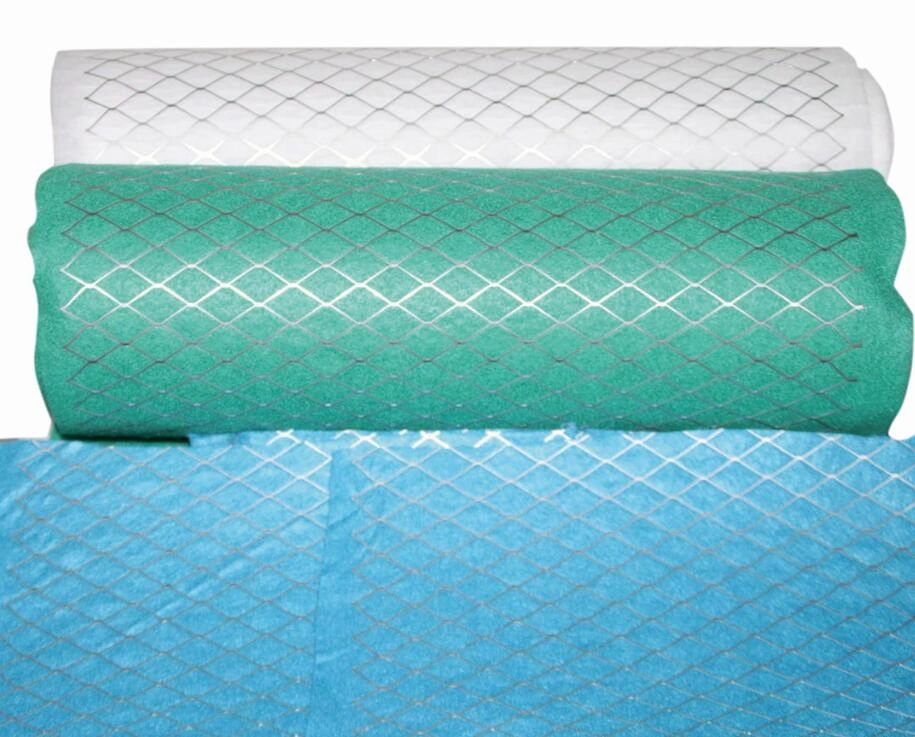
Electrostatic needle-punched filter media represents a significant advancement in air filtration technology, bridging the gap between traditional mechanical filtration and more complex, and often costly, electronic air purification systems. These media are commonly employed in HVAC systems, cleanrooms, automotive cabin air filters, and respirator applications where high efficiency particulate air (HEPA)-like performance is required without the expense or energy consumption of true HEPA filters. The core functionality relies on a carefully engineered combination of a nonwoven substrate, typically polypropylene or polyester, mechanically entangled through needle-punching, and a permanently charged electret fiber treatment. This electret charge imparts a static electrical attraction to airborne particles, significantly enhancing capture efficiency, particularly for sub-micron particulate matter. The manufacturing process is scalable and cost-effective, making electrostatic needle-punched media a preferred solution across a broad spectrum of industrial and commercial applications. Its technical position within the filtration industry chain sits between disposable panel filters and high-efficiency modular filters. Core performance metrics include initial pressure drop, Minimum Efficiency Reporting Value (MERV) rating, particulate matter capture efficiency, and electrostatic charge decay rate.
Material Science & Manufacturing
The foundation of electrostatic needle-punched filter media lies in the selection of appropriate raw materials and a controlled manufacturing process. The primary substrate materials are polypropylene (PP), polyester (PET), and occasionally, acrylic fibers. Polypropylene is favored for its cost-effectiveness, chemical resistance, and inherent hydrophobic properties, hindering moisture absorption. Polyester offers superior temperature resistance and dimensional stability, critical in applications involving higher thermal loads. The electret fibers, often polypropylene, are treated during or after extrusion with fluoropolymers such as polytetrafluoroethylene (PTFE) or poly(vinylidene fluoride) (PVDF). These fluoropolymers, when subjected to a high-voltage corona discharge, accumulate a substantial surface charge, establishing the electret effect. Needle-punching, the core mechanical entanglement process, utilizes barbed needles to interlock the fibers, forming a three-dimensional web structure. Crucial parameters during needle-punching include needle density, punch depth, and punching speed. Higher needle density increases fiber interlocking but can also compromise media porosity and pressure drop. Precise control of punch depth is vital to avoid fiber breakage and maintain media integrity. Post-treatment may involve calendaring to adjust the media's basis weight and porosity, and electrostatic enhancement to optimize charge density and longevity. Chemical compatibility is a key consideration; exposure to certain solvents or harsh chemicals can neutralize the electret charge and degrade the substrate material, reducing filter performance. The manufacturing process inherently introduces variability in fiber diameter, density, and electret charge distribution. These variations can impact filtration efficiency and require stringent quality control measures.
Performance & Engineering
The performance of electrostatic needle-punched filter media is governed by a complex interplay of factors, including fiber diameter, porosity, electret charge density, and air velocity. The capture of airborne particles occurs through a combination of mechanisms: direct interception, inertial impaction, diffusion, and electrostatic attraction. Electrostatic attraction, the dominant mechanism in these media, exerts a force on charged particles, drawing them towards the charged fibers. The efficiency of this process is directly proportional to the charge density on the fibers and the particle charge. Force analysis reveals that the electrostatic force is most effective for sub-micron particles, where inertial and gravitational forces are minimal. Environmental resistance is a critical engineering consideration. Exposure to high humidity can lead to surface conductivity, reducing the effectiveness of the electret charge. Temperature fluctuations can also impact charge decay rates. Maintaining consistent air velocity is crucial; excessive airflow can cause fiber distortion and reduce filtration efficiency. Compliance requirements dictate performance standards, typically assessed using the ASHRAE 52.2 test method. This standard defines MERV ratings, which categorize filter performance based on their ability to remove particles of different sizes. The design of the filter media also impacts pressure drop; lower pressure drop translates to reduced energy consumption by HVAC systems. Structural integrity is paramount; the media must withstand the aerodynamic forces imposed by airflow without tearing or delaminating. Engineers must consider the long-term performance degradation due to charge decay and contamination buildup. Periodic filter replacement is necessary to maintain optimal performance, and the frequency of replacement depends on the operating environment and the concentration of airborne pollutants.
Technical Specifications
| Parameter | Typical Value (Polypropylene, 20gsm) | Typical Value (Polyester, 25gsm) | Testing Standard |
|---|---|---|---|
| Basis Weight (gsm) | 20 | 25 | ISO 536 |
| Air Permeability (m³/min/m²) | 80-120 | 60-100 | ISO 9073-2 |
| Initial Pressure Drop (Pa) @ 29.4 m/s | 180-220 | 200-250 | ASHRAE 52.2 |
| MERV Rating | F7-F9 | F8-F9 | ASHRAE 52.2 |
| Electrostatic Charge Density (µC/m²) | 0.5 - 1.5 | 0.6 - 1.8 | ASTM D149 |
| Charge Decay Time (half-life, hours) | >500 | >600 | ASTM D7707 |
Failure Mode & Maintenance
Electrostatic needle-punched filter media are susceptible to several failure modes that can compromise their performance. A common failure is charge decay, where the electrostatic charge gradually dissipates over time due to environmental factors like humidity and temperature. This is often exacerbated by the presence of polar contaminants that attract moisture and reduce surface resistivity. Mechanical degradation, including fiber breakage and tearing, can occur due to excessive airflow or physical impact. Delamination, the separation of the filter media layers, can occur if the needle-punching process is insufficient or the substrate materials are incompatible. Contamination buildup, particularly of oily or sticky substances, can block pores and reduce airflow, increasing pressure drop and diminishing filtration efficiency. Chemical attack from volatile organic compounds (VOCs) or corrosive gases can degrade the polymer fibers and neutralize the electret charge. Failure analysis often reveals that premature failure is linked to improper installation or operation. For example, installing the filter media in a location exposed to direct moisture or operating it at an excessive airflow rate. Maintenance primarily involves periodic filter replacement. Pre-filters, installed upstream of the electrostatic media, can extend the service life by capturing larger particles and reducing the contaminant load. Visual inspection for signs of damage, such as tears or delamination, should be conducted regularly. Pressure drop monitoring can also indicate filter clogging and the need for replacement. Avoid cleaning the filter media; attempts to wash or vacuum the filter can disrupt the electret charge and damage the fibers. Proper disposal of used filter media is essential, adhering to local environmental regulations.
Industry FAQ
Q: What is the impact of humidity on the performance of electrostatic needle-punched filter media?
A: High humidity significantly reduces the performance of these media. Moisture increases surface conductivity, allowing the electrostatic charge to dissipate more rapidly. This leads to a reduction in particle capture efficiency, particularly for sub-micron particles. In humid environments, the frequency of filter replacement may need to be increased.
Q: How does the basis weight of the filter media affect its performance?
A: Generally, a higher basis weight (gsm) correlates with increased filtration efficiency and dust-holding capacity. However, increasing the basis weight also increases pressure drop. Optimizing the basis weight involves finding a balance between these competing factors to meet specific application requirements.
Q: What is the expected lifespan of an electrostatic needle-punched filter?
A: The lifespan varies considerably based on operating conditions, contaminant loading, and initial filter quality. Typical lifespans range from 3 to 12 months. Regular pressure drop monitoring is the best indicator of when replacement is necessary. A significant increase in pressure drop indicates clogging and reduced efficiency.
Q: Can these filter media be used in corrosive environments?
A: The suitability for corrosive environments depends on the substrate material. Polyester offers better resistance to chemical attack than polypropylene. However, prolonged exposure to strong acids, bases, or solvents can still degrade the filter media and reduce its performance. Specific chemical compatibility testing is recommended.
Q: How do I ensure proper installation to maximize filter performance?
A: Proper sealing is critical to prevent air bypass. Ensure the filter media is correctly seated within the filter frame and that all gaps are sealed. Avoid exposing the filter to direct moisture or extreme temperatures during installation. Follow the manufacturer's installation instructions carefully.
Conclusion
Electrostatic needle-punched filter media provides a compelling balance of filtration efficiency, cost-effectiveness, and scalability. Their reliance on electret technology delivers performance approaching that of HEPA filters, particularly for sub-micron particulate matter, without the associated energy costs. Understanding the interplay between material science, manufacturing processes, and operating conditions is crucial for optimizing performance and preventing premature failure. Careful consideration of factors like humidity, chemical exposure, and airflow rates is essential for maximizing filter lifespan and maintaining consistent air quality.
Future advancements in electrostatic needle-punched filter media are likely to focus on enhancing electret charge stability, developing novel substrate materials with improved chemical resistance, and integrating smart sensor technology for real-time performance monitoring. The continued demand for energy-efficient and cost-effective air filtration solutions will undoubtedly drive further innovation in this field, solidifying the position of these media as a cornerstone of modern air purification systems.