

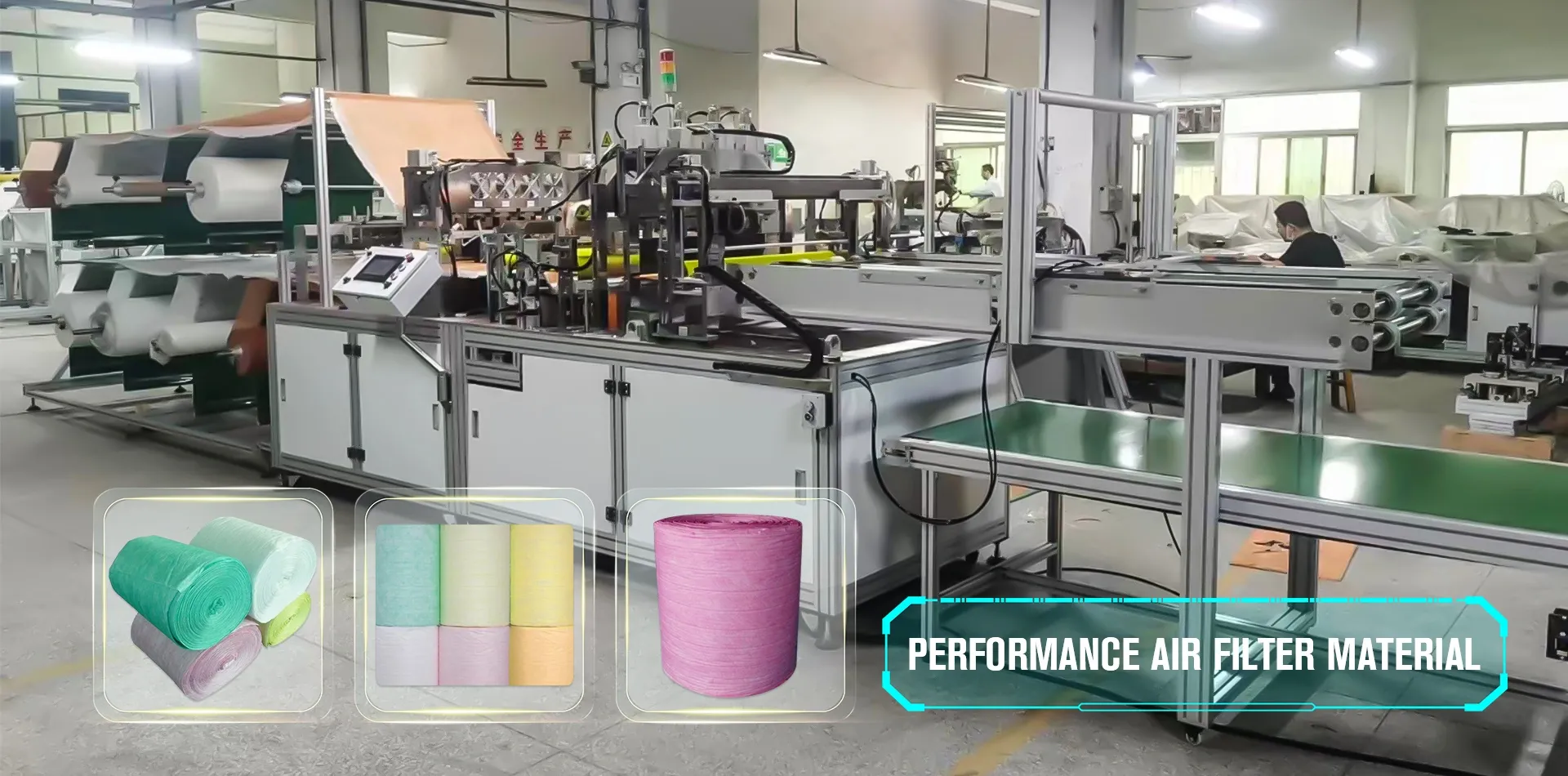
Introduction
Electrostatic filter cotton, a non-woven filter media, plays a critical role in a wide range of industrial and commercial air filtration applications. It functions as a pre-filter or primary filter, capturing particulate matter through a combination of mechanical interception, diffusion, and electrostatic attraction. Unlike traditional fibrous filters, electrostatic filter cotton incorporates an electret process, imparting a permanent static charge to the fibers. This electrostatic charge significantly enhances the filter’s ability to capture smaller particles, including PM2.5 and submicron dust, improving overall filtration efficiency. Its position within the industry chain lies between raw polypropylene production and the assembly of complete air handling units, HVAC systems, and industrial dust collectors. Core performance characteristics include initial pressure drop, filtration efficiency across various particle sizes, and electrostatic charge durability. The increasing demand for higher air quality standards in manufacturing, healthcare, and environmental control drives the adoption of this technology.
Material Science & Manufacturing
The primary raw material for electrostatic filter cotton is polypropylene (PP), selected for its inherent chemical resistance, low cost, and processability. Polypropylene’s physical properties include a density of 0.90 - 0.91 g/cm³, a melting point of approximately 160-170°C, and a tensile strength ranging from 20-40 MPa, depending on the molecular weight distribution and processing conditions. The manufacturing process typically involves melt-blowing, where molten polypropylene is extruded through a die and stretched by high-velocity air, forming fine fibers. These fibers are then laid down randomly onto a collecting conveyor, forming the non-woven fabric. The critical step is the electret treatment. This typically utilizes corona discharge, where a high-voltage electric field is applied to the fabric, polarizing the polymer chains and trapping the static charge. Control of process parameters during melt-blowing is crucial. Die temperature directly influences fiber diameter, with lower temperatures yielding finer fibers but potentially increasing defects. Air velocity affects fiber attenuation and web uniformity. Electret treatment voltage and duration determine the charge density and its long-term stability. Chemical compatibility is also paramount; exposure to certain solvents or cleaning agents can neutralize the electrostatic charge, diminishing the filter's effectiveness. The fiber diameter is a key parameter, typically ranging from 1 to 5 micrometers, influencing both filtration efficiency and pressure drop. Fiber orientation is primarily random, although controlled alignment can enhance specific performance characteristics.

Performance & Engineering
The performance of electrostatic filter cotton is fundamentally governed by the principles of filtration mechanics. Mechanical interception occurs when particles physically collide with the fibers. Diffusion dominates for smaller particles (below 0.1 µm), which exhibit Brownian motion and are more likely to contact the fibers. Electrostatic attraction is the defining characteristic, whereby the charged fibers attract oppositely charged or polarized particles. Force analysis involves considering the drag force exerted by the airflow on the particles, the electrostatic force between the particle and the fiber, and the inertial forces acting on the particle. Environmental resistance is a crucial consideration. Humidity can significantly impact performance; high humidity reduces the electrostatic charge and increases particle adhesion to the filter media, leading to pressure drop increases. Temperature fluctuations also affect charge retention. Compliance requirements vary by application. In HVAC systems, filters must meet ASHRAE standards for minimum efficiency reporting value (MERV) ratings. Industrial applications often require compliance with EN 1822 (European standard for high-efficiency particulate air filters) or ISO 16890 (international standard for air filters). Functional implementation relies on proper sealing between the filter media and the filter frame to prevent air bypass. The material’s resistance to tearing and puncture is also critical for maintaining integrity during operation. Calculating the filter’s clean and dirty pressure drop is essential for determining the filter’s lifespan and replacement schedule. The relationship between airflow rate, filter area, and pressure drop is governed by Darcy’s Law, modified to account for the non-woven structure.
Technical Specifications
| Parameter | Units | Typical Value | Test Method |
|---|---|---|---|
| Filtration Efficiency (PM2.5) | % | 85-95 | EN 1822 |
| Initial Pressure Drop | Pa | 100-250 | ISO 14644-3 |
| Air Permeability | m³/m²/min | 50-150 | ASTM D737 |
| Electrostatic Charge Density | µC/m² | ±5-15 | ASTM D1896 |
| Maximum Operating Temperature | °C | 80 | Manufacturer Specification |
| Moisture Content | % | < 5 | ASTM D698 |
Failure Mode & Maintenance
Electrostatic filter cotton is susceptible to several failure modes. Loss of electrostatic charge is a primary concern, often caused by exposure to high humidity, ozone, or certain chemical vapors. This reduces filtration efficiency. Mechanical failure, including tearing or puncture, can occur due to excessive pressure drop or physical damage. Fiber shedding contributes to dust buildup in downstream components and reduces filter life. Chemical degradation, particularly from exposure to strong acids or bases, can compromise the polypropylene fibers. Failure analysis reveals that charge decay is often non-uniform, creating localized areas of reduced filtration. Fatigue cracking can occur in the filter frame due to repeated pressure fluctuations. Maintenance strategies focus on regular filter replacement based on pressure drop measurements and visual inspection. Avoid cleaning with water or harsh chemicals, as this can neutralize the electrostatic charge. Pre-filters can be used to extend the lifespan of the electrostatic filter cotton by removing larger particles. Storage conditions are also important; store filters in a dry, clean environment to prevent premature charge decay. Implementing a scheduled maintenance program with documented pressure drop readings and filter replacement intervals is critical for maintaining optimal performance and preventing system failures. Periodic testing of electrostatic charge levels can also provide valuable insights into filter performance and remaining useful life.
Industry FAQ
Q: What is the impact of humidity on the performance of electrostatic filter cotton?
A: Increased humidity significantly reduces the electrostatic charge on the filter fibers, diminishing its ability to attract and retain particulate matter. Water molecules can also condense on the fibers, increasing particle adhesion and leading to a rapid increase in pressure drop. Therefore, performance declines in high-humidity environments unless specialized moisture-resistant electret treatments are applied.
Q: How does the filtration efficiency of electrostatic filter cotton compare to HEPA filters?
A: While electrostatic filter cotton offers excellent efficiency for its cost, it typically doesn’t match the performance of HEPA filters. HEPA filters are designed to capture 99.97% of particles 0.3 microns in size, whereas electrostatic filter cotton typically achieves 85-95% efficiency. However, electrostatic filter cotton provides a good balance between efficiency and airflow resistance, making it suitable for pre-filtration stages or applications where extremely high efficiency isn’t required.
Q: What is the lifespan of an electrostatic filter cotton filter, and how do I determine when to replace it?
A: The lifespan varies depending on the dust loading, airflow rate, and filter grade. Typically, it ranges from 3 to 6 months. Replacement should be determined by monitoring the pressure drop across the filter. A significant increase in pressure drop indicates that the filter is becoming clogged and needs to be replaced. Visual inspection for damage or excessive dust accumulation is also recommended.
Q: Can electrostatic filter cotton be cleaned and reused?
A: Cleaning is generally not recommended. Washing or attempting to clean the filter media will likely remove the electrostatic charge, rendering it ineffective. The cost of replacement is typically lower than the risk of reduced performance from a cleaned filter.
Q: What are the fire safety considerations when using electrostatic filter cotton?
A: Polypropylene is a combustible material. Electrostatic filter cotton is generally classified as a slow-burning material, but it can ignite under high heat or flame exposure. It is important to select filters that meet relevant fire safety standards, such as UL 900 (flammability test for air-handling unit filters). Avoid using the filter in environments with high fire risks without proper fire suppression systems.
Conclusion
Electrostatic filter cotton represents a cost-effective and efficient solution for a wide range of air filtration applications. Its reliance on electrostatic attraction, coupled with polypropylene's inherent properties, delivers superior particle capture capabilities compared to traditional non-woven filters. The critical aspects influencing performance include maintaining electrostatic charge integrity, controlling manufacturing parameters during melt-blowing and electret treatment, and understanding the impact of environmental factors such as humidity and temperature.
Looking forward, advancements in electret materials and coating technologies promise to enhance charge durability and improve performance in challenging environments. Future research will likely focus on developing filters with tailored electrostatic properties to target specific particle sizes and enhance resistance to chemical degradation. Implementing comprehensive monitoring and maintenance programs remains essential for maximizing filter lifespan and ensuring optimal air quality.