
Introduction
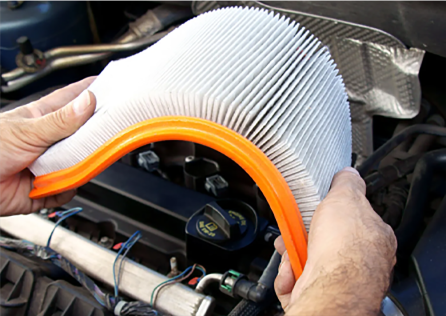
AC filter media rolls represent a crucial component in air filtration systems utilized across a broad spectrum of industrial and commercial applications. Positioned within the HVAC (Heating, Ventilation, and Air Conditioning) chain, these rolls serve as the primary barrier against particulate matter, extending the lifespan of downstream components like cooling coils and ensuring consistent air quality. Typically composed of synthetic fibers, AC filter media exhibits varying levels of efficiency denoted by MERV (Minimum Efficiency Reporting Value) ratings, impacting its ability to capture particles of different sizes. Core performance characteristics include airflow resistance, dust-holding capacity, and overall filtration efficiency, directly influencing system energy consumption and indoor air quality compliance. The selection of appropriate AC filter media is therefore a critical engineering consideration impacting operational costs and regulatory adherence.
Material Science & Manufacturing
The dominant material in AC filter media roll production is polypropylene, favored for its cost-effectiveness, chemical inertness, and inherent fiber-forming properties. Polyester and acrylic fibers are also utilized, often blended with polypropylene to enhance specific performance attributes like temperature resistance and moisture uptake. The manufacturing process typically begins with fiber extrusion, where molten polymer is forced through spinnerets to create continuous filaments. These filaments undergo calendering, a process of compressing the fiber web to achieve desired density and uniformity. A critical parameter is fiber diameter, directly impacting filtration efficiency; smaller diameters increase surface area, enhancing particle capture. Electrostatic charging is frequently employed, imparting a static charge to the fibers, improving their attraction to airborne particles. Binder application, utilizing acrylic or latex polymers, provides structural integrity to the media. Precise control of binder weight is paramount; excessive binder reduces airflow, while insufficient binder leads to media disintegration. Web formation techniques include spunbond, meltblown, and carding, each influencing the fiber orientation and resulting mechanical properties. Quality control focuses on basis weight consistency, air permeability measurements, and fiber diameter distribution analysis.

Performance & Engineering
The performance of AC filter media rolls is governed by a complex interplay of aerodynamic forces and particle interception mechanisms. Particles are captured via inertial impaction (larger particles following airflow curves), direct interception (particles contacting fibers directly), and diffusion (Brownian motion of smaller particles leading to collisions with fibers). Pressure drop across the media is a key engineering consideration; higher MERV ratings typically correlate with increased pressure drop, demanding more powerful (and energy-intensive) fans. Force analysis involves calculating drag force on air molecules and particles, considering fiber density and media thickness. Environmental resistance is critical; prolonged exposure to high humidity can promote microbial growth within the media, reducing efficiency and potentially releasing contaminants. Compliance requirements, dictated by ASHRAE Standard 52.2 (testing procedures for filter efficiency) and UL 900 (flammability testing), must be met for commercial applications. Functional implementation often involves pleating the media to increase surface area within a confined space, maximizing dust-holding capacity and minimizing airflow restriction. The impact of temperature and relative humidity on filter performance must be factored into system design, as both parameters affect air density and particle behavior.
Technical Specifications
| MERV Rating | Airflow Resistance (in. w.g.) @ 100 fpm | Initial Pressure Drop (Pa) | Dust Holding Capacity (grams/ft³) |
|---|---|---|---|
| MERV 8 | 0.20 – 0.30 | 24 – 36 | 200 - 300 |
| MERV 11 | 0.30 – 0.50 | 36 – 60 | 300 - 450 |
| MERV 13 | 0.50 – 0.80 | 60 – 96 | 400 - 600 |
| MERV 16 | 0.80 – 1.20 | 96 – 144 | 500 - 750 |
| Media Thickness (inches) | 0.25 - 1.0 | N/A | N/A |
| Maximum Operating Temperature (°F) | 180 - 250 | N/A | N/A |
Failure Mode & Maintenance
AC filter media rolls are susceptible to several failure modes. Progressive clogging due to dust accumulation is the most common, leading to increased pressure drop and reduced airflow. This can induce fan motor stress and system inefficiency. Fiber shedding, particularly in lower-quality media, releases particles back into the airstream, negating the filtration process. Media delamination, caused by inadequate binder adhesion or exposure to extreme humidity, results in structural failure and bypass of unfiltered air. Oxidation of polypropylene fibers, triggered by UV exposure or elevated temperatures, degrades the media’s mechanical strength and filtration efficiency. Microbial growth, thriving in moist environments, can lead to bioaerosol release and allergic reactions. Maintenance involves regular filter replacement based on recommended schedules (typically every 1-3 months) and visual inspection for signs of clogging or damage. Pre-filters can extend the lifespan of higher-efficiency AC filters by capturing larger particles. Proper handling and storage are crucial; media should be protected from moisture and direct sunlight to prevent degradation. Periodic system assessments, including pressure drop monitoring, can optimize filter replacement intervals and ensure optimal performance.
Industry FAQ
Q: What is the impact of MERV rating on energy consumption?
A: Higher MERV ratings generally result in increased airflow resistance, requiring HVAC systems to work harder to maintain desired airflow. This translates to higher fan energy consumption. Selecting the lowest MERV rating that meets air quality requirements is a key strategy for optimizing energy efficiency. A thorough life-cycle cost analysis, considering filter replacement costs and energy consumption, should guide MERV rating selection.
Q: How does electrostatic charging affect filter performance over time?
A: Electrostatic charging enhances initial particle capture, but the charge gradually dissipates over time due to humidity and particle loading. This leads to a decline in filtration efficiency. Media with permanently charged fibers exhibit more consistent performance over their lifespan, but are generally more expensive.
Q: What are the key considerations for selecting filter media in a hospital environment?
A: Hospitals require high-efficiency filtration to control airborne pathogens and maintain sterile environments. MERV 13 or higher filters are typically mandated, often coupled with HEPA (High Efficiency Particulate Air) filters in critical areas. Antimicrobial treatments may be incorporated into the media to inhibit microbial growth. Compliance with healthcare-specific standards, such as those set by ASHRAE 170, is paramount.
Q: What is the role of binder in AC filter media, and what are the drawbacks of excessive binder use?
A: Binder provides structural integrity to the fiber web, preventing disintegration and maintaining media shape. However, excessive binder reduces the open area within the media, increasing airflow resistance and decreasing dust-holding capacity. The optimal binder weight is a compromise between structural stability and airflow performance.
Q: How do I determine the appropriate filter replacement schedule for my application?
A: Filter replacement frequency depends on factors such as air quality, system airflow, and filter MERV rating. Regular pressure drop monitoring is the most reliable method for determining when a filter needs replacement. Visual inspection for signs of clogging or damage is also recommended. Following the manufacturer’s recommended replacement schedule is a good starting point, but adjustments may be necessary based on specific operating conditions.
Conclusion
AC filter media rolls constitute a fundamental element in maintaining indoor air quality and protecting HVAC system components. Their performance is critically dependent on material selection, manufacturing processes, and a comprehensive understanding of filtration principles. Optimizing filter selection requires careful consideration of MERV ratings, airflow resistance, dust-holding capacity, and environmental factors.
Looking forward, innovations in filter media technology will likely focus on enhancing filtration efficiency, reducing pressure drop, and improving antimicrobial properties. Sustainable materials and manufacturing processes will also gain prominence, driven by environmental concerns and regulatory pressures. Proper maintenance and monitoring remain essential for ensuring optimal performance and extending filter lifespan, ultimately contributing to reduced energy consumption and healthier indoor environments.